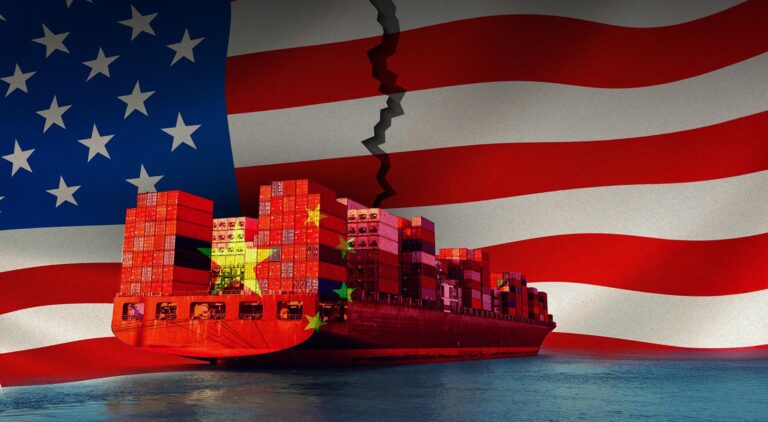
As geopolitical frictions between the United States and China continue to escalate, countries like South Korea find themselves navigating an increasingly complex and precarious position. Caught between the world’s two largest economies and military powers, South Korea must balance economic interests, security alliances, and diplomatic relations amid escalating tensions. This delicate balancing act underscores the broader challenges faced by nations situated between competing global powers, highlighting the far-reaching impact of U.S.-China rivalry on regional stability and international diplomacy.
South Koreas Strategic Dilemma Amid Escalating U.S.-China Rivalry
South Korea confronts an intricate balancing act as the intensifying rivalry between the United States and China forces it to navigate conflicting pressures from two of its most critical partners. On one hand, Seoul depends heavily on Washington for its security framework and military deterrence, especially given the persistent threats from North Korea. On the other, China remains South Korea’s largest trading partner, underpinning much of its economic growth through exports and investments. This dual dependence leaves South Korea in a delicate position where aligning too closely with either side risks alienating the other, creating economic and geopolitical vulnerabilities.
Key challenges facing South Korea include:
- Maintaining a strong security alliance with the U.S. without provoking China’s economic retaliation.
- Protecting supply chains amid growing pressures to decouple from Chinese technology and manufacturing.
- Managing public sentiment that ranges from pro-American security support to concerns about economic overreliance on China.
| Aspect | U.S. Expectation | China Expectation |
|---|---|---|
| Security | Firm adherence to security alliances and joint military exercises | Neutrality or restraint in U.S.-led military activities in the region |
| Economics | Shift away from Chinese supply chains, support for democratic trade partners | Continued economic cooperation and resistance to tech decoupling |
| Diplomacy | Public condemnation of China’s regional actions | Efforts to limit South Korea’s pro-U.S. diplomatic stances |
As geopolitical fault lines deepen, South Korea’s decisions will profoundly affect its regional role and domestic stability. Navigating this strategic dilemma requires deft diplomacy, economic foresight, and an acute understanding of shifting global dynamics, reinforcing that Seoul’s middle position is both a challenge and a strategic asset in a polarized world.
Economic and Security Impacts on South Korea Caught Between Two Giants
South Korea finds itself navigating a precarious geopolitical landscape as economic and security tensions between the U.S. and China intensify. The country’s export-driven economy heavily relies on both giants; China is South Korea’s largest trading partner, accounting for nearly a quarter of its total trade, while the U.S. remains a critical security ally under the longstanding military alliance. This delicate balance leaves Seoul vulnerable to potential disruptions in supply chains, market access, and diplomatic maneuvering, forcing policymakers to carefully weigh engagement strategies to avoid antagonizing either side.
On the security front, South Korea faces mounting pressure to align its defense policies amid growing U.S.-China rivalry in the Indo-Pacific. The deployment of advanced U.S. missile systems on Korean soil has elicited sharp rebuke from Beijing, highlighting the tightrope Seoul must walk between deterrence and diplomacy. Analysts underscore that any shift in South Korea’s stance could ripple through regional stability, complicating efforts to manage North Korean provocations and broader nuclear proliferation threats.
- Economic dependency: China (~25% of trade), U.S. (~14% of trade)
- Security alliance: 28,500 U.S. troops stationed in South Korea
- Recent pressures: Controversies over THAAD missile defense
- Diplomatic challenges: Balancing ties without alienation
| Aspect | Impact | Potential Risk |
|---|---|---|
| Trade | Supply chain disruptions | Export slowdowns to China or U.S. |
| Military | Increased defense coordination with U.S. | Chinese diplomatic reprisals |
| Diplomacy | Delicate balancing act | Strained regional alliances |
Navigating the Middle Path Recommendations for South Korea in a Divided World
South Korea’s strategic position amid escalating U.S.-China rivalry demands a careful, measured approach that safeguards national interests without alienating either superpower. Policymakers are urged to focus on fostering diplomatic agility, leveraging economic partnerships while maintaining a robust defense posture. The essence of this approach hinges on cultivating flexibility-where South Korea can engage with both Washington and Beijing selectively, avoiding an adversarial posture that could compromise regional stability or economic growth.
Key recommendations include:
- Strengthening multilateral forums with ASEAN and other regional actors to diversify diplomatic ties.
- Expanding technological and trade cooperation with both powers while safeguarding critical sectors from geopolitical risks.
- Enhancing investment in cyber defense and intelligence-sharing frameworks to address emerging security threats.
- Promoting cultural and academic exchanges to build people-to-people trust across borders.
| Policy Area | U.S. Engagement | China Engagement | |||||||||||
|---|---|---|---|---|---|---|---|---|---|---|---|---|---|
| Trade & Economy | Strengthen free trade agreements | Expand supply chain partnerships | |||||||||||
| Security | Joint military exercises & intelligence | Maintain open dialogue to mitigate tensions | |||||||||||
| Technology | Collaborate on innovation & cybersecurity | South Korea’s strategic position amid escalating U.S.-China rivalry demands a careful, measured approach that safeguards national interests without alienating either superpower. Policymakers are urged to focus on fostering diplomatic agility, leveraging economic partnerships while maintaining a robust defense posture. The essence of this approach hinges on cultivating flexibility-where South Korea can engage with both Washington and Beijing selectively, avoiding an adversarial posture that could compromise regional stability or economic growth. Key recommendations include:
|