
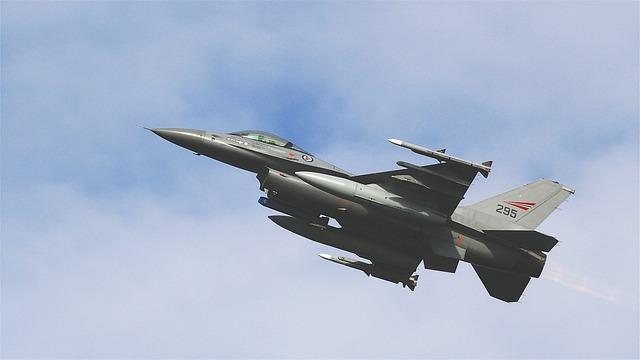
An investigation has been launched following multiple reports of American F-16 fighter jets coming under laser attacks while stationed in Germany. The incidents, which have raised concerns over the safety of U.S. military personnel and aircraft, occurred near key airbases hosting these advanced fighter jets. Authorities are working to identify the source of the laser strikes and assess potential threats amid heightened tensions in the region. This development underscores the growing challenges faced by U.S. forces overseas as they navigate both conventional and unconventional security risks.
Investigation Launched into Laser Incidents Targeting American F-16s in Germany
Authorities have initiated a thorough investigation following multiple incidents involving laser exposure directed at American F-16 fighter jets stationed in Germany. These events, which pose significant risks to both the pilots and the integrity of the aircraft, have raised alarms within the military community and diplomatic circles alike. Preliminary reports suggest that the lasers, potentially from unauthorized sources on the ground, were aimed during routine flight operations, complicating both identification and immediate response efforts.
Key aspects of the ongoing inquiry include:
- Collaboration between U.S. military officials and German law enforcement to trace the origin of the laser attacks
- Implementation of enhanced safety protocols during F-16 missions to minimize pilot vulnerability
- Assessment of drone and civilian aircraft activity in the affected airspace to rule out accidental or malicious involvement
| Date | Location | Number of Incidents | Reported Damage |
|---|---|---|---|
| April 10, 2024 | Ramstein Air Base | 3 | Temporary pilot vision impairment |
| April 15, 2024 | Spangdahlem Air Base | 2 | No physical damage reported |
Assessing the Threat and Implications for US Military Operations in Europe
The recent incidents involving American F-16s targeted by laser devices in Germany reveal a concerning escalation in unconventional threats against US military assets stationed in Europe. These attacks not only jeopardize pilot safety but also signal a potential increase in hostile activities aimed at undermining NATO’s operational readiness. With lasers capable of causing temporary blindness or damage to aircraft sensors, the implications extend beyond immediate physical harm to challenges in maintaining air superiority and surveillance capabilities in contested airspaces.
In response, military officials are reassessing current countermeasure strategies to mitigate risks from such directed-energy threats. Enhanced pilot training, upgraded cockpit shielding, and stricter perimeter security at airbases have emerged as critical priorities. The evolving threat landscape may also compel a revamp of engagement protocols with local authorities and cyber-security frameworks to identify and neutralize emerging laser targeting technologies swiftly.
| Aspect | Current Status | Proposed Enhancements |
|---|---|---|
| Pilot Safety | Standard eye protection | Advanced anti-laser visors |
| Aircraft Sensors | Basic shielding | Upgraded sensor filters and coatings |
| Base Security | Conventional perimeter controls | Integrated laser detection systems |
- Risk amplification with the proliferation of low-cost laser devices
- Operational readiness potentially affected by pilot health concerns
- Strategic coordination between US forces and European allies becoming increasingly vital
Recommendations for Enhanced Security Measures and Counter-Laser Technologies
To effectively mitigate the rising threat of laser attacks on military aircraft, a multi-layered approach embracing advanced counter-laser technologies is imperative. Key recommendations include:
- Integration of laser warning receivers (LWR): These devices alert pilots instantly upon laser exposure, enabling timely evasive maneuvers or activation of countermeasures.
- Deployment of directed energy countermeasures: Utilize dazzler systems that emit controlled laser beams to disrupt and blind hostile laser sources without causing permanent damage.
- Enhanced pilot training: Intensive simulation drills focusing on laser threat recognition and response can significantly reduce pilot vulnerability during missions.
- Development of anti-laser coatings: Innovations in materials science are critical to producing coatings for cockpit glass and airframe surfaces that can absorb or deflect harmful laser radiation.
Furthermore, a collaborative framework between allied nations is necessary to standardize detection and defense protocols. The table below summarizes core technologies and their respective benefits in countering laser threats:
| Technology | Primary Benefit | Implementation Status |
|---|---|---|
| Laser Warning Receivers | Early detection and alert system | Operational |
| Active Dazzlers | Disrupt hostile laser targeting | Testing phase |
| Anti-Laser Coatings | Physical protection for aircraft surfaces | Developmental |
| Pilot Simulation Training | Improved response tactics | Ongoing |
To Conclude
As investigations continue, military and security officials are working to determine the source and intent behind the laser incidents targeting American F-16 fighter jets in Germany. The events have raised concerns about the safety of U.S. personnel and the potential escalation of unconventional threats in allied territories. Authorities have pledged increased vigilance and cooperation with local law enforcement as they seek to prevent further incidents and ensure the security of allied forces stationed abroad. Updates are expected as the inquiry progresses.