
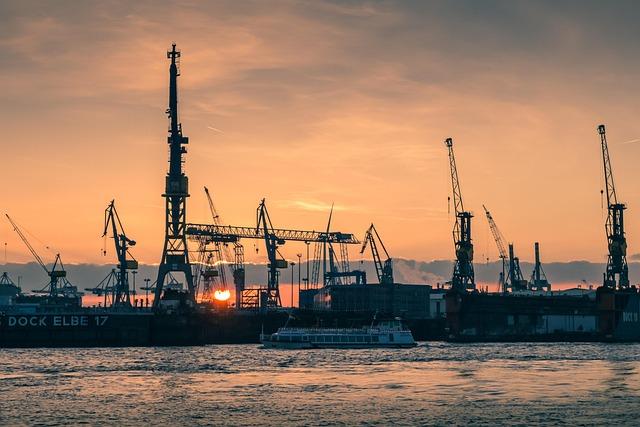
Hanseatic Global Terminals, a leading player in the maritime logistics sector, has announced a significant investment in a greenfield container terminal project in Brazil, in partnership with global shipping giant Hapag-Lloyd. The development marks a strategic move to expand port infrastructure capacity in the region, aiming to enhance supply chain efficiency and support growing trade demands. This collaboration underscores the ongoing efforts by industry leaders to modernize container handling facilities while boosting Brazil’s position as a key hub in international shipping networks.
Hanseatic Global Terminals Announces Major Investment in Brazil’s Container Infrastructure
Hanseatic Global Terminals is set to reshape Brazil’s shipping landscape with a substantial investment in a new greenfield container terminal. This ambitious project aims to enhance the nation’s port capacity while integrating state-of-the-art technology and sustainable practices. Positioned strategically on the Atlantic coast, the terminal will bolster Brazil’s logistics infrastructure, facilitating faster, more efficient cargo movement and reinforcing trade connectivity with global markets. Industry analysts note that this development responds directly to the growing demand for efficient import-export solutions amid rising international trade volumes.
Key features of the project include:
- Deployment of eco-friendly equipment to minimize carbon footprint
- Advanced automation systems for optimized cargo handling
- Infrastructure designed to accommodate larger vessel classes
- Collaboration with local authorities to boost regional economic growth
| Investment Aspect | Details |
|---|---|
| Estimated Capital Outlay | USD 500 Million |
| Projected Cargo Capacity | 2.5 Million TEUs/year |
| Completion Timeline | 2027 |
| Environmental Certification | ISO 14001 Planned |
Project Expected to Boost Regional Trade and Create Thousands of Jobs
The ambitious new project announced by Hanseatic Global Terminals in partnership with Hapag-Lloyd marks a significant milestone in enhancing Brazil’s maritime infrastructure. Located strategically along key shipping routes, the greenfield container terminal is designed to streamline cargo handling, reduce turnaround times, and accommodate larger vessels. Industry experts anticipate that this state-of-the-art facility will become a pivotal hub for regional trade, fostering stronger connections between South America and global markets. The project’s focus on integrating advanced technology and sustainable practices signals a forward-thinking approach that aligns with evolving environmental standards.
In addition to modernizing port capabilities, the investment is expected to generate substantial employment opportunities, benefiting local communities with a diverse range of jobs. The economic ripple effect is projected through:
- Direct employment in construction, operations, and logistics
- Indirect job creation across supply chain networks
- Skill development initiatives tailored to high-demand maritime sectors
| Project Aspect | Expected Impact |
|---|---|
| Container Throughput Capacity | 2 million TEUs per year |
| Job Creation | Approx. 4,500 new positions |
| Carbon Emission Reduction | 15% through green technology |
| Completion Timeline | By 2027 |
Experts Recommend Close Monitoring of Environmental Impact and Sustainable Development Practices
Industry specialists emphasize the necessity for rigorous environmental oversight during the implementation of the new container terminal in Brazil. With the project expected to significantly boost regional trade capacity, stakeholders call for adopting advanced monitoring technologies to track emissions, water quality, and biodiversity impacts. This proactive approach aims to ensure that industrial growth aligns with environmental preservation without compromising the surrounding ecosystems. Key recommendations include:
- Integration of real-time environmental data analytics
- Periodic impact assessments by independent watchdogs
- Community engagement to promote transparency and social responsibility
- Strict adherence to both national and international sustainability regulations
Moreover, experts advocate for embedding sustainable development principles within project milestones to foster long-term benefits beyond mere economic gains. These include the adoption of green infrastructure, renewable energy solutions, and waste reduction strategies. The table below outlines core sustainability benchmarks proposed for the Hanseatic Global Terminals initiative:
| Area | Target | Implementation Timeline |
|---|---|---|
| Carbon Emission Reduction | 30% reduction by 2028 | Phase 1 (2024-2026) |
| Waste Recycling Rate | 70% of total waste | Phase 2 (2026-2028) |
| Use of Renewable Energy | 50% of total energy consumption | Phase 3 (2028-2030) |
Concluding Remarks
The investment by Hanseatic Global Terminals in the new greenfield container terminal project in Brazil marks a significant development in the region’s maritime infrastructure. Partnering with industry leader Hapag-Lloyd, the initiative is expected to enhance Brazil’s capacity to handle increasing container volumes while promoting sustainable port operations. As global trade continues to evolve, such strategic investments underscore the importance of modern, efficient, and environmentally conscious terminal facilities in supporting economic growth and competitiveness. Further updates on the project’s progress and impact are anticipated in the coming months.