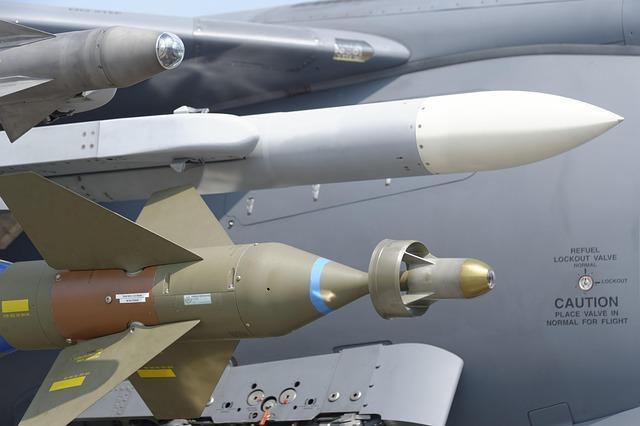
China’s development of the DF-27 missile has intensified strategic concerns across the Pacific, signaling a significant enhancement in Beijing’s long-range strike capabilities. Designed to target both maritime vessels and land-based installations, the DF-27 poses a formidable challenge to U.S. naval forces operating in the Indo-Pacific region, as well as to critical assets on the American mainland. This advancement not only underscores China’s commitment to expanding its anti-access, area-denial (A2/AD) capabilities but also raises the stakes in the ongoing contest for regional dominance, prompting heightened vigilance among military planners and policymakers alike.
China’s DF 27 Missile Alters Strategic Balance in the Pacific
The introduction of the DF-27 missile into China’s arsenal marks a significant shift in the military dynamics of the Pacific region. With an estimated range of 3,000 kilometers and the capability to carry both conventional and nuclear warheads, the missile effectively places key U.S. naval assets and strategic bases within striking distance. This development poses a substantial challenge to the current balance of power, compelling regional actors to reconsider defense postures and alliance commitments. The missile’s high-speed maneuverability and advanced guidance systems make it particularly difficult to detect and intercept, heightening concerns over the vulnerability of aircraft carriers, amphibious task forces, and key island outposts.
Analysts emphasize several critical aspects that define the DF-27’s strategic impact:
- Enhanced regional deterrence: By extending China’s reach, the missile deters hostile actions near its periphery.
- Disruption of U.S. force projection: The risk to forward-deployed platforms may complicate American rapid response capabilities.
- Increased escalation risks: The dual-capable nature of the missile adds layers of ambiguity in crisis scenarios, raising the prospect of miscalculation.
| Feature | Capability | Impact |
|---|---|---|
| Range | 3,000 km | Threatens Western Pacific bases and U.S. homeland |
| Speed | Hypersonic maneuvering | Reduces interception window |
| Warhead | Conventional/Nuclear | Complicates enemy decision-making |
Advanced Capabilities and Potential Targets of the DF 27 System
Equipped with cutting-edge guidance technology and rapid launch capabilities, the DF-27 missile represents a significant leap in China’s strategic arsenal. Its advanced maneuverability allows the missile to evade traditional missile defense systems, making it a formidable threat to naval assets in the Pacific theater. With an estimated operational range exceeding 3,000 kilometers, the system can accurately strike moving maritime targets, including aircraft carriers and amphibious assault ships, at considerable distances from the Chinese mainland. The DF-27’s utilization of solid-fuel propulsion notably reduces launch preparation time, enhancing China’s ability to execute surprise strikes in a fast-paced conflict scenario.
Potential targets extend well beyond military vessels. The missile’s accuracy and range designate it as a credible threat to key U.S. military bases across the Pacific, such as those in Guam and Hawaii, along with critical infrastructure on the U.S. west coast. This multilayered targeting capacity serves both as a deterrent and as an operational tool to degrade American response capability in the early stages of hostilities. Below is a summary table outlining the primary capabilities and potential targets of the DF-27 system:
| Capability | Description | Potential Targets |
|---|---|---|
| Range | 3,000+ km | Pacific naval fleets, U.S. bases in Guam & Hawaii |
| Guidance | Inertial + terminal radar homing | Moving surface warships, critical infrastructure |
| Propulsion | Solid-fuel, rapid launch | Surprise strike capabilities |
| Warhead | Conventional or nuclear | High-value military and strategic targets |
- Extended maritime reach challenges current U.S. naval dominance.
- Dual-use warhead options increase strategic ambiguity.
- Rapid deployment enhances China’s tactical flexibility.
Urgent Policy Recommendations to Counter Emerging Missile Threats
To effectively address the growing menace posed by hypersonic weapons like China’s DF-27 missile, a swift overhaul of current defense protocols is essential. Investing in advanced missile detection systems, integrating AI-driven threat analysis, and expanding early-warning networks across the Pacific are critical steps. Equally important is strengthening cooperation with regional allies through joint exercises and intelligence sharing, ensuring rapid, coordinated responses to potential missile launches aimed at maritime assets or critical U.S. infrastructure. Without these proactive measures, the ability to counter such fast, unpredictable threats will remain severely compromised.
A multifaceted approach also demands urgent legislative backing for increased funding toward next-gen countermeasures such as directed-energy weapons and cyber defense mechanisms designed to disrupt missile guidance systems. Below is a concise outline of key policy actions recommended for immediate implementation:
- Enhanced Surveillance: Deploy over-the-horizon radar and space-based sensors to achieve persistent tracking of missile activity.
- Joint Defense Initiatives: Expand trilateral missile defense agreements in the Indo-Pacific.
- Research and Development: Prioritize hypersonic interception technology and electronic warfare capabilities.
- Infrastructure Hardening: Upgrade critical naval bases and command centers against missile strikes.
- Public-Private Partnerships: Leverage defense industrial innovation to accelerate deployment of countermeasures.
| Policy Area | Action Item | Expected Outcome |
|---|---|---|
| Surveillance | Deploy additional radar arrays | Improved early warning times |
| Alliances | Conduct joint missile defense drills | Enhanced regional response capability |
| R&D | Accelerate hypersonic interceptors | Increased interception success |
| Infrastructure | Fortify naval bases | Reduced vulnerability to attacks |
The Conclusion
As China continues to advance its missile capabilities with the DF-27, the strategic balance in the Pacific faces increasing uncertainty. This intermediate-range weapon not only challenges the defense postures of regional navies but also extends Beijing’s reach toward the U.S. homeland, underscoring the urgency for heightened vigilance and strategic adaptation. Policymakers and military planners must closely monitor these developments to ensure maritime security and maintain stability in an evolving geopolitical landscape.