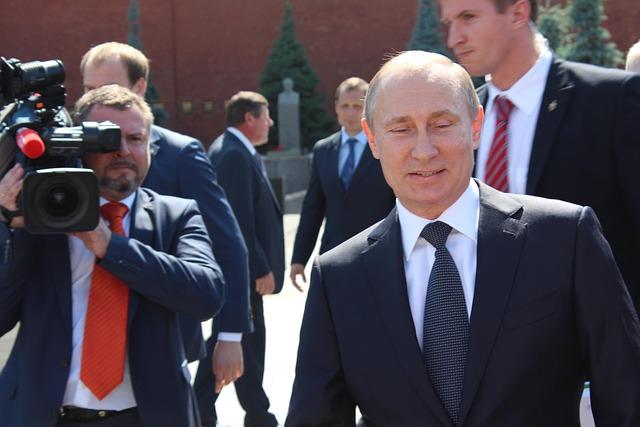
In a rare public statement signaling a potential shift in Russia’s foreign policy posture, President Vladimir Putin has vowed to refrain from engaging in further conflicts, provided that Western nations treat Moscow with respect. Speaking amid ongoing tensions between Russia and the West, Putin’s comments, reported by the BBC, come as diplomatic efforts continue to navigate a fraught geopolitical landscape marked by sanctions, military confrontations, and deep-seated mistrust. This development raises questions about the prospects for de-escalation and the future of international relations between Russia and Western powers.
Putin Calls for Mutual Respect as Basis for Peace with the West
In a recent address, President Vladimir Putin emphasized the necessity for the West to approach Russia with mutual respect as the cornerstone for lasting peace. Highlighting the dangers of continued hostility, he asserted that Russia’s willingness to refrain from future conflicts hinges entirely on the West’s recognition of its interests and sovereignty. Putin proposed a renewed dialogue framework, urging Western nations to abandon policies of confrontation in favor of constructive engagement.
Key points from Putin’s remarks included:
- Equal footing: Calls to treat Russia as an equal partner in international relations.
- Security guarantees: Demand for legally binding agreements to prevent NATO’s eastward expansion.
- Economic cooperation: Invitation to rebuild trade and energy partnerships.
| Proposal | Western Response Needed | Potential Outcome |
|---|---|---|
| Mutual Respect | Recognition of Russia’s interests | Reduced tensions |
| Security Guarantees | Limits on NATO expansion | Stabilized borders |
| Economic Cooperation | Resumption of trade talks | Mutual growth |
Analysis of Russia’s Security Concerns Behind the No More Wars Pledge
Russia’s security anxieties stem primarily from what it perceives as NATO’s expanding influence near its borders and the persistent geopolitical pressure from Western powers. Moscow views these developments as existential threats, intensifying a long-standing narrative of encirclement and vulnerability. The pledge to refrain from initiating further conflicts emerges as a conditional promise, hinging on reciprocal respect-a demand highlighting the Kremlin’s insistence on recognition of its strategic interests and a rebalancing of diplomatic relations.
The complexities of this dynamic can be summarized in three core concerns:
- Military encroachment: The forward deployment of Western military assets close to Russian territory.
- Economic sanctions: The use of sanctions as a tool to undermine Russia’s global standing and economic stability.
- Political isolation: Efforts to marginalize Russia in international forums, reducing its role in global decision-making.
| Concern | Impact | Russian Response Strategy |
|---|---|---|
| Military encroachment | Heightened threat perception | Reinforcement of western borders |
| Economic sanctions | Restricted market access | Pivot to Eastern partnerships |
| Political isolation | Diplomatic marginalization | Asserting alternative alliances |
Experts Recommend Diplomatic Engagement to Deescalate Tensions and Foster Stability
Leading authorities in international relations emphasize the critical role of sustained diplomatic efforts to ease the escalating tensions between Russia and Western nations. They argue that genuine dialogue rooted in mutual respect and understanding can create a pathway to long-term stability and reduce the risks of further conflict. Experts highlight that unilateral actions and harsh rhetoric often entrench positions, making reconciliation increasingly difficult.
Recommended strategies include:
- Incremental confidence-building measures to restore trust on both sides.
- Multilateral forums that incorporate key stakeholders to foster inclusive discussions.
- Economic and cultural exchanges aimed at bridging divisions beyond political disagreements.
| Diplomatic Approach | Expected Outcome |
|---|---|
| Direct bilateral talks | Reduction in misunderstandings |
| Third-party mediation | Neutral facilitation of dialogue |
| Confidence-building initiatives | Improved mutual trust |
Future Outlook
As tensions continue to define East-West relations, President Putin’s pledge to forgo further conflicts hinges on a mutual foundation of respect. Whether this overture signals a genuine shift or a strategic maneuver remains to be seen, but it undeniably places the spotlight on diplomatic engagement as a potential path forward. The coming weeks will be critical in determining if these promises translate into a lasting de-escalation or if underlying disputes will persist.