
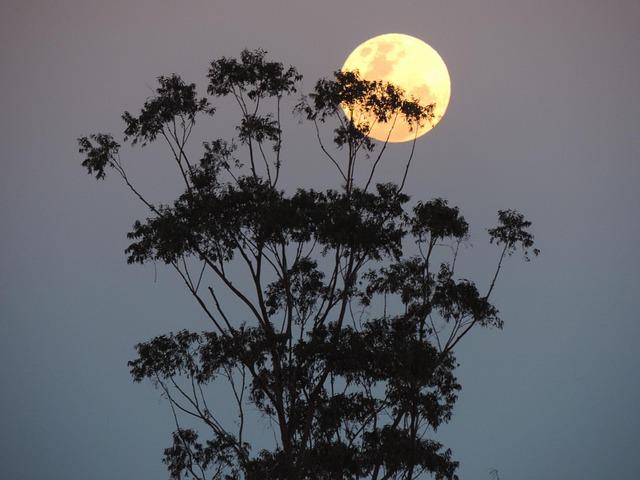
India is set to witness a spectacular celestial event as the first supermoon of 2026 brightens the night sky. This awe-inspiring phenomenon, which occurs when the full moon is closest to Earth in its orbit, promises to offer stargazers across the country a rare and captivating view. In this article, we detail when and where the supermoon will be visible, ensuring enthusiasts don’t miss this luminous spectacle lighting up Indian skies.
First Supermoon of 2026 Set to Dazzle Indian Skies with Extraordinary Brightness
The celestial event promises an awe-inspiring spectacle as the moon reaches its closest point to Earth on January 25, 2026. This proximity will cause the moon to appear up to 14% larger and 30% brighter than a typical full moon, offering skywatchers across India a unique opportunity to witness nature’s grandeur in stunning detail. Experts recommend observing the supermoon shortly after sunset, when the moon hovers low on the horizon, enhancing its visual impact with an enchanting orange hue.
Visibility will stretch across the entire Indian subcontinent, with prime viewing conditions expected in:
- Rural and suburban areas, where light pollution is minimal
- Hill stations and elevated regions such as Shimla and Manali
- Coastal cities like Mumbai and Chennai, offering clear unobstructed horizons
| City | Moonrise Time | Viewing Tips |
|---|---|---|
| New Delhi | 06:00 PM IST | Head to open parks or rooftops |
| Bengaluru | 06:10 PM IST | Avoid city lights, find outskirts |
| Kolkata | 05:58 PM IST | Riverfront areas provide best views |
| Hyderabad | 06:05 PM IST | Elevated points nearby recommended |
Best Locations Across India to Witness the Supermoon in All Its Glory
As the first supermoon of 2026 approaches, several prime locations across India stand out for their unparalleled views of this celestial marvel. Hill stations such as Shimla and Darjeeling offer clear, elevated vantage points away from city light pollution, making the moon’s glow appear even more spectacular. Similarly, the vast expanses of the Thar Desert in Rajasthan provide a surreal backdrop where the bright lunar disc contrasts sharply against the dark, open skies. Coastal regions including the serene beaches of Kerala and the tranquil shores of Goa are also favored spots, where the moon’s reflection on the water adds an ethereal dimension to the experience.
For enthusiasts willing to travel further, wildlife sanctuaries like Jim Corbett and Bandipur present a unique opportunity to witness the supermoon amidst rich biodiversity under a starlit sky. Urban residents are advised to head to outlying parks or rooftops of tall buildings to escape the glow of streetlights. Experts highlight these locations for optimal visibility:
- Shimla, Himachal Pradesh
- Thar Desert, Rajasthan
- Alleppey Beaches, Kerala
- Bandipur National Park, Karnataka
- Darjeeling, West Bengal
- Goa Coastal Areas
| Location | Best Viewing Time | Visibility Tip | |||||||||||||||
|---|---|---|---|---|---|---|---|---|---|---|---|---|---|---|---|---|---|
| Shimla | 8:00 PM – Midnight | Higher altitude for clear skies | |||||||||||||||
| Thar Desert |
| Location |
Best Viewing Time |
Visibility Tip |
| |||||||||||||
| Shimla | 8:00 PM – Midnight | Higher altitude for clear skies | |||||||||||||||
| Thar Desert | 9:00 PM – 1:00 AM | Minimal light pollution in open desert | |||||||||||||||
| Alleppey Beaches | 7:30 PM – 11:00 PM | Moon reflection on water enhances view | |||||||||||||||
| Bandipur National Park | 8:30 PM – 12:00 AM | Observe with minimal disturbance to wildlife | |||||||||||||||
| Darjeeling | 7:45 PM – 11:30 PM | Safety Tips and Viewing Recommendations for an Unforgettable Supermoon Experience
To enjoy the spectacular supermoon safely, avoid looking directly at the bright light for extended periods, especially with unprotected eyes. Using binoculars or telescopes equipped with moon filters enhances your viewing experience without risking eye strain. Remember, the supermoon’s glow can disrupt natural night vision, so give your eyes time to adjust before and after observation. It’s best to scout out a viewing spot away from city lights to minimize light pollution, ensuring the moon’s details stand out against the dark sky. For optimal viewing, bring along essentials such as a comfortable chair, warm clothing, and a camera with a zoom lens to capture the mesmerizing sight. Local parks, open rooftops, and elevated terrains offer ideal vantage points across various Indian cities. Below is a quick reference guide highlighting prime locations and recommended times for peak visibility during the event:
In RetrospectAs the first supermoon of 2026 graces the night skies across India, stargazers are reminded of the celestial wonders that connect us all. Visible in various parts of the country, this astronomical event offers a rare opportunity to witness the moon at its closest and brightest. Residents and enthusiasts alike are encouraged to step outside and experience the spectacle firsthand, making the most of this luminous moment before the next supermoon lights up the skies. Stay tuned for more updates on upcoming celestial events. 
Atticus Reed
A journalism icon known for his courage and integrity. Related Posts


|