
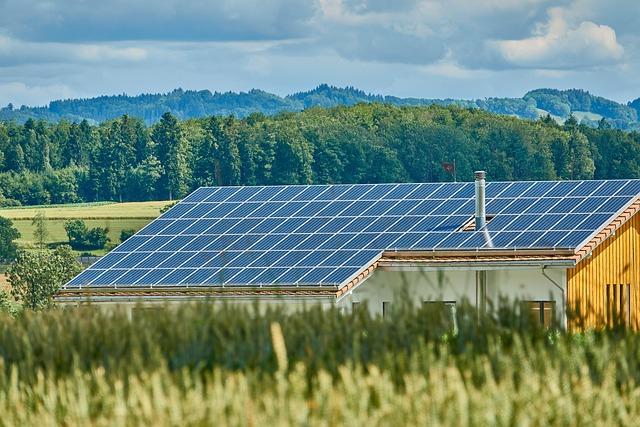
The United Kingdom marked a landmark year in 2025 for solar energy, adding a record-breaking 2.6 gigawatts (GW) of new capacity, driven largely by a surge in rooftop installations. According to recent data, this milestone highlights the growing momentum of solar photovoltaics (PV) across the nation, underscoring the sector’s vital role in the UK’s transition to renewable energy. The unprecedented growth in rooftop solar not only reflects increasing consumer and business adoption but also signals a significant shift in the country’s clean energy landscape.
UK Achieves Record Growth in Solar Capacity Driven by Rooftop Installations
The UK has witnessed an unprecedented surge in solar power installations in 2025, adding a remarkable 2.6 GW to its solar capacity. This milestone marks one of the most significant annual increases in the country’s renewable energy portfolio, with rooftop solar systems playing a pivotal role. Homeowners and businesses alike have embraced solar technology, contributing extensively to the nation’s push towards cleaner energy and sustainability targets.
Key drivers behind this record growth include:
- Government incentives: Enhanced schemes encouraging rooftop solar adoption have lowered financial barriers.
- Technological advancements: Improved panel efficiency and reduced installation costs have made solar more accessible.
- Corporate investments: An increasing number of companies are committing to net-zero goals by deploying solar on their properties.
This trend not only reflects a growing environmental consciousness among the public but also positions the UK as a leading market in rooftop solar innovation within Europe.
Detailed Analysis of Regional Trends and Technological Advances Fueling Solar Expansion
In 2025, the UK’s solar sector witnessed an unprecedented surge, driven by a combination of regional dynamics and cutting-edge technological innovations. The addition of 2.6 GW marked the highest annual capacity increase to date, with rooftop installations leading the charge. Encouraging policy frameworks, along with enhanced government incentives, catalyzed widespread adoption among both residential and commercial stakeholders. Urban centers, particularly London and Manchester, saw significant growth as local councils prioritized sustainable energy transitions, incorporating solar into new building regulations and community energy projects.
The rapid expansion was also fueled by advances in photovoltaic (PV) technology. Manufacturers introduced higher-efficiency panels and sophisticated energy management systems that optimize output even in the UK’s variable climate. Key technological trends include:
- Improved bifacial solar modules that capture sunlight on both sides, boosting generation without increasing roof space.
- Smart inverter integration enabling dynamic load balancing and grid stabilization.
- Enhanced energy storage solutions paired with solar arrays, allowing users to maximize self-consumption and reduce reliance on the grid.
These innovations, combined with strategic regional initiatives, have positioned the UK as a leader in the European solar landscape, setting a robust foundation for continued growth in the coming years.
Policy Recommendations to Sustain Momentum and Enhance Grid Integration
To maintain the UK’s impressive solar growth trajectory, policymakers must prioritize streamlined permitting processes and incentivize the uptake of smart technologies. Simplifying grid connection procedures can remove significant bottlenecks, particularly for small-scale rooftop installations. Additionally, subsidies and financial mechanisms targeted at integrating energy storage solutions will be crucial in addressing intermittency issues and ensuring a stable energy supply. Encouraging innovation in grid management can also help optimize the balance between supply and demand, maximizing the benefits of distributed solar generation.
Key measures for advancing grid integration include:
- Expanding investment in grid infrastructure upgrades to accommodate increased solar capacity.
- Promoting flexible tariff structures that reward consumers for peak-time energy use and storage deployment.
- Enhancing data transparency and real-time monitoring to improve grid responsiveness.
- Supporting cross-sector collaboration between government, industry, and local communities to foster scalable, inclusive solutions.
Wrapping Up
The UK’s addition of 2.6 GW of solar capacity in 2025 marks a significant milestone, underscoring the country’s growing commitment to renewable energy and rooftop installations. With this record-breaking year, industry experts anticipate continued momentum as government policies and technological advancements further drive the adoption of solar power across the nation. As the UK accelerates its transition to a low-carbon future, the rooftop solar sector is expected to remain a key contributor to achieving net-zero targets in the coming decade.