
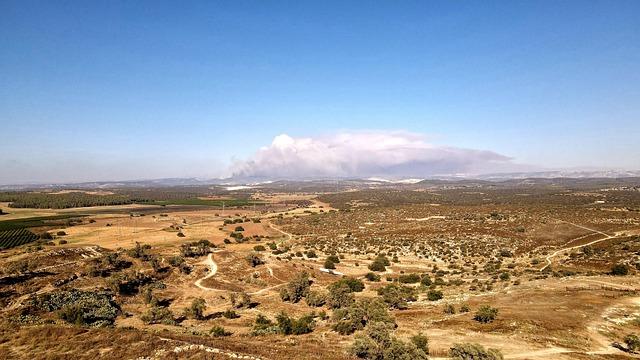
Massive wildfires have swept through the untouched forests of Patagonia, Argentina, sparking widespread alarm and drawing sharp criticism toward the government of Economy Minister Javier Milei. As flames continue to ravage this ecologically vital region, questions mount over the impact of recent austerity measures on firefighting capabilities and environmental protections. The unfolding crisis exposes the tensions between economic policy and environmental stewardship at a critical moment for one of the world’s last great wildernesses.
Argentina Wildfires Devastate Patagonia’s Ancient Forests Raising Environmental Alarm
The relentless wildfires sweeping through Patagonia have left vast swaths of the region’s ancient forests charred and lifeless, signaling a potentially irreversible loss for one of the world’s most biologically diverse areas. These fires, fueled by unusually dry conditions and intensified winds, have decimated towering lenga and coihue trees that have thrived for centuries. Local communities and environmentalists are sounding the alarm over the immediate threat to endangered wildlife habitats, including species that are found nowhere else on Earth. Satellite images reveal a staggering increase in burned land, threatening Patagonia’s role as a crucial carbon sink amid global climate concerns.
Critics sharply attribute these escalating disasters to recent government decisions under Javier Milei’s administration, pointing to severe budget cuts in environmental protection agencies and firefighting services. They argue that austerity measures have critically weakened wildfire response capabilities at a time when climate-related disasters are intensifying worldwide. The primary concerns include:
- Reduced funding for forest management and early fire detection systems
- Insufficient resources allocated to local brigades tasked with rapid wildfire containment
- Delays in implementing climate resilience policies designed to protect vulnerable ecosystems
As debates rage in political and scientific circles, international calls for increased support and a reassessment of national priorities are growing louder, emphasizing that preserving Patagonia’s ancient forests is crucial not only for Argentina but for global environmental stability.
Experts Link Blaze Management Failures to Milei’s Austerity-Driven Budget Cuts
Environmental specialists and wildfire management experts have identified a direct correlation between the escalating devastation of the Patagonia forests and the recent budget cuts imposed by the Milei administration. According to these experts, significant reductions in funding have crippled firefighting capabilities, reduced maintenance of firebreaks, and stalled investments in early detection systems – all critical elements in wildfire prevention and containment. The austerity measures, aimed at reducing Argentina’s fiscal deficit, have inadvertently undermined the very infrastructure needed to protect one of the country’s most ecologically sensitive regions.
Key consequences highlighted include:
- Diminished aerial firefighting resources, limiting rapid response to emerging hotspots
- Staff layoffs in forest ranger and emergency response units
- Postponement of modernization projects for firefighting equipment
- Reduced community education programs on wildfire prevention
Critics argue that this austerity-driven approach not only exacerbates environmental damage but also threatens local economies dependent on tourism and agriculture. The burning of pristine forests has sparked a wave of public outcry, questioning the long-term wisdom of slashing budgets in essential public safety domains during times of escalating climate-related threats.
Calls Grow for Immediate Investment in Firefighting Resources and Sustainable Land Policies
As the flames continue to engulf vast areas of Patagonia’s untouched wilderness, urgent demands have surfaced from environmentalists, local communities, and experts alike, urging the government to drastically enhance firefighting capabilities. Current resources are widely regarded as insufficient, with many firefighters working in dangerously understaffed and under-equipped conditions. Critics highlight that budget cuts, championed by President Javier Milei’s administration, have severely constrained emergency response units, complicating efforts to control the blazes and protect both natural habitats and nearby settlements.
Beyond immediate emergency funding, calls emphasize the need for a comprehensive reevaluation of Argentina’s land management strategies. Advocates propose:
- Investment in advanced surveillance technologies to detect fires early and deploy rapid response teams.
- Development of sustainable agricultural and forestry practices that reduce fire risks.
- Implementation of community-driven conservation programs designed to balance economic activity with ecological preservation.
The consensus among specialists warns that without a shift toward sustainable policy frameworks, Argentina risks not only repeated devastation of its pristine forests but also long-term environmental and economic fallout.
Concluding Remarks
As the flames continue to consume vast swaths of Patagonia’s untouched forests, the devastating wildfires have cast a harsh spotlight on Argentina’s environmental and fiscal policies under President Javier Milei’s administration. Critics argue that austerity measures and budget cuts have undermined firefighting capabilities and environmental protections, exacerbating the crisis. With the region’s unique biodiversity hanging in the balance, the unfolding disaster raises urgent questions about the government’s preparedness and priorities amid an intensifying climate emergency.