
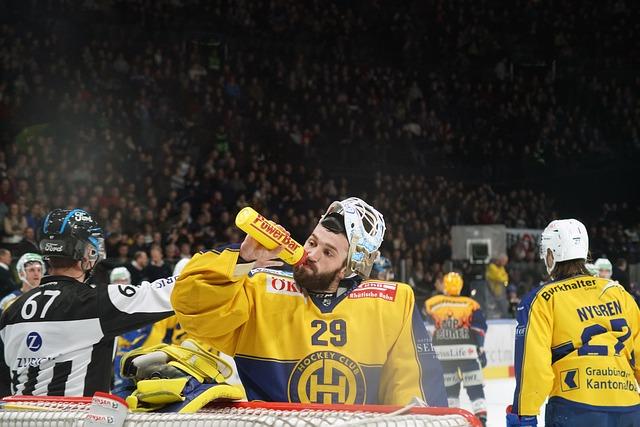
In the wake of Czechia’s recent Olympic ice hockey defeat to Canada, the Czech national team’s head coach has publicly criticized the officiating, asserting that referees appeared “afraid to call anything against Canada.” The controversial comments have sparked discussion about the role of referees in high-stakes international competitions and reignited debates over fairness and impartiality in the sport. This article examines the coach’s statements, the context of the game, and the broader implications for Olympic hockey officiating.
Czechia Hockey Coach Criticizes Officials for Bias in Olympic Defeat
Following a highly contentious match against Canada, the Czechia hockey coach openly expressed his frustration over what he described as biased officiating during the Olympic tournament. In a post-game interview, he accused the referees of hesitating to enforce calls against the Canadian team, suggesting that fear of backlash influenced their decisions. This perceived partiality significantly impacted the outcome, leaving the Czech squad and fans disheartened by the missed opportunities and unchecked infringements.
The coach underscored several instances where critical penalties were overlooked, listing key moments he felt warranted official intervention:
- Uncalled high-sticking during a pivotal power play
- Neglected interference that disrupted Czechian forward breaks
- Lack of review on questionable goals favoring Canada
He asserted that such inconsistent officiating undermines the integrity of the sport, calling for greater accountability and transparency in referee assignments and performance evaluations to ensure fair play in future international competitions.
Analysis of Controversial Refereeing Decisions Impacting Game Outcome
The recent Olympic clash between Czechia and Canada was marred by several contentious refereeing decisions that continue to fuel debate among players, coaches, and fans alike. The Czechia coach openly criticized officials, alleging a reluctance to penalize the Canadian team, a claim that echoes frustrations over what many perceive as an uneven application of rules during critical moments of the game. Notable incidents included:
- Uncalled penalties against key Canadian players during power-play opportunities that shifted game momentum.
- Disputed goal reviews where video replay was either inconclusive or seemingly ignored in favor of rapid game continuation.
- Inconsistent enforcement of physical contact rules, leading to allowances that some argued gave Canada an undue advantage defensively and offensively.
These disputable calls not only sparked outrage but also intensified scrutiny on referee impartiality in high-stakes tournaments. The Czech bench’s vocal dissatisfaction hinted at a deeper concern about the pressure officials face when policing games involving top-tier nations like Canada. This perceived hesitance to issue penalties may stem from fears of influencing the game’s outcome too heavily, yet it inadvertently raises questions about fairness and consistency in officiating – elements crucial to maintaining the integrity of Olympic competition.
Recommendations for Enhancing Fairness and Transparency in International Hockey Officiating
To address growing concerns over subjective officiating in international hockey, several key steps should be taken to foster greater fairness and transparency. Implementing advanced video review systems universally across all major tournaments can provide referees with reliable tools to reassess crucial calls in real time, reducing human error and perceived bias. Additionally, referee accountability can be strengthened through regular performance evaluations by independent panels comprising former players, coaches, and officials. Such oversight ensures that decisions are consistently in line with established rules irrespective of team stature or reputation.
Moreover, increasing transparency through mandatory public disclosures of penalty rationale after matches can enhance trust among players, coaches, and fans alike. Open communication regarding controversial calls would clarify the application of rules and diminish speculation about favoritism. Finally, fostering diversity and rotation among international officiating crews can mitigate the risk of partiality, ensuring that no single nation disproportionately influences game outcomes. Collectively, these recommendations aim to uphold the integrity of international hockey while reinforcing the credibility of its officials on the world stage.
The Way Forward
The controversy surrounding the refereeing decisions in Czechia’s Olympic hockey loss to Canada has sparked strong reactions from the Czech coaching staff, highlighting ongoing tensions in international sports officiating. As the conversation continues, stakeholders and fans alike await further scrutiny and potential responses from the governing bodies to ensure fairness and transparency in future competitions.