
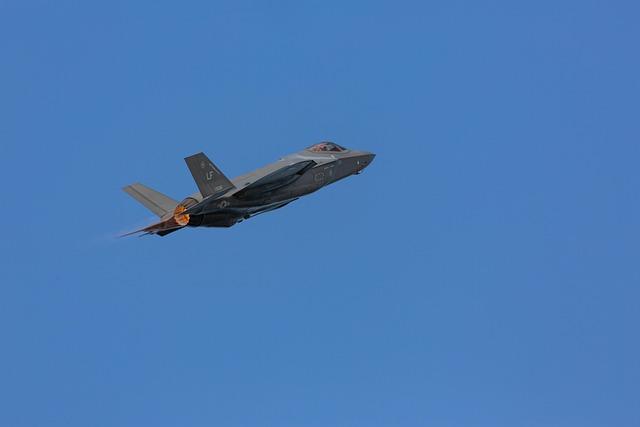
As Europe charts its course toward greater strategic autonomy, the ambitious Future Combat Air System (FCAS) promises to redefine the continent’s defense landscape. Yet, this visionary European project finds itself navigating the complex realities of established military powerhouses, notably the United States with its proven F-35 fighter jets. In this article, we explore the tension and interplay between Europe’s high-tech aspirations and the operational dominance of American defense technology, shedding light on the challenges and opportunities shaping the future of transatlantic military cooperation.
European FCAS Ambitions Collide with F-35 Operational Realities
The ambitious vision for Europe’s Future Combat Air System (FCAS) is facing significant challenges as it confronts the operational dominance of the US-made F-35 fighter jet. While FCAS aims to deliver next-generation stealth, autonomous capabilities, and seamless integration across European air forces, the realities of interoperating with existing F-35 fleets complicate this path. European nations equipped with the Lockheed Martin stealth fighter are forced to balance cutting-edge indigenous development with the proven battlefield effectiveness and global support network of the F-35.
Analysts highlight that key obstacles include:
- Integration issues: Ensuring seamless communication and data sharing between FCAS platforms and F-35s remains a technical and strategic hurdle.
- Political alignment: Diverging defense priorities among European countries complicate unified adoption of FCAS.
- Cost and timelines: The high development expenses and extended delivery schedules for FCAS contrast sharply with the operational availability of the F-35.
These factors underscore a critical tension in transatlantic defense collaboration, where European ambitions for strategic autonomy intersect with established US defense capabilities currently dominating allied skies.
Analyzing the Strategic Implications for European Defense Autonomy
Europe’s quest for strategic autonomy in defense is facing a critical crossroads as it balances ambitions with geopolitical realities. The ongoing development of the Future Combat Air System (FCAS) symbolizes a bold step toward an independent European defense industry, promising advanced capabilities tailored to the continent’s unique security needs. However, this vision collides with the immediate operational superiority and established presence of the US-led F-35 program, which many European allies continue to rely on for their air superiority. This duality creates a complex environment where sovereignty and interoperability must be carefully negotiated, raising questions about whether Europe can truly decouple from American defense dependencies without compromising its own security.
Several strategic factors weigh heavily on Europe’s defense landscape:
- Industrial competition vs. collaboration: Balancing the growth of a competitive European aerospace sector with the need to remain interoperable within NATO frameworks.
- Financial burdens: High development and procurement costs for FCAS contrast sharply with the already operational and battle-tested F-35 fleet.
- Political will and unity: Diverging national interests between member states complicate efforts to establish a cohesive defense policy.
- Technological sovereignty: Ensuring control over critical military technologies without overreliance on non-European suppliers.
These elements highlight the delicate balancing act Europe must perform to safeguard its long-term autonomy while navigating existing transatlantic defense ties.
Recommendations for Bridging Transatlantic Technology and Procurement Gaps
To effectively narrow the widening technology and procurement divide between Europe and the United States, stakeholders must prioritize enhanced collaboration frameworks. Establishing joint research and development ventures that pool resources and expertise can accelerate innovation while reducing redundant expenditures. Furthermore, harmonizing technical standards and certification processes will ease integration challenges, fostering smoother cooperation between the FCAS and F-35 programs. This alignment could be facilitated through regular transatlantic strategy summits and the creation of a dedicated oversight body to monitor progress and address emerging discrepancies promptly.
Additionally, transparency and mutual trust remain essential pillars for bridging these gaps. Both sides should commit to open data-sharing protocols and joint procurement planning to mitigate the risks of operational incompatibilities. By embedding flexibility into contractual agreements, European and American defense sectors can adapt more swiftly to technological breakthroughs and shifting geopolitical priorities. Encouraging cross-cultural exchanges among engineers, procurement officials, and policy-makers will further enhance understanding and cooperation, laying the groundwork for a truly unified defense ecosystem.
Final Thoughts
As Europe navigates the complex landscape between its ambitious FCAS program and the operational reality of the F-35, the continent’s defense future remains at a pivotal crossroads. Balancing the drive for strategic autonomy with the practical advantages of established American technology will shape not only European airpower but also transatlantic relations in the years to come. The unfolding interplay between these two paths underscores the broader challenges and opportunities facing Europe’s military and industrial landscape in an increasingly complex global environment.