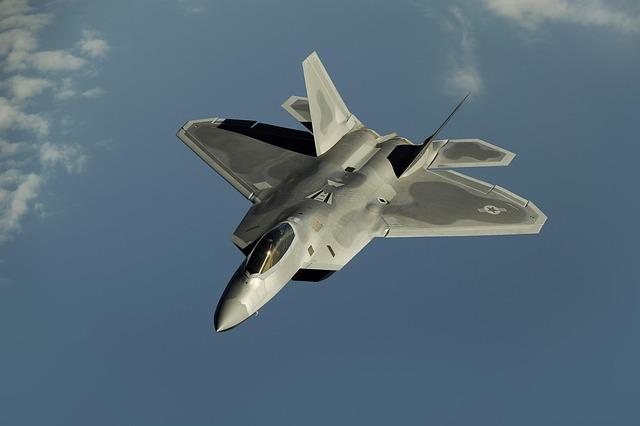
France has deployed fighter jets over the United Arab Emirates as part of enhanced security measures to protect its military bases in the region, officials confirmed Tuesday. The move underscores Paris’s commitment to safeguarding its strategic assets amid rising regional tensions. According to France 24, the deployment aims to bolster the defense posture of French forces stationed in the Gulf, ensuring rapid response capabilities against potential threats.
France Enhances Military Presence in UAE with Strategic Fighter Jet Deployment
France has bolstered its defensive capabilities in the United Arab Emirates by deploying advanced fighter jets to the region, reinforcing its commitment to safeguarding key military installations. This strategic move comes amid rising regional tensions, ensuring rapid aerial response and enhanced surveillance over French military bases. The deployment includes state-of-the-art aircraft equipped with the latest avionics and weaponry, underscoring France’s dedication to maintaining stability and protecting its interests in the Middle East.
Key objectives of the deployment focus on:
- Deterrence: Dissuading potential threats through visible air power presence
- Surveillance: Enhancing airspace monitoring to detect and respond swiftly to any incursions
- Support: Providing rapid assistance to ground forces and allied operations in the region
This augmentation of France’s military posture highlights a proactive approach to regional security, enabling flexible response options while reassuring allied partners. The sustained presence of fighter jets signifies a long-term commitment to defense collaboration with the UAE amid evolving geopolitical dynamics.
Assessing the Regional Security Implications of France’s Air Power Expansion
The recent deployment of French fighter jets to the United Arab Emirates marks a significant shift in France’s strategic posture in the Gulf region. By enhancing its aerial capabilities abroad, France not only reinforces the defense of its military installations but also signals a commitment to maintaining stability amid rising geopolitical tensions. This move serves as a clear message to regional adversaries that French interests are safeguarded by cutting-edge air power, potentially deterring hostile actions and contributing to a recalibration of military balances in the Middle East.
Experts highlight several key implications for regional security:
- Strengthened France-UAE defense cooperation: The deployment cements bilateral ties and encourages joint military exercises, fostering interoperability and rapid response capabilities.
- Enhanced deterrence against Iranian ambitions: France’s bolstered presence may complicate Tehran’s strategic calculations in the Gulf, impacting its influence in proxy conflicts.
- Potential catalyst for regional arms race: Neighboring states might accelerate their own military acquisitions, raising concerns over increased militarization.
- Support for international maritime security: With vigilant air patrols, France helps secure critical shipping lanes essential for global energy supplies.
Recommendations for Strengthening France’s Defense Coordination and Diplomatic Engagement
To enhance the security framework surrounding France’s military assets in the Gulf region, it is imperative to pursue a multi-layered approach that integrates both military coordination and strategic diplomacy. Establishing joint operational commands with regional allies could facilitate real-time intelligence sharing and rapid response capabilities, reducing potential vulnerabilities. Furthermore, France should prioritize the modernization of surveillance technologies deployed around its bases to ensure continuous situational awareness in an increasingly volatile environment.
On the diplomatic front, France must actively engage in dialogue with key Gulf Cooperation Council (GCC) members to cultivate stronger defense partnerships and build mutual trust. This involves regular high-level consultations, combined military exercises, and collaborative security initiatives aimed at stabilizing the broader Middle East theatre. In parallel, Paris should leverage its longstanding diplomatic channels to mediate regional tensions, positioning itself as a pivotal actor in sustaining peace and safeguarding critical military interests.
- Enhance intelligence sharing platforms with regional partners
- Expand joint military exercises to improve interoperability
- Invest in advanced surveillance systems for early threat detection
- Strengthen diplomatic ties through continuous high-level engagement
- Promote regional conflict resolution as part of defense strategy
To Conclude
As tensions in the Gulf region persist, France’s decision to deploy fighter jets over the United Arab Emirates underscores its commitment to safeguarding its strategic military assets abroad. This move signals Paris’s continued engagement in regional security dynamics and highlights the evolving geopolitical challenges facing both France and its Gulf partners. Observers will be watching closely to see how this deployment influences stability in the area and shapes future defense collaborations.