
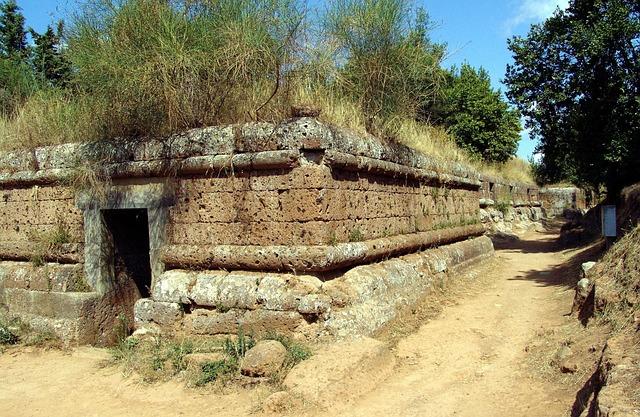
Archaeologists in Italy have uncovered a remarkable necropolis that is shedding new light on ancient burial practices. Among the discoveries are graves of children adorned with warrior belts, a find that challenges long-held assumptions about social roles and status in early societies. This unprecedented revelation offers fresh insights into the cultural and symbolic significance of weaponry in funerary rites, suggesting that youth may have held greater prominence in martial traditions than previously understood. The excavation, hailed as a breakthrough in the study of ancient civilizations, continues to captivate researchers and historians worldwide.
Necropolis Discovery Sheds Light on Childhood and Status in Ancient Italy
Archaeologists recently unearthed a remarkable burial site in central Italy that challenges previous assumptions about childhood and social hierarchy in ancient societies. Among the graves, several children were found interred with items traditionally reserved for adult warriors, including intricately designed belts adorned with bronze fittings and symbolic motifs. This find suggests that children in this community may have held a unique social status, potentially linked to family lineage or early initiation into warrior classes.
Key artifacts recovered from the necropolis reveal:
- Warrior belts believed to signify rank or bravery;
- Personal ornaments such as beads and amulets, indicating personal identity or protection;
- Burial placement within the necropolis, shedding light on familial and societal structures.
These discoveries not only broaden our understanding of childhood roles in ancient Italy but also open new discussions on the interplay between age, status, and ritual in early European cultures.
Archaeological Insights into Warrior Belts and Their Symbolism in Youth Burials
Recent excavations in the Italian necropolis have uncovered an extraordinary phenomenon: young individuals interred with intricately crafted warrior belts. These artifacts, often adorned with ornate metalwork and symbolic motifs, suggest a complex social symbolism tied to youth and status within ancient communities. Archaeologists believe these belts were not merely decorative but served as signifiers of valor and protection, possibly conferring a revered warrior identity upon children even in death.
Detailed analysis reveals patterns that challenge previous assumptions about ancient rites of passage. Among the key findings are:
- Consistent placement of belts around the waist, hinting at ritualistic practices.
- Variations in belt design correlating with age and gender distinctions.
- Inscriptions and motifs indicating familial lineage or clan affiliations.
These insights enrich our understanding of how societies recognized youth roles and the symbolic weight of warrior attributes in burial customs, shedding light on the interplay between identity, honor, and afterlife beliefs in ancient Italy.
Preservation and Study Recommendations for Protecting Italy’s Newly Unearthed Necropolis
To safeguard this invaluable archaeological site, experts emphasize the urgent implementation of controlled excavation techniques paired with advanced non-invasive surveying methods. These approaches can meticulously document the layout and context of the burials without causing unnecessary disturbance. Additionally, the necropolis should be subjected to rigorous environmental monitoring to prevent deterioration from moisture, temperature fluctuations, and human interference. Local authorities are encouraged to collaborate with international conservation bodies to ensure that preservation protocols align with global best practices.
Key recommendations include:
- Establishing a protective perimeter around the site to limit access and potential vandalism.
- Digitizing artifacts and site data for enhanced accessibility and long-term study.
- Engaging multidisciplinary teams, including archaeologists, anthropologists, and conservation scientists, to analyze the warrior belts and burial customs.
- Developing educational programs to raise public awareness about the cultural significance of the necropolis.
By combining careful excavation with community engagement and scientific research, the preservation efforts can not only protect the necropolis but also enrich our understanding of ancient Italic societies. The discovery of children buried with warrior belts challenges existing historical narratives and underscores the complexity of social structures in this region during antiquity.
Closing Remarks
The discovery of children buried with warrior belts at the ancient necropolis in Italy offers a fascinating glimpse into the social structures and cultural beliefs of past civilizations. As archaeologists continue to unearth and study these graves, each find adds valuable insight into how status, identity, and rites of passage were expressed in antiquity. This remarkable evidence challenges traditional assumptions about childhood and warrior roles in ancient societies, opening new avenues for research into their complex histories. The ongoing excavation promises to deepen our understanding of Italy’s rich archaeological heritage and the stories etched beneath its soil.