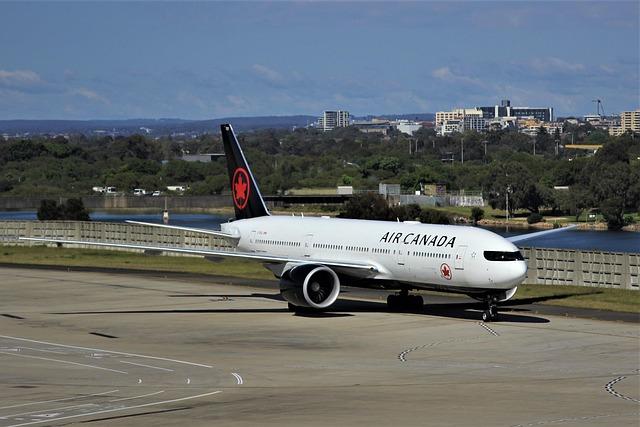
Two people have died following a collision between an Air Canada jet and a fire truck at a New York airport, authorities confirmed. The incident occurred amid chaotic scenes as emergency responders rushed to the scene. In a dramatic turn, the pilot reportedly admitted fault, stating, “I messed up.” The investigation is underway to determine the exact circumstances that led to the tragic accident, raising serious concerns about airport ground safety protocols.
Collision at New York Airport Highlights Critical Lapses in Ground Safety Protocols
The tragic incident at the bustling New York airport has cast a harsh spotlight on significant shortcomings in ground safety operations. An Air Canada aircraft collided with a stationary fire truck on the runway, resulting in two fatalities and multiple injuries. Preliminary investigations reveal potential communication failures between airport ground control and emergency response teams, raising urgent questions about existing safety protocols and their enforcement. Witnesses described chaotic scenes as first responders struggled to manage the aftermath amid operational disruptions.
Experts emphasize that this catastrophe underscores the need for immediate reforms, including:
- Enhanced coordination between air traffic control and ground emergency units to prevent similar occurrences.
- Updated training programs focused on situational awareness and emergency response in high-traffic airport zones.
- Implementation of advanced technological safeguards such as collision-avoidance systems tailored for ground operations.
As investigations continue, airport authorities promise a comprehensive review to fortify ground safety measures, aiming to avert future tragedies in one of the world’s busiest aviation hubs.
Investigation Reveals Communication Breakdowns Between Air Traffic and Emergency Services
An investigation into the tragic collision at the New York airport has uncovered critical communication failures between air traffic controllers and emergency response teams. Preliminary reports indicate that vital information regarding the Air Canada jet’s taxiing path was not clearly relayed to the fire truck crew, resulting in the vehicle entering an active runway during aircraft movement. Sources familiar with the inquiry have highlighted a series of missteps, including unclear radio messages and procedural lapses that prevented timely coordination between the two parties.
Key factors identified include:
- Ambiguous use of terminology in radio communications leading to misinterpretation.
- Delays in conveying emergency vehicle clearance from ground control.
- Lapses in adherence to standard protocols designed to segregate aircraft and ground vehicles.
These breakdowns collectively contributed to the inability of both crews to anticipate each other’s actions, culminating in the fatal collision. As investigators continue to analyze communications logs and procedural workflows, aviation authorities are simultaneously reviewing guidelines to prevent such a devastating accident from reoccurring.
Recommendations Urge Enhanced Training and Real-Time Coordination to Prevent Future Tragedies
In the aftermath of the tragic collision at the New York airport, investigators and safety experts have called for a comprehensive overhaul of training protocols for both aviation and emergency response teams. Emphasizing the critical need for enhanced situational awareness, they recommend regular simulation exercises that reflect real-world scenarios to better prepare personnel for high-pressure situations. These drills should focus not only on technical skills but also on communication and decision-making under stress, aiming to minimize the risk of human error like that which contributed to this fatal incident.
Key recommendations include:
- Implementing integrated real-time communication systems between air traffic control, pilots, and emergency vehicles to ensure immediate coordination.
- Mandating recurrent training programs with joint participation from airport staff, fire crews, and flight crews to strengthen cross-team collaboration.
- Adopting advanced monitoring technologies that provide live updates on runway conditions and the positioning of all vehicles and aircraft.
In Summary
The investigation into the tragic collision between the Air Canada jet and the fire truck at the New York airport remains ongoing, with authorities working to determine the exact cause of the incident. As the aviation community and the public mourn the loss of two lives, officials have pledged to implement any necessary measures to prevent such accidents in the future. Further updates will be provided as more information becomes available.