
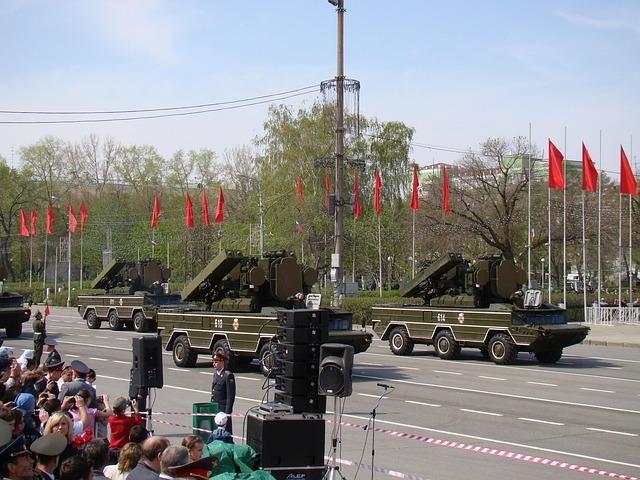
India has approved defense contracts totaling $25 billion, marking a significant boost to its military capabilities, with key procurements including the advanced Russian S-400 missile defense system and a fleet of cutting-edge drones. This major arms acquisition underscores New Delhi’s intent to modernize its defense posture amid evolving regional security challenges. The deals, announced by government officials and defense experts, are set to enhance India’s strategic deterrence and surveillance capacities, reflecting a broader push to strengthen domestic and international defense partnerships.
India Advances Strategic Defense Capabilities with Landmark S-400 Acquisition
India’s defense landscape is undergoing a significant transformation with the recent approval of major defense acquisitions valued at a staggering $25 billion. Central to this procurement wave is the induction of the Russian-made S-400 Triumf missile defense system, a move poised to enhance the country’s aerial defense architecture drastically. The S-400’s advanced radar and missile capabilities offer India a robust shield against potential threats, reinforcing its strategic deterrence in a region marked by evolving security challenges. Alongside the missile system, the deal encompasses a broad spectrum of cutting-edge defense technologies, underscoring India’s commitment to modernizing its military might.
Complementing the S-400 acquisition, the package includes high-end drone systems designed for surveillance, reconnaissance, and precision strike missions, significantly bolstering India’s tactical edge. Key highlights of the new defense deals include:
- State-of-the-art unmanned aerial vehicles (UAVs) for enhanced real-time intelligence gathering
- Integrated weapon platforms to support diversified operational requirements
- Advanced missile defense technology facilitating multi-layered airspace security
- Strategic collaboration fostering bilateral defense ties and technology transfer
This comprehensive defense upgrade not only addresses imminent threats but also signals India’s growing prowess in global defense circles, asserting its position as a formidable regional power.
Drones to Enhance Tactical Edge in Modern Warfare Scenarios
Recent advancements in unmanned aerial technology have dramatically shifted the dynamics of battlefield strategy, providing commanders with unprecedented situational awareness and precision strike capabilities. The integration of cutting-edge drones equipped with real-time surveillance systems allows for seamless intelligence gathering, target acquisition, and coordinated offensive operations. These platforms, varying from micro UAVs to high-altitude reconnaissance drones, offer versatility across diverse terrain and combat scenarios, enhancing both offensive and defensive maneuvers with minimal human risk.
Key tactical advantages include:
- Enhanced real-time data fusion and battlefield visibility
- Extended operational reach beyond traditional line-of-sight constraints
- Rapid deployment and adaptability in contested environments
- Cost-effective force multiplication with autonomous engagement options
With India’s significant investment in drone technology as part of its broader defense modernization, these aerial systems are poised to play a pivotal role in securing air superiority and providing strategic leverage in future conflicts. The synergy between manned and unmanned assets marks a decisive evolution, ensuring the Indian armed forces maintain a competitive edge amid increasingly complex warfare scenarios.
Experts Recommend Streamlined Integration for Optimized Operational Readiness
Leading defence analysts emphasize that the success of India’s landmark $25bn procurement hinges on the ability to seamlessly integrate diverse systems, particularly with the induction of the advanced S-400 air defence battery and cutting-edge drone technology. Experts warn that without a unified operational framework, these sophisticated platforms may operate in silos, undermining the potential for real-time situational awareness and rapid threat response. Streamlined data interoperability and enhanced communication protocols between legacy systems and new assets are cited as critical enablers to maximize combat readiness.
Key recommendations include:
- Centralized command and control architecture to consolidate inputs from multiple sensors and platforms
- Standardized software interfaces facilitating cross-compatibility and faster decision-making cycles
- Robust cyber-resilience frameworks to secure integrated networks against emerging threats
Defence experts agree that achieving these integration benchmarks will not only expedite deployment timelines but also significantly enhance India’s strategic deterrence and operational flexibility in dynamic theatres.
The Way Forward
As India finalizes these landmark defence agreements, including the acquisition of S-400 missile systems and cutting-edge drone technology, the nation’s strategic capabilities are set to receive a substantial boost. This $25 billion investment underscores India’s commitment to modernizing its armed forces and enhancing its geopolitical standing in a rapidly evolving security environment. Aerospace Global News will continue to monitor the developments and their implications for regional and global defence dynamics.