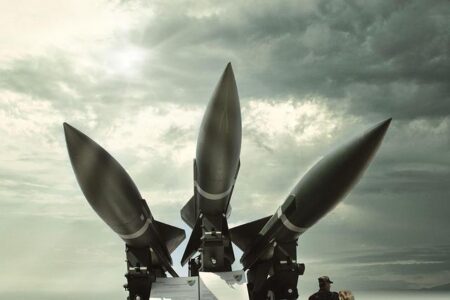

In March, Ukraine’s long-range missile strikes dealt a significant blow to Russia’s oil industry, resulting in billions of dollars in revenue losses, Ukrainian President Volodymyr Zelensky announced. The targeted attacks on key oil infrastructure have disrupted Russia’s energy exports amid the ongoing conflict, underscoring Ukraine’s strategic capabilities and resilience. The developments highlight the escalating economic pressures faced by Russia as Ukraine seeks to weaken its opponent’s financial support for the war.
Ukraine’s Long-Range Strikes Severely Disrupt Russian Oil Revenue Streams in March
In March, Ukraine executed a series of long-range missile strikes targeting critical infrastructure linked to Russia’s oil exports, significantly undermining the Kremlin’s capabilities to generate revenue. According to President Volodymyr Zelensky, these strategic attacks resulted in losses amounting to billions of dollars, further straining Russia’s war economy. The strikes predominantly focused on oil refineries, storage facilities, and key transportation hubs, effectively disrupting supply chains and export operations across several regions under Russian control.
Key impacts of these operations include:
- Severe damage to Russia’s refining capacities, reducing output by an estimated 30%
- Interruption of pipeline networks critical for oil transportation to international markets
- Substantial delays in shipment schedules, increasing export costs and logistical challenges
- Amplified pressure on Russia’s financial reserves due to decreased oil sales
This calculated disruption not only serves as a tactical blow against Russia’s energy sector but also underscores Ukraine’s growing ability to conduct precision strikes far beyond frontlines. Analysts suggest that sustained operations of this nature could erode Russia’s economic stamina over time, constraining its capacity to sustain prolonged military engagements.
Strategic Impact of Targeted Attacks on Russia’s Energy Infrastructure
In March, Ukraine’s precision strikes targeted Russia’s energy infrastructure with a calculated focus that disrupted key oil production and transportation hubs. These operations not only devastated physical assets but also created ripple effects across Russia’s financial ecosystem, severely undermining its ability to generate oil revenue. According to President Volodymyr Zelensky, the assaults led to billions in economic losses within a short timeframe, highlighting the strategic importance of energy as a vulnerability in Russia’s war machinery.
Key consequences of the sustained campaign include:
- Severe reductions in oil output due to damaged refineries and pipelines.
- Supply chain disruptions that hampered Russia’s export capabilities to international markets.
- Heightened financial pressure on Russian energy firms grappling with infrastructure repair costs and lost sales.
These impacts collectively undermine Russia’s operational funding, potentially influencing the broader geopolitical landscape by restricting the Kremlin’s access to crucial war finances.
Recommendations for Enhancing Ukraine’s Offensive Capabilities to Sustain Economic Pressure
To maintain the momentum of long-range strikes, Ukraine must prioritize the expansion of its missile and drone arsenal, ensuring a steady supply of advanced precision-guided munitions. Investment in domestic production capabilities alongside international procurement will reduce dependence on foreign aid and enhance operational autonomy. Furthermore, strengthening intelligence, surveillance, and reconnaissance (ISR) networks-leveraging satellite imagery and signals intelligence-will enable more accurate targeting of critical Russian infrastructure, maximizing economic disruption with minimal collateral damage.
Key strategic initiatives should include:
- Enhancement of integrated air defense suppression tactics to ensure strike package survivability.
- Collaboration with Western allies for real-time intelligence sharing and advanced targeting technology.
- Development of rapid-response strike teams capable of hitting multi-dimensional targets.
- Augmentation of cyber warfare operations to complement kinetic attacks by disrupting Russian command and control systems.
To Wrap It Up
As the conflict in Ukraine continues to evolve, the recent long-range strikes targeting Russian oil infrastructure mark a significant strategic development with substantial economic repercussions. According to President Zelensky, the disruption of Russian oil revenue in March underscores Ukraine’s growing capabilities to impact the adversary beyond the battlefield. Analysts will be closely monitoring how these operations influence both the course of the war and the broader geopolitical landscape in the coming months.