
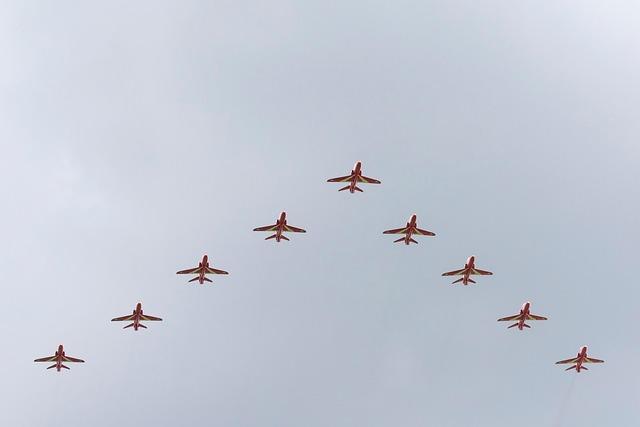
Royal Air Force fighter jets were scrambled in response to a perceived threat from Russian drones near the NATO border, officials confirmed today. The rapid deployment highlights escalating tensions in the region as Western allies remain on high alert over increased unmanned aerial activity. This development marks a significant moment in the ongoing efforts to safeguard NATO airspace amid growing concerns over Russian military maneuvers.
RAF Fighter Jets Deployed Amid Increased Russian Drone Activity Near NATO Borders
In response to a significant escalation in Russian drone incursions near NATO airspace, Royal Air Force (RAF) fighter jets were swiftly scrambled to intercept and monitor the unauthorized aerial vehicles. This rapid deployment reflects growing concerns within NATO command about the increasing boldness of Russian reconnaissance operations that challenge alliance air sovereignty. The jets were tasked with conducting immediate reconnaissance, electronic surveillance, and providing real-time intelligence to allied forces, emphasizing the critical role of air defense readiness amid heightened geopolitical tensions.
Key details of the operation include:
- Multiple sorties launched over sensitive border regions to deter and disrupt drone flights
- Close coordination with NATO radar and intelligence networks to track drone movements effectively
- Heightened vigilance maintained around potential hotspots prone to unauthorized air activity
- Implementation of advanced counter-drone tactics designed to neutralize surveillance threats
Analyzing the Strategic Implications of Russian Unmanned Aerial Threats
Recent incidents involving Russian unmanned aerial vehicles (UAVs) near NATO borders have underscored the evolving nature of aerial threats and forced member states to reconsider their air defense strategies. The rapid deployment of RAF fighter jets in response to these incursions highlights the increased urgency with which Western military forces are addressing drone-based provocations. Unlike traditional manned aircraft, these drones operate with a high degree of stealth and autonomy, challenging existing surveillance and interception frameworks.
Key strategic implications emerging from this trend include:
- Enhancement of airspace monitoring systems: Upgrading radar and signal detection to promptly identify low-signature UAVs.
- Development of counter-drone technologies: Implementing electronic warfare, directed energy weapons, and advanced interceptor missiles specifically designed for unmanned threats.
- Revised rules of engagement: Adapting protocols for rapid response that balance deterrence with de-escalation in contested airspace.
These layers of response form a complex tapestry of deterrence, signaling a strategic shift in how aerial sovereignty is defended in the face of miniaturized yet increasingly sophisticated Russian drone operations.
Enhancing NATO Air Defense Systems to Counter Emerging Drone Incursions
In a decisive response to recent aerial threats, NATO has accelerated advancements in its air defense technology to effectively counter the rising presence of sophisticated drone incursions near alliance borders. Emerging drone technologies, often compact and capable of evading traditional radar detection, have posed significant challenges to existing defense protocols. To mitigate this risk, NATO forces are integrating advanced sensor arrays, artificial intelligence-driven tracking systems, and enhanced electronic warfare capabilities designed to detect, classify, and neutralize unmanned aerial vehicles before they breach sensitive airspace.
Key upgrades include:
- Multi-layered radar systems optimized for low-altitude and small-object detection
- Autonomous interception units capable of rapid deployment against unpredictable drone patterns
- Improved communication networks ensuring seamless coordination between ground forces and interceptor aircraft
These enhancements aim to bolster the swift deployment of fighter jets and ground-based countermeasures, as witnessed in the recent scramble of RAF fighter jets reacting to drone incursions near eastern NATO borders. With drone threats evolving in both scale and sophistication, NATO’s proactive measures underscore a commitment to maintaining airspace integrity amid increasingly complex security dynamics.
Final Thoughts
As tensions continue to rise along NATO’s eastern frontier, the recent scramble of RAF fighter jets in response to Russian drone activity underscores the persistent security challenges faced by alliance forces. With both sides maintaining a high level of alert, the situation remains fluid, prompting calls for continued vigilance and diplomatic efforts to prevent further escalation in the region. The coming weeks will be closely watched by international observers, as the delicate balance of power along the border hangs in the balance.