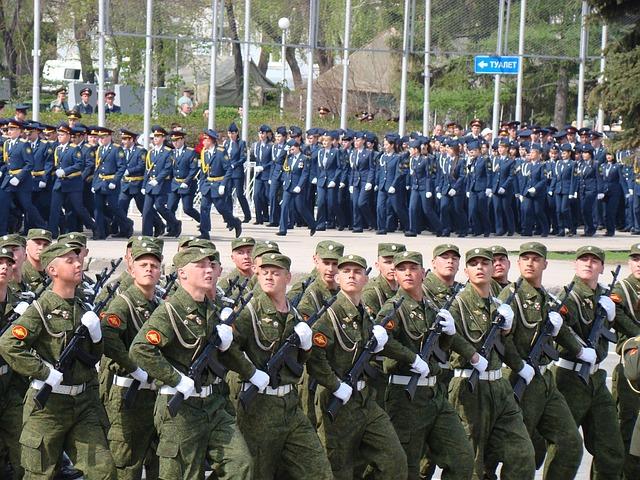
Moscow’s latest Victory Day parade, traditionally a showcase of national pride and military strength, has exposed underlying tensions within Russia’s political landscape, according to an analysis by the Council on Foreign Relations. While the event projected an image of unity and resilience under President Vladimir Putin, subtle signs of dissent and economic strain have emerged, suggesting cracks beneath the surface of the Kremlin’s carefully curated display. This article examines how the parade’s spectacle contrasts with growing challenges facing Putin’s Russia amid international sanctions and domestic pressures.
Moscow’s Victory Day Parade Exposes Military and Political Vulnerabilities
The recent military procession in Moscow, intended as a demonstration of Russia’s enduring strength, instead laid bare significant operational weaknesses within its armed forces. Analysts noted the conspicuous absence of several flagship weapon systems, coupled with technical glitches during live demonstrations, signaling deeper issues in procurement and maintenance. The limited showcase of modernized equipment contrasted sharply with previous parades, raising questions about Moscow’s current military readiness amid ongoing geopolitical tensions. Furthermore, the parade’s logistical execution suggested a possible strain on resources, reflecting broader challenges facing Russia’s defense sector amid international sanctions and economic pressures.
Politically, the event underscored a widening divide between Kremlin messaging and public sentiment. Several observers highlighted the uncharacteristic restraint in official speeches, which omitted traditional grandstanding rhetoric in favor of vague references to national unity and resilience. This shift indicates a possible attempt to manage domestic dissatisfaction and international criticism. Elements contributing to this vulnerability include:
- Visible low turnout among political elites, signaling internal discord.
- Heightened security measures that betrayed concern over potential protests.
- Media censorship intensifying around parade coverage, reflecting nervousness about public perception.
Together, these factors paint a picture of a leadership grappling with increasing instability amid efforts to project strength on one of Russia’s most significant national holidays.
Public Sentiment Appears Divided Amidst Festivities and Propaganda Efforts
Amid the grand displays of military hardware and choreographed patriotic fervor, public reactions remain sharply polarized. While official narratives emphasize unity and national pride, a growing portion of the population privately expresses skepticism and unease, revealing a fault line in the collective mood. Social media platforms and whispered conversations paint a more nuanced picture, with younger generations particularly questioning the cost of ongoing conflicts and the legitimacy of the government’s messages.
Key indicators of this division include:
- Visible apathy among urban youth during the parades contrasted with enthusiastic participation by older demographics.
- Subtle but persistent protests and symbolic acts of dissent reported in several regional centers.
- Conflicting commentary across state and independent media outlets, reflecting underlying tensions rather than cohesive propaganda success.
Recommendations for Western Policy to Address Russia’s Internal Instability
The West must adopt a calibrated approach that balances pressure with engagement to exploit the vulnerabilities exposed in Russia’s current power structure. Targeted sanctions aimed specifically at key military suppliers and elite economic interests can exacerbate internal fractures without severely harming the broader Russian populace, thereby minimizing propaganda ammunition for Moscow. Simultaneously, investment in independent media and civil society initiatives inside Russia can empower dissenting voices, amplifying internal critiques of authoritarian governance and the mismanagement revealed by recent military setbacks.
Moreover, building robust alliances with Russia’s neighbors and increasing diplomatic support for Eastern European states’ resilience programs is essential. This includes enhancing cybersecurity cooperation and intelligence sharing to contain Kremlin-backed disinformation campaigns. Supporting grassroots movements that advocate for political reform and human rights while maintaining open channels for dialogue with technocratic elements within the Russian government could foster incremental change. Western policy must therefore avoid all-or-nothing strategies, instead favoring nuanced, multilayered tactics that encourage long-term transformation from within.
- Implement selective sanctions aimed at the ruling elite and defense sectors
- Increase funding for independent Russian media and civil society organizations
- Strengthen alliances with neighboring countries and bolster regional security cooperation
- Enhance cybersecurity measures to counteract Kremlin disinformation and cyberattacks
- Maintain diplomatic channels with moderate factions within Russia’s bureaucratic apparatus
Final Thoughts
As Moscow’s latest Victory Day parade unfolds, the carefully choreographed display of military might and patriotic fervor simultaneously exposes underlying tensions within Putin’s Russia. Beyond the spectacle, cracks in political unity and economic resilience are becoming increasingly apparent, signaling challenges that Kremlin strategists can no longer afford to overlook. Observers at home and abroad will be watching closely to see whether these fissures deepen or if the Kremlin can reassert its control in the months ahead.