
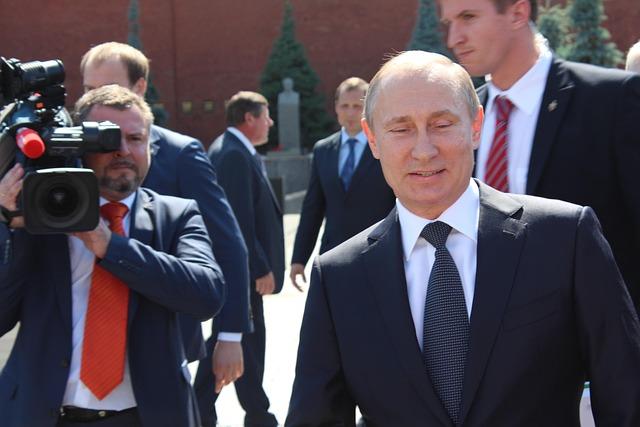
Russian President Vladimir Putin arrived in Beijing this week to reinforce the strategic partnership between Russia and China amid ongoing global tensions. The visit comes as Chinese President Xi Jinping simultaneously signals a desire to stabilize relations with the United States, highlighting the complex geopolitical balancing act facing both nations. As the two leaders meet, analysts are closely watching the implications for international diplomacy and the shifting landscape of great-power competition.
Putin’s Visit to China Signals Strengthened Bilateral Cooperation Amid Global Tensions
During a high-profile summit in Beijing, Russian President Vladimir Putin and Chinese President Xi Jinping underscored their commitment to deepening strategic ties amid an increasingly complex global landscape. The visit comes at a time when both nations face mounting external pressures and shifting alliances, emphasizing a shared interest in promoting a multipolar world order. Key discussions centered on expanding cooperation in areas such as energy, technology, and military collaboration, signaling an intent to solidify a partnership that can effectively counterbalance Western influence.
Highlights from the bilateral talks included:
- Agreements to enhance cross-border trade and investment, boosting economic resilience.
- Joint efforts to advance infrastructure projects under the Belt and Road Initiative, aiming for increased connectivity.
- Coordination on regional security issues, with a focus on maintaining stability in Eurasia.
- Commitments to foster cultural exchanges and mutual understanding to reinforce diplomatic goodwill.
Meanwhile, President Xi reaffirmed China’s intention to sustain a stable relationship with the United States, navigating a delicate balance between cooperation and competition. This diplomatic maneuvering highlights Beijing’s strategic calculus of engaging with multiple global powers simultaneously while fortifying its alliance with Moscow. The visit is therefore not only a testament to Russia-China solidarity but also a reflection of the broader geopolitical efforts shaping 21st-century international relations.
Xi Jinping Emphasizes Need for Stable U S Relations While Welcoming Russian Leader
During a high-profile meeting in Beijing, President Xi Jinping and Russian President Vladimir Putin underscored the enduring strength of Sino-Russian relations amid a rapidly changing global landscape. Xi highlighted the importance of fostering cooperation and mutual support between the two nations, emphasizing shared goals in promoting international stability and economic development. Both leaders committed to deepening strategic ties through expanded trade, energy partnerships, and collaborative diplomatic efforts, signaling a united front in addressing global challenges.
In a notable shift, Xi also stressed the necessity for maintaining stable relations with the United States. Recognizing the complexity of U.S.-China interactions, he called for open communication channels and constructive engagement to avoid misunderstandings and potential conflicts. Key points from Xi’s remarks included:
- Promoting dialogue to resolve differences peacefully
- Encouraging economic cooperation despite geopolitical tensions
- Maintaining global supply chain stability
This dual approach reflects Beijing’s strategic balancing act as it reinforces its alliance with Moscow while cautiously navigating its often fraught relationship with Washington.
Experts Recommend Strategic Dialogue to Balance Power Dynamics in Asia-Pacific Region
In the backdrop of escalating geopolitical tensions, leading analysts emphasize the necessity of sustained, strategic conversations among key stakeholders in the Asia-Pacific. This approach is seen as essential to mitigating risks associated with power imbalances that could provoke instability or conflict. Experts argue that such dialogue should not only include traditional powers like the United States, China, and Russia but also emerging regional players, fostering a comprehensive framework for cooperation and conflict resolution.
Key recommendations from specialists include:
- Establishing regular multilateral forums to encourage transparency and trust.
- Promoting economic interdependence as a stabilizing factor in diplomatic relations.
- Enhancing communication channels to swiftly address misunderstandings or escalations.
- Supporting joint initiatives on security, climate change, and technology sharing.
Such measures aim to create a balanced environment where power dynamics do not overshadow the region’s collective progress. By prioritizing dialogue, experts believe that Asia-Pacific nations can better navigate their complex relationships, ensuring peace and stability for decades to come.
Concluding Remarks
As Putin’s visit to China concludes, both Moscow and Beijing signal a continued commitment to strengthening their strategic partnership amid shifting global dynamics. Meanwhile, President Xi’s emphasis on maintaining stable relations with the United States highlights Beijing’s delicate balancing act on the international stage. The evolving interactions between these major powers will remain a key focus for global observers in the months ahead.