
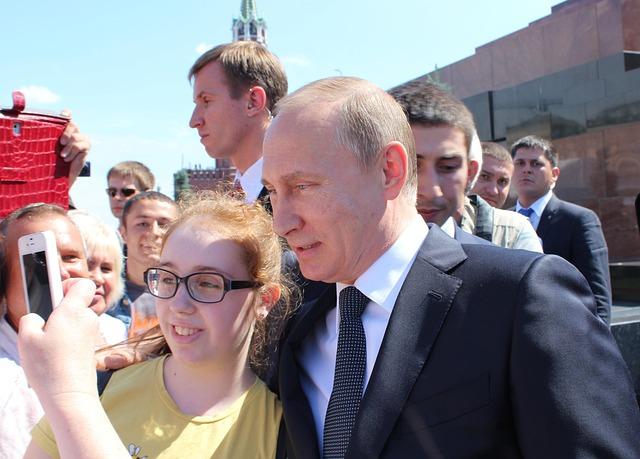
In a strategic move that intertwines technology and political power, Russian President Vladimir Putin has transformed the nation’s burgeoning artificial intelligence sector into a closely held Kremlin family enterprise. According to a recent Bloomberg report, key AI initiatives and contracts are increasingly concentrated among firms tied to the president’s inner circle, raising questions about the future direction of Russia’s digital ambitions and the consolidation of influence within the country’s ruling elite. This development signals a new chapter in Moscow’s approach to AI, where technological advancement is tightly linked to political control.
Putins Strategic Consolidation of Russia’s AI Sector Under Kremlin Control
Over the past year, the Kremlin has orchestrated a sweeping reorganization of Russia’s artificial intelligence landscape, placing the sector firmly under the aegis of state-controlled entities linked to President Vladimir Putin’s inner circle. By channeling investments and regulatory authority through pro-government corporations, Moscow is effectively transforming what was once a fragmented ecosystem of startups and academic institutions into a centralized apparatus designed to serve national strategic priorities. This approach not only tightens governmental oversight but also ensures that AI developments align closely with Russia’s geopolitical ambitions and internal security concerns.
Key moves include the consolidation of research facilities, recruitment of top AI talent under state contracts, and the establishment of exclusive partnerships with favored technology firms. Experts highlight several critical elements of this strategy:
- State-backed funding streams prioritized for Kremlin-aligned projects.
- Centralized data repositories under government control, facilitating enhanced surveillance capabilities.
- Regulatory frameworks that limit foreign investment and influence in the AI sector.
- Exclusive licenses granted to companies owned or operated by Putin’s trusted allies.
Collectively, these initiatives signal a deliberate effort to mold Russia’s AI trajectory into an extension of Kremlin power rather than a competitive, innovation-driven marketplace.
The Role of Putin’s Inner Circle in Shaping Russia’s Artificial Intelligence Landscape
Behind Russia’s ambitious push into artificial intelligence lies a tightly knit network of Putin’s closest confidants, whose influence extends far beyond politics into tech innovation and strategic development. These key figures, often drawn from the president’s trusted circle, are steering the direction of AI research, funding, and governance in a way that closely aligns with Kremlin priorities. By centralizing control within this inner circle, Russia aims to maintain strict oversight over AI applications, especially those with military and surveillance capabilities. This consolidation effectively transforms the development of AI into an extension of the state apparatus, ensuring that advancements serve both national security interests and geopolitical strategies.
Several dynamics characterize this exclusive collaboration:
- Strategic Appointments: Top tech firms and research institutions have been staffed with individuals linked to Kremlin insiders, reinforcing loyalty and control.
- State-Backed Funding: Large-scale government investments are funneled through entities controlled by regime loyalists, prioritizing projects with dual-use potential.
- Regulatory Influence: Policy frameworks governing AI development are shaped to safeguard state secrets and suppress dissenting technological directions that diverge from Kremlin objectives.
As a result, the AI ecosystem in Russia is less a free market of ideas and more a strategic enterprise helmed by a select few, underscoring a broader trend of political patronage woven into the fabric of technological progress.
Policy Recommendations for Ensuring Transparency and Accountability in Russia’s AI Development
To dismantle the opaque frameworks currently enveloping Russia’s AI industry, a robust set of measures must be enacted emphasizing openness and civic oversight. Foremost, establishing a transparent regulatory body independent from Kremlin influence can function as a watchdog, publicly disclosing AI development projects, their funding sources, and potential security implications. This entity should mandate periodic audits and offer an accessible platform for whistleblowers, ensuring that ethical boundaries are maintained even amid nationalistic ambitions. Additionally, fostering collaboration with international AI governance organizations will embed a layer of accountability that counters monopolistic control within the Russian AI sphere.
Complementing regulatory reforms, there must be a concerted push towards democratizing AI research by promoting public-private partnerships that broaden participation beyond the Kremlin’s inner circle. Encouraging open-source initiatives and academic involvement can serve to decentralize innovation, diminishing risks associated with single-point control over critical technologies. Moreover, implementing clear legal frameworks that define liability for AI failures and misuse will compel developers and state actors alike to adhere to stringent standards, safeguarding both civil liberties and technological integrity.
The Way Forward
As Russia positions itself at the forefront of artificial intelligence development, Vladimir Putin’s decision to consolidate control within a close circle of Kremlin insiders reveals the increasingly centralized nature of the country’s technological ambitions. This approach underscores the intersection of politics and innovation in Moscow’s AI strategy, raising questions about transparency, accountability, and the broader implications for global AI competition. As Russia’s AI future unfolds under this tightly held regime, observers will be watching closely to see how this blend of state power and emerging technology shapes both domestic policy and international dynamics.