
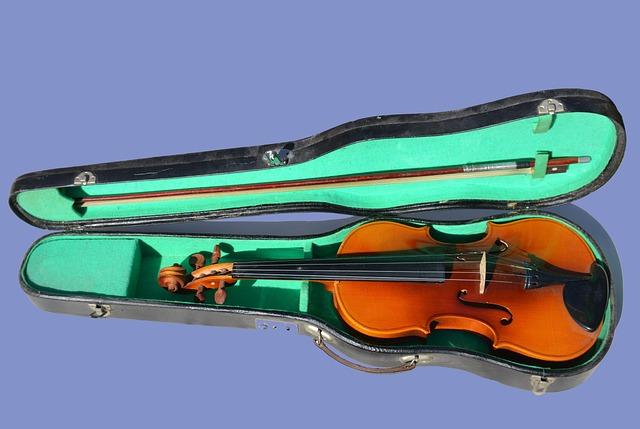
For centuries, the Stradivarius violin has captivated musicians and collectors alike with its unparalleled sound quality and craftsmanship. Now, new scientific research published in National Geographic reveals a surprising secret behind the legendary instrument’s exceptional tone: the wood used to build Stradivarius violins came from a single forest in Italy. By combining advanced analytical techniques with historical investigation, scientists have traced the origins of these iconic violins to a specific region, shedding light on the natural factors that contribute to their enduring mystique.
The Unique Wood Characteristics Behind Stradivarius Sound
At the heart of the Stradivarius’ captivating tone lies an extraordinary secret embedded in the wood itself. Researchers pinpointed the source to a singular forest in Italy, whose ancient spruce trees possess a rare combination of cellular density and elasticity. This unique blend alters the way sound waves travel through the wood, producing the violin’s legendary resonance and clarity. The slow growth during the Little Ice Age likely contributed to these wood properties, creating tighter grain patterns that enhanced acoustic performance. Such factors remain nearly impossible to replicate, making the Stradivarius not just an instrument, but a natural marvel.
Scientists uncovered several defining features that set this wood apart:
- High resin content: Providing durability while influencing tonal warmth.
- Uniform cell structure: Allowing harmonious vibration transmission.
- Optimal stiffness-to-weight ratio: Ensuring responsiveness and sustain.
Combined, these characteristics weave the signature Stradivarius sound-one that continues to mystify musicians, makers, and researchers centuries after Antonio Stradivari crafted his masterpieces.
Tracing the Italian Forest That Supplied Stradivari’s Materials
Recent scientific research has pinpointed the origin of the exquisite wood used by Antonio Stradivari to craft his legendary violins. By analyzing the tree rings and isotopic composition found in the instrument’s wood, researchers identified a specific forest in the Italian Alps as the crucial source. This discovery sheds light on the *unique environmental conditions* that contributed to the wood’s exceptional density and resonance-qualities that have baffled luthiers and musicians for centuries. The alpine forest’s slow-growing spruce trees, nurtured by a combination of high elevation, cold winters, and stable humidity levels, provided the ideal raw material essential to Stradivari’s unparalleled craftsmanship.
Key factors that set this forest apart include:
- Climatic stability: Consistently cool temperatures with minimal fluctuations, fostering dense, uniform growth rings.
- Soil composition: Rich in minerals, contributing to the wood’s strength and acoustic properties.
- Geographical isolation: Limited human interference preserving the quality and age of the timber.
Understanding this natural synergy offers invaluable insight into why Stradivarius violins continue to captivate audiences worldwide, linking their sonic magic directly to the enigmatic forest that supplied their essential materials.
How Modern Makers Can Apply Historical Insights to Craftsmanship
Drawing from the meticulous craft of Stradivari violins, modern artisans can revive the forgotten art of material selection by tracing origins just as precisely. The revelation that a specific Italian forest’s wood contributed to the instrument’s unparalleled sound offers a powerful lesson: nature and nurture converge in the making of masterpieces. Contemporary makers might consider prioritizing sustainable sourcing from unique ecosystems, pairing traditional techniques with scientific analysis to achieve both authenticity and innovation. This blend of old-world patience and modern expertise could set new standards in durability, resonance, and aesthetic quality.
Beyond material choice, historical insights underscore the importance of collaboration among disciplines. Stradivari’s mastery was not solely a product of woodworking but also involved acoustic knowledge and environmental factors. Today’s craftsmen would benefit by embracing:
- Interdisciplinary research: integrating advances in materials science, acoustics, and forestry.
- Emphasis on provenance: documenting the origin and history of all components.
- Experimentation rooted in tradition: testing new methods without abandoning time-honored practices.
These strategies cultivate a deeper respect for the source materials and the craft itself, echoing the timeless legacy of Stradivari through a modern lens.
Key Takeaways
As researchers continue to unravel the mysteries behind the unparalleled sound of Stradivarius violins, this latest discovery highlights the vital role of the specific wood from a singular forest in Italy. By combining historical craftsmanship with unique natural materials, these instruments embody a legacy that transcends time. While the science brings us closer to understanding their exceptional quality, the magic of a Stradivarius remains a testament to both nature and human artistry-ensuring its legendary status endures for generations to come.