
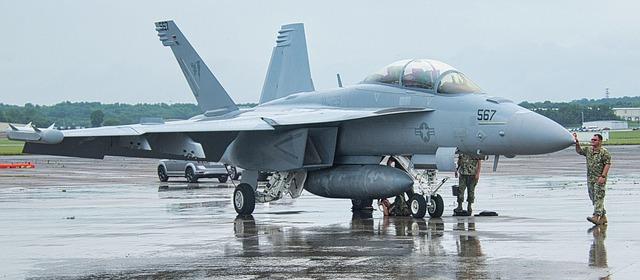
Germany’s ambitious fighter jet program faced significant setbacks in recent years, casting doubt on the country’s future air defense capabilities. However, what initially appeared as a costly failure has now been transformed into a strategic opportunity, reshaping Germany’s defense landscape. In this article, we explore how Berlin navigated technical challenges, political pressures, and shifting alliances to turn its fighter jet woes into a catalyst for innovation and collaboration-offering new insights into the complex dynamics of European defense policy.
Germany’s Strategic Pivot from Fighter Jet Setback to Defense Innovation
Faced with the abrupt cancellation of their advanced fighter jet program, Germany has swiftly recalibrated its defense strategy, channeling resources into cutting-edge innovation rather than lamenting the loss. The government’s renewed focus is pivoting towards enhancing technological capabilities across multiple domains, including unmanned systems, cyber defense, and next-generation communication networks. This shift not only addresses immediate defense needs but also positions Germany as a forward-thinking leader within the European security landscape.
Key initiatives now receiving increased investment include:
- Development of autonomous drone fleets designed to complement traditional airpower with precision and adaptability.
- Advanced cyber resilience programs aimed at safeguarding critical infrastructure from escalating digital threats.
- Collaborative European research ventures that leverage combined expertise to accelerate innovation and reduce dependency on external suppliers.
Through these concerted efforts, Germany is transforming a highly publicized setback into an opportunity to redefine its defense paradigm, ensuring greater agility and strategic autonomy in an increasingly complex security environment.
Lessons Learned from Procurement Challenges Reshape Military Modernization
Germany’s experience with its fighter jet procurement has underscored the critical need for agility and transparency in military modernization efforts. The delays and technical setbacks, initially seen as failures, prompted a thorough reassessment of project management and collaboration strategies within the defense sector. Emphasizing a culture of adaptability, German authorities have since prioritized early risk identification and fostered tighter integration between various stakeholders, including industry partners and government agencies. This shift has not only mitigated further disruptions but also positioned Germany as a model for recalibrating defense procurement in a rapidly evolving geopolitical landscape.
Key takeaways from this scenario highlight that successful modernization demands more than state-of-the-art technology. Effective communication channels, robust contingency planning, and a willingness to reevaluate priorities are just as vital. Stakeholders have acknowledged that:
- Flexibility in contractual frameworks allows for quicker responses to unforeseen challenges.
- Enhanced transparency reduces mistrust and streamlines decision-making processes.
- Continuous learning loops improve forecasting and future program resilience.
These lessons are now influencing broader European defense initiatives, driving collaborative efforts to reduce bureaucratic inertia and accelerate innovation across joint military projects.
Recommendations for Leveraging Failure to Foster Technological Advancement
Embracing failure as a critical component of innovation can transform setbacks into powerful catalysts for progress. Germany’s approach to overcoming the fighter jet program’s shortcomings underscores the importance of cultivating an environment where experimentation and risk-taking are encouraged rather than penalized. Key strategies include fostering cross-sector collaboration and maintaining transparency throughout the development process. By openly addressing missteps, stakeholders can swiftly identify weaknesses and channel resources more effectively toward viable solutions.
In practice, this requires institutionalizing mechanisms that codify lessons learned and promote continuous improvement. Among the best practices observed:
- Implementing rigorous post-mortem analyses to pinpoint technological and managerial gaps.
- Investing in modular design philosophies that allow iterative enhancements without disrupting the entire system.
- Encouraging a culture of resilience and adaptability among engineers and decision-makers alike.
- Leveraging public-private partnerships to integrate diverse expertise and accelerate innovation.
By institutionalizing these recommendations, nations can not only mitigate the impact of costly failures but also harvest invaluable insights, ultimately driving advanced technological breakthroughs that redefine aerospace capabilities.
Concluding Remarks
Germany’s ability to transform setbacks in its fighter jet program into strategic opportunities underscores a broader commitment to innovation and resilience in defense policy. As challenges persist in an increasingly complex security environment, this case illustrates how adaptive approaches and collaborative efforts can redefine national capabilities. The evolution of Germany’s aerospace ambitions serves as a compelling example of turning failure into a catalyst for progress, setting a precedent for future defense initiatives both at home and across Europe.