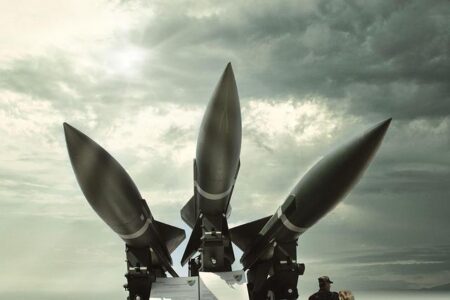

Taiwan has conducted a test-firing of a U.S.-supplied missile launcher aimed toward China, marking a significant development in the island’s ongoing efforts to bolster its defensive capabilities amid escalating regional tensions. The live-fire exercise, reported by the Wall Street Journal, underscores Taiwan’s commitment to deter potential aggression from Beijing as cross-strait relations remain fraught. This latest demonstration of military readiness comes amid continuing concerns over China’s growing military presence and assertiveness in the Taiwan Strait.
Taiwan Demonstrates Enhanced Defensive Capabilities with US Missile Launcher Test
Taiwan has successfully conducted a test-fire of a U.S.-supplied missile launcher, signaling a significant boost in its defensive arsenal amid rising tensions with China. The missile launcher, praised for its precision and rapid deployment capabilities, was deployed during a live-fire exercise aimed at demonstrating the island’s readiness to counter potential threats. Defense officials highlighted the test as a clear message of deterrence, emphasizing Taiwan’s commitment to safeguarding its sovereignty.
The newly tested system includes several key features that enhance Taiwan’s defense posture:
- Advanced Targeting Precision: The missile launcher integrates cutting-edge guidance systems, enabling high accuracy against various targets.
- Rapid Mobility: Designed for quick repositioning, the launcher enhances survivability on the battlefield.
- Interoperability with U.S. Defense Systems: Seamless coordination with existing U.S. military hardware strengthens joint operational effectiveness.
Experts note that this development is part of broader strategic efforts to modernize Taiwan’s military and reinforce its defenses in response to Beijing’s assertive military activities in the region.
Strategic Implications of Taiwan’s Missile Launch on Cross-Strait Relations
The recent missile test carried out by Taiwan, utilizing advanced U.S.-supplied launch systems, signals a pivotal shift in the strategic calculus across the Taiwan Strait. This demonstration of enhanced military capability serves not just as a deterrent but also as a stark message of defiance against Beijing’s escalating pressure. The move underscores Taiwan’s resolve to bolster its defensive posture amid increasing assertiveness from China, which has consistently viewed such military enhancements as provocations undermining regional stability.
Experts suggest that this development may provoke a spectrum of reactions from various stakeholders, potentially intensifying the geopolitical friction in East Asia. Key strategic implications include:
- Heightened military alertness: Both sides may ramp up surveillance and readiness, increasing the risk of miscalculations.
- Diplomatic strain: U.S.-Taiwan defense cooperation could further complicate diplomatic ties between Washington and Beijing.
- Regional security dynamics: Neighboring countries might recalibrate their own defense strategies in response to the shifting balance of power.
Recommendations for Regional Powers to Navigate Heightened Taiwan-China Military Tensions
Amid escalating military displays between Taiwan and China, regional powers must carefully recalibrate their strategic postures to avoid inadvertent escalation. A multi-faceted approach that balances deterrence with diplomatic engagement is paramount. Strengthening intelligence-sharing frameworks across key partners can enhance early-warning capabilities and situational awareness in the volatile Taiwan Strait. Equally important is the promotion of multilateral dialogue platforms that include smaller yet strategically placed regional actors, fostering a collective understanding of red lines and crisis management protocols.
Moreover, investment in asymmetric defense technologies and cyber resilience can provide regional states with flexible options that do not provoke outright military confrontation but still signal readiness. Regional powers should also consider coordinated economic policies that minimize disruptions caused by potential conflict scenarios, safeguarding supply chains while exerting subtle pressure to encourage restraint. Such calibrated actions can serve as a stabilizing force, reducing the risk that localized military provocations spiral into broader regional crises.
- Enhance intelligence and early-warning cooperation among allied and neutral countries
- Develop multilateral crisis communication channels to manage tensions proactively
- Prioritize asymmetric defense capabilities over large-scale conventional arms buildup
- Implement coordinated economic safeguards aimed at mitigating conflict impacts
- Encourage diplomatic initiatives that broaden engagement beyond the immediate Taiwan-China dynamic
Closing Remarks
As tensions in the Taiwan Strait continue to draw international attention, Taiwan’s recent test-firing of a U.S.-supplied missile launcher underscores the island’s ongoing efforts to bolster its defense capabilities amid growing concerns over China’s military assertiveness. The development marks a significant moment in the evolving security dynamics of the region, with global powers closely monitoring the situation. Further developments are expected as Taiwan and its allies navigate the complex geopolitical landscape in East Asia.