
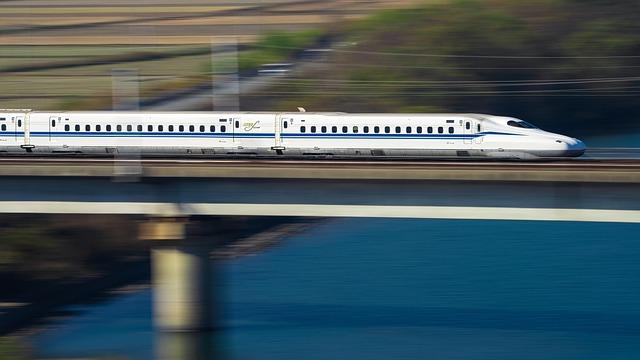
China’s high-speed rail (HSR) network is making significant strides in western regions, as new projects advance steadily to enhance connectivity and promote economic development. According to China Daily, ongoing construction and upgrades are accelerating the expansion of rail infrastructure across western China, aiming to bridge the gap between the region and the country’s more developed eastern provinces. This progress reflects the government’s broader commitment to balanced regional growth and improving transportation efficiency nationwide.
HSR Expansion Accelerates Regional Connectivity and Economic Growth
The ongoing development of high-speed rail (HSR) networks in western China is ushering in a new era of unprecedented connectivity across this vast region. Key strategic corridors are rapidly taking shape, linking remote areas with economic hubs and significantly reducing travel times. This enhanced accessibility is proving instrumental in bridging the urban-rural divide, enabling the free flow of talent, investment, and resources, thus fostering a more balanced regional development model.
Local governments and industry experts highlight several immediate benefits:
- Stimulated regional trade and tourism through improved transportation infrastructure
- Creation of new job opportunities in construction, operations, and ancillary services
- Acceleration of urbanization processes, promoting the modernization of smaller cities
- Increased competitiveness of western provinces in attracting foreign and domestic investment
With continued state backing and technological innovation, the HSR expansion is set to transform western China’s economic landscape, underpinning sustainable growth and enhanced quality of life for millions.
Innovative Engineering Overcomes Challenging Terrain in Western China
The expansion of high-speed rail networks into western China has prompted engineers to pioneer groundbreaking solutions tailored to some of the most unforgiving landscapes in the country. From the rugged mountain ranges to sprawling plateaus, the project confronts a mosaic of natural barriers that traditionally hindered large-scale infrastructure development. Advanced surveying technologies and state-of-the-art construction techniques have been deployed to ensure stability and safety without compromising environmental integrity.
Key innovations that have propelled this progress include:
- Adaptive bridge designs capable of withstanding seismic activity and extreme weather conditions.
- Tunneling machinery customized for heterogeneous geological formations.
- Real-time monitoring systems that facilitate immediate response to any structural anomalies.
These engineering feats not only underscore China’s commitment to integrating remote regions with the national economy but also set new benchmarks in sustainable infrastructure development under extreme conditions.
Policy Recommendations to Sustain Momentum and Maximize Community Benefits
To ensure the high-speed rail (HSR) expansion in western China continues to thrive and delivers sustained benefits, policymakers must prioritize strategic investments in infrastructure alongside robust community engagement. It is essential to establish multimodal transport hubs that seamlessly connect HSR lines with local transit, fostering improved regional mobility and reducing last-mile travel challenges. Additionally, embedding environmental safeguards and promoting green technologies within construction and operations will help minimize ecological disruptions and support China’s broader sustainability goals.
Moreover, targeted policies should focus on maximizing socioeconomic gains for local populations. This includes:
- Workforce development programs to equip residents with skills required in HSR-related industries.
- Incentives for small and medium enterprises to capitalize on new market opportunities spawned by enhanced connectivity.
- Community participation platforms to ensure that infrastructure development aligns with local needs and cultural contexts.
By embedding these measures, western China’s HSR network can become a catalyst not only for economic growth but also for equitable and sustainable community advancement.
In Conclusion
As construction advances steadily, the development of high-speed rail in western China underscores the region’s growing integration into the national transportation network. With continued investment and strategic planning, these projects are set to enhance connectivity, stimulate economic growth, and improve the quality of life for local communities, marking a significant milestone in China’s broader infrastructure ambitions. China Daily will continue to monitor the progress of these initiatives and their impact on the region’s development.