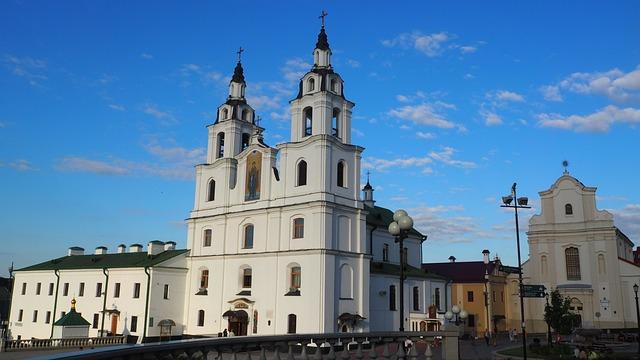
Belarus is increasingly positioning itself to assume a more prominent role in Russia’s ongoing war in Ukraine, according to recent analyses by the Atlantic Council. While maintaining a low profile on the international stage, Minsk is quietly enhancing its military cooperation with Moscow and laying the groundwork to support Russian operations more extensively. This shift signals a potential escalation in Belarus’s involvement, raising geopolitical concerns about the broader implications for regional security and the future trajectory of the conflict.
Belarus Increasing Military Support Signals Escalation in Russia’s Ukraine Conflict
Amid mounting tensions in Eastern Europe, Belarus has taken decisive steps to enhance its military capabilities, signaling a potential shift in its involvement in the ongoing conflict between Russia and Ukraine. Recent reports indicate a significant increase in troop deployments along the Belarus-Ukraine border, accompanied by the delivery of advanced weaponry and logistical support. Analysts suggest this buildup could be a strategic precursor to deeper operational collaboration with Russian forces, raising concerns over a possible multi-front escalation in the war.
Key indicators of Belarus’s expanding role include:
- Enhanced air defense systems and armored units mobilized near conflict zones.
- Joint training exercises conducted with Russian military personnel, improving interoperability.
- Heightened intelligence-sharing activities aimed at bolstering offensive capabilities.
Western officials warn that these developments complicate diplomatic efforts and may intensify the humanitarian impact across the region. The evolving Belarusian stance underscores Moscow’s reliance on allied support amid prolonged hostilities, suggesting that the conflict’s geographic and political scope could widen in the coming months.
Strategic Implications of Belarus’s Growing Involvement for Regional Security
Belarus’s increasing alignment with Russia in the ongoing conflict over Ukraine signals a profound shift in the security landscape of Eastern Europe. This evolving partnership extends beyond symbolic support to tangible military collaboration, raising alarms among neighboring states about a potential expansion of the war’s geographical scope. As Minsk integrates more deeply into Moscow’s strategic calculus, regional powers are compelled to reassess their defensive postures, diplomatic engagements, and intelligence sharing frameworks. The blurring of Belarusian neutrality challenges established norms and escalates the risk of spillover violence, creating a precarious environment where the balance of power could rapidly destabilize.
The repercussions of Belarus’s enhanced involvement are multifaceted, impacting everything from NATO’s eastern flank to energy security corridors critical for Europe. Key strategic concerns include:
- Increased military deployments on Belarusian territory, bolstering Russia’s operational reach and complicating Ukrainian defense strategies.
- Expanded intelligence cooperation facilitating more sophisticated and coordinated attacks, potentially prolonging the conflict.
- Heightened risk of economic sanctions against Minsk, which may further isolate the country and drive it closer to Moscow.
- Potential seizure of border areas that would alter territorial control and disrupt regional supply chains.
As Belarus quietly prepares to assume a more pronounced role in the conflict, the imperative for international actors to deter escalation and reinforce regional security mechanisms becomes increasingly urgent.
Recommendations for Western Policy to Address Belarus’s Expanding Role in the War
To effectively counter Belarus’s growing involvement in the conflict, Western policymakers must adopt a multifaceted approach that balances diplomatic pressure with strategic support. Enhanced sanctions targeting key sectors of the Belarusian economy, especially those linked to military logistics and technology transfers, would constrain Minsk’s capacity to sustain its contributions to the war effort. Concurrently, intelligence sharing and closer coordination with NATO allies can help monitor cross-border movements, ensuring early detection of troop redeployments or increased military hardware transfers from Belarus to Ukraine’s frontlines.
On the diplomatic front, engaging Belarusian civil society and promoting narratives that undermine the regime’s wartime collaboration could weaken President Lukashenko’s domestic legitimacy. Support for independent media and targeted humanitarian aid programs will amplify internal dissent against Belarus’s involvement in the conflict. Additionally, Western governments should consider opening discreet backchannels for dialogue with moderate Belarusian elements, fostering potential leverage that could destabilize the ruling alliance with Moscow over time.
- Implement sector-specific sanctions to disrupt Belarus’s military support capabilities.
- Increase intelligence collaboration among NATO members to track Belarusian military movements.
- Amplify support for Belarusian civil society and independent media outlets.
- Explore discreet diplomatic engagement with non-aligned Belarusian political groups.
The Conclusion
As Belarus continues to deepen its military cooperation with Russia, its evolving role in the conflict in Ukraine signals a significant shift in the regional dynamics. While Minsk has maintained a relatively low profile, its growing involvement underscores the complexities of the war and the challenges facing international efforts to de-escalate tensions. Observers will be closely monitoring Belarus’s actions in the coming months, as its quiet preparations may well foreshadow a more prominent position in the ongoing conflict.