
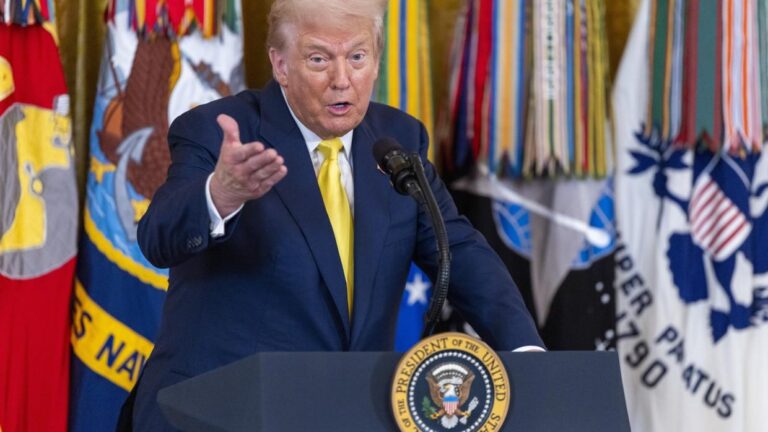
In a decisive escalation of trade tensions, the Trump administration has announced plans to double tariffs on India’s imports to 50%, targeting New Delhi’s continued purchases of Russian oil. The move, reported by The New York Times, underscores growing friction between the two nations amid U.S. efforts to isolate Russia economically following its invasion of Ukraine. This development marks a significant shift in U.S.-India relations, with potential repercussions for global energy markets and international diplomacy.
Trump Plans to Double India’s Tariff to 50 Percent Citing Russian Oil Trade
In a bold move reflecting escalating economic tensions, the Trump administration has announced plans to increase tariffs on Indian imports to 50 percent. This decision stems from concerns over India’s continued purchases of Russian oil, which the U.S. views as both a geopolitical challenge and a breach of sanction efforts aimed at Russia. Officials believe the steep tariff hike will pressure New Delhi to reconsider its energy procurement strategies while signaling a more aggressive stance on enforcing U.S. trade and foreign policy priorities.
The proposed tariff adjustment targets a range of Indian goods, potentially impacting sectors including textiles, pharmaceuticals, and technology components. Below is a summary of key areas affected by the tariff hike:
- Textiles: Major export segment facing increased costs.
- Pharmaceuticals: Potential disruption in supply chain and pricing.
- Technology Components: Impact on electronics manufacturing and trade flows.
| Sector | Current Tariff | Proposed Tariff | Potential Impact |
|---|---|---|---|
| Textiles | 25% | 50% | Reduced US demand, supply chain shifts |
| Pharmaceuticals | 10% | 50% | Higher US drug costs, sourcing disruptions |
| Technology Components | 15% | 50% | Slowed manufacturing, increased prices |
Implications for US-India Relations and Global Energy Markets
The decision to double tariffs on Indian imports amid its continued purchase of Russian oil signals a strain in US-India diplomatic relations. As the two largest democracies have been strategic partners in counterbalancing global powers, this move introduces a new layer of complexity. New Delhi faces the challenge of balancing its energy security-driven by affordable Russian oil-and adherence to Washington’s sanctions regime. This could lead to a recalibration of bilateral talks, with India potentially exploring alternative energy partnerships to protect its economic interests without escalating diplomatic tensions.
On a broader scale, this tariff hike has the potential to ripple through global energy markets. India, as one of the world’s fastest-growing energy consumers, plays a pivotal role in demand dynamics. Changes in its oil import patterns due to increased tariffs could affect crude pricing and supply chains, especially in Asia. Key impacts include:
- Volatility in crude oil prices as India may seek non-Russian sources, straining global supply.
- Shifts in trade flows with potential increases in oil imports from the Middle East and Africa.
- Acceleration of renewable energy investments in India to reduce dependence on geopolitically sensitive imports.
| Factor | Potential Impact |
|---|---|
| US Tariffs on India | 50% increase on selected imports |
| India’s Russian Oil Imports | Continues despite sanctions pressure |
| Global Oil Supply | Potential reallocation from Russia to Middle East |
| Energy Security | Increased focus on diversification and renewables |
Strategic Recommendations for India Amid Escalating Trade Tensions
The imposition of a 50% tariff by the U.S. on Indian goods in response to New Delhi’s continued procurement of Russian oil represents a critical juncture for India’s international trade strategy. To mitigate the economic fallout, India must adopt a multipronged approach centered around diversification and diplomatic agility. Strengthening trade ties with alternative partners in Southeast Asia, the Middle East, and Europe can cushion the impact of increased tariffs and reduce dependence on any single market. Additionally, enhancing domestic manufacturing capabilities under schemes like “Make in India” will bolster self-reliance and improve resilience in global supply chains.
Key focus areas include:
- Negotiating bilateral and multilateral trade agreements to offset tariff barriers
- Promoting investment in renewable energy and technology to reduce strategic vulnerabilities
- Leveraging geopolitical dialogues to clarify India’s stance on energy security and sovereign trade decisions
- Enhancing export competitiveness by investing in innovation and quality standards
| Strategic Initiative | Expected Outcome |
|---|---|
| Trade Diversification | Reduced tariff risks and expanded markets |
| Domestic Manufacturing Boost | Increased employment and supply chain control |
| Diplomatic Engagements | Stronger international support and negotiation leverage |
The following table summarizes these strategic initiatives with their expected outcomes:
| Strategic Initiative | Expected Outcome |
|——————————|————————————————|
| Trade Diversification | Reduced tariff risks and expanded markets |
| Domestic Manufacturing Boost | Increased employment and supply chain control |
| Diplomatic Engagements | Stronger international support and negotiation leverage |
Overall, this multipronged approach aims to sustain India’s economic growth and global trade presence amid evolving geopolitical tensions.
Closing Remarks
As the United States moves forward with its decision to double tariffs on Indian goods in response to New Delhi’s continued purchases of Russian oil, the unfolding trade tensions are set to reshape economic relations between the two nations. Analysts will be closely watching how India balances its energy needs against growing diplomatic pressures, while the global market braces for the broader implications of this escalating dispute. The developments underscore the complex interplay between geopolitics and international trade in an increasingly interconnected world.