

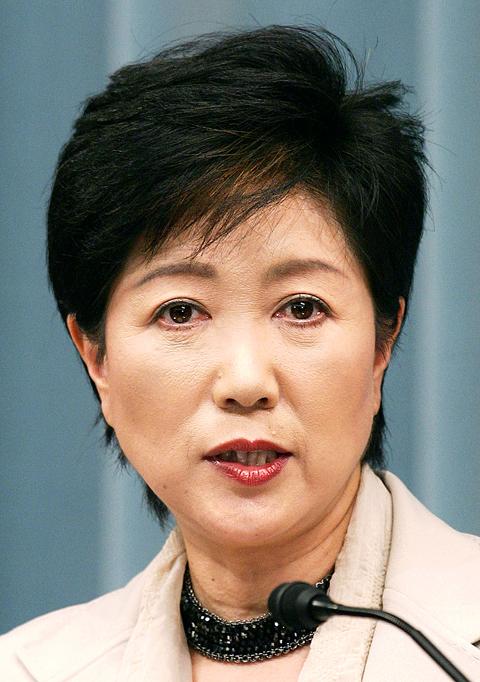
Japan has made history with the appointment of its first female prime minister, who has swiftly signaled a more hawkish stance toward China and Taiwan. In a move that could reshape regional dynamics, the new leader emphasized a robust defense posture and closer security ties with allies amid rising tensions in East Asia. This development marks a significant shift in Tokyo’s approach to Beijing and Taipei, reflecting growing concerns over China’s assertive actions in the region.
First Female Japan Prime Minister Adopts Firm Stance on China’s Regional Ambitions
In a bold departure from Japan’s traditionally cautious diplomacy, the country’s first female prime minister has taken a resolute stand against what she describes as “expansionist ambitions” by China in the East Asian region. Emphasizing Japan’s commitment to maintaining regional stability, she has strengthened military partnerships and advocated for increased defense spending. Her stance comes amid escalating tensions over Taiwan’s sovereignty, where she has expressed unwavering support for Taipei’s autonomy and called for a unified international response to any coercive acts by Beijing.
The prime minister’s strategy centers on several key actions designed to counterbalance China’s influence, including:
- Enhancement of Japan-US security ties through joint exercises and intelligence sharing
- Promotion of multilateral alliances involving Indo-Pacific democracies
- Investment in advanced defense technologies to boost deterrence capabilities
- Diplomatic efforts strengthening regional frameworks to uphold the rule of law and freedom of navigation
| Policy Area | Action Taken | Expected Outcome |
|---|---|---|
| Defense Cooperation | Expanded joint drills with US forces | Improved readiness and interoperability |
| Foreign Policy | Formed new alliances with ASEAN countries | Stronger regional unity against coercion |
| Defense Spending | Increased budget by 15% | Acquisition of cutting-edge missile systems |
Implications of Tokyo’s Shift for Taiwan Security and Indo-Pacific Stability
Tokyo’s recent pivot to a more assertive stance on China and Taiwan marks a strategic recalibration with deep implications for regional security. By amplifying support for Taiwan’s defense capabilities, Japan signals a commitment to deterring potential Chinese aggression, which could alter the military balance in the Indo-Pacific. This hawkish posture not only strengthens bilateral ties with Taiwan but also reassures regional allies of Japan’s resolve to uphold a free and open Indo-Pacific order. However, it risks provoking Beijing, potentially escalating tensions and complicating diplomatic efforts aimed at maintaining stability.
From a broader perspective, Japan’s shift forces neighboring countries and global powers to reassess their strategic calculations. The move encourages closer cooperation among like-minded democracies, fostering new security frameworks and joint military exercises that enhance collective readiness. Below is a table summarizing key potential outcomes of Tokyo’s policy change:
| Implication | Potential Outcome |
|---|---|
| Taiwan Security | Enhanced military support and intelligence sharing |
| China Relations | Increased diplomatic friction and risk of retaliatory measures |
| Regional Alliances | Strengthened partnerships with the US, Australia, and India |
| Indo-Pacific Stability | Mixed impact-deterrence balanced against escalation risk |
- Boost to multilateral defense collaborations including joint naval patrols and intelligence exchanges.
- Heightened alertness among regional actors adapting to a more confrontational security environment.
- Increased diplomatic engagements aimed at managing the potential for conflict.
Strategic Recommendations for Strengthening Alliances and Deterrence Measures
To bolster regional security in the face of escalating tensions, Japan’s leadership is advocating for a multifaceted approach that leverages existing alliances while expanding deterrence capabilities. Central to this strategy is the deepening of cooperation with the United States and other Indo-Pacific partners through enhanced joint military exercises and intelligence sharing. Additionally, the emphasis on integrating emerging technologies such as cyber defense systems and missile defense networks underscores the commitment to a robust, forward-leaning posture.
Key strategic initiatives proposed include:
- Strengthening trilateral security dialogues with the U.S. and South Korea to ensure seamless coordination
- Expanding maritime patrols and surveillance capabilities in contested waters
- Accelerating defense modernization programs focused on rapid deployment and precision strike assets
- Promoting diplomatic frameworks that enhance deterrence through clear communication channels
| Measure | Objective | Expected Impact | |||||||||||||
|---|---|---|---|---|---|---|---|---|---|---|---|---|---|---|---|
| Joint Military Drills | Enhance interoperability | Stronger combined response | |||||||||||||
| Cyber Defense Expansion | Protect critical infrastructure | Resilience against cyberattacks | |||||||||||||
| Maritime Surveillance | Monitor strategic sea lanes | Improved situational awareness | |||||||||||||
| Diplomatic Engagement | Reduce miscalculations | Stability through dialogue |
| Measure | Objective | Expected Impact |
|---|---|---|
| Joint Military Drills | Enhance interoperability | Stronger combined response |
| Cyber Defense Expansion | Protect critical infrastructure | Resilience against cyberattacks |
| Maritime Surveillance | Monitor strategic sea lanes | Improved situational awareness |
| In Summary As Japan’s first female prime minister signals a firmer stance on China and Taiwan, her hawkish approach marks a pivotal shift in the country’s foreign policy. Balancing domestic expectations and regional security concerns, her leadership will be closely watched by international observers navigating the complexities of East Asian geopolitics. The coming months will reveal how this new direction impacts Japan’s role on the global stage and the broader dynamics of stability in the Indo-Pacific region.  Samuel Brown A sports reporter with a passion for the game. Related Posts   |