
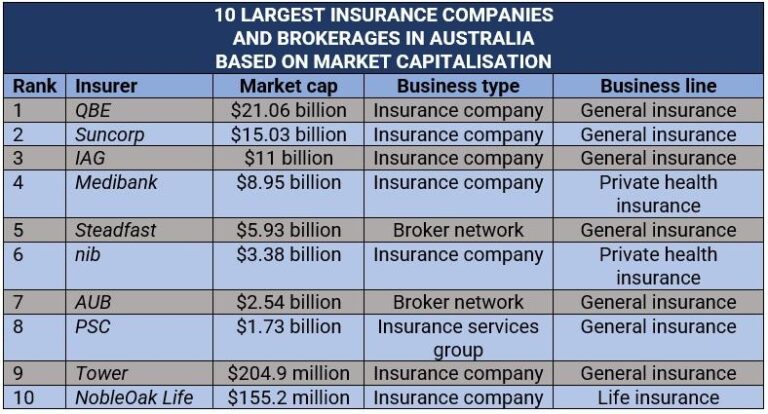
Australian general insurers have reported their highest return on equity (ROE) in a decade, signaling a robust recovery and strengthened profitability in the sector. According to the latest data highlighted by Insurance Business America, key players in the Australian insurance market have capitalized on favourable market conditions, improved underwriting performance, and efficient capital management strategies. This milestone marks a significant turnaround for the industry, reflecting both resilience and growth potential amid evolving economic challenges.
Australian General Insurers Post Record Return on Equity Driven by Strong Underwriting Performance
The latest financial disclosures reveal a remarkable surge in profitability across the Australian general insurance sector, with companies reporting a return on equity (ROE) that hasn’t been seen in over ten years. This upward trajectory is primarily attributed to robust underwriting results, which have collectively outpaced market expectations and bolstered shareholder value. Analysts point to prudent risk selection, enhanced claims management, and a disciplined approach to premium pricing as pivotal factors that contributed to this exceptional performance.
Key drivers behind the impressive ROE include:
- Improved loss ratios: Claims have been better contained, reflecting effective risk mitigation and favorable market conditions.
- Stronger premium growth: Insurers successfully adjusted rates to align with underlying risk trends without compromising competitiveness.
- Operational efficiencies: Streamlining processes and investing in technology reduced expenses and enhanced underwriting precision.
| Metric | 2024 | 2023 | % Change |
|---|---|---|---|
| Return on Equity (ROE) | 18.5% | 14.2% | +4.3% |
| Loss Ratio | 62% | 68% | -6% |
| Combined Ratio | 89% | 94% | -5% |
Key Market Drivers and Emerging Risks Shaping Profitability in the Australian Insurance Sector
Recent performance in the Australian insurance market highlights a confluence of factors that have propelled general insurers to record-breaking returns. Strong premium growth, fueled by rising property valuations and increased awareness of personal risk, has played a pivotal role. Additionally, insurers have benefited from improved underwriting discipline, leveraging advanced analytics to tighten risk selection and reduce loss ratios. Technological innovation continues to reshape the landscape, with digital platforms accelerating customer acquisition and driving operational efficiencies, while regulatory reforms aimed at enhancing market transparency have boosted investor confidence.
However, emerging risks cast a complex shadow on sustained profitability. Climate change remains a dominant concern, with escalating natural catastrophes threatening to inflate claims costs unpredictably. Cybersecurity threats are increasingly sophisticated, pushing insurers to develop robust cyber insurance products amid evolving exposures. Furthermore, inflationary pressures and geopolitical uncertainties introduce volatility into investment portfolios, complicating asset-liability management strategies. The sector’s resilience will depend on balancing these growth drivers against such systemic risks to maintain a favorable risk-return profile.
- Premium growth: Rising property values and heightened risk awareness
- Underwriting improvements: Data analytics and risk selection
- Technology: Digital customer engagement and operational efficiencies
- Regulatory support: Enhanced transparency and market stability
| Emerging Risks | Potential Impact | Mitigation Approach |
|---|---|---|
| Climate-related catastrophes | Increasing claim frequency & severity | Improved modeling & adaptive pricing |
| Cybersecurity threats | Novel risk exposures | Enhanced cyber product development |
| Inflation and market volatility | Asset-liability mismatch | Diversified investment strategies |
Strategic Recommendations for Sustaining Growth Amid Shifts in Regulatory and Economic Landscapes
To maintain momentum amid evolving regulatory requirements and economic pressure, Australian general insurers must prioritize agility and robust risk management frameworks. Embracing digital transformation is crucial-not only to streamline operations and enhance customer experience but also to enable rapid compliance adjustments. Insurers should leverage data analytics and artificial intelligence to anticipate regulatory shifts and optimize underwriting processes. Additionally, fostering strong collaboration with regulators can provide early insights, helping insurers to proactively adapt their strategies rather than reactively respond.
Strategic diversification remains a cornerstone in countering market volatility. Expanding product portfolios to include emerging risks such as cyber threats and climate-related exposures can open new revenue streams and reduce dependency on traditional lines. Investing in talent aligned with innovation and regulatory expertise will strengthen internal capabilities. Key focus areas include:
- Dynamic pricing models driven by real-time data
- Enhanced claims automation to lower costs and improve turnaround
- Strategic partnerships with InsurTech firms to accelerate innovation
- Strengthened capital buffers to withstand economic fluctuations
| Strategy | Benefit | Timeframe |
|---|---|---|
| AI-Powered Risk Assessment | Improved accuracy & speed | Short-term |
| Climate Risk Product Expansion | Diversified revenue | Medium-term |
| Regulatory Liaison Teams | Proactive compliance | Ongoing |
In Summary
As Australian general insurers celebrate a decade-high return on equity, industry watchers will be keen to see how companies sustain this momentum amid evolving market challenges. With strong profitability underscoring the sector’s resilience, the coming years will be critical in determining whether this upward trajectory can continue in an increasingly competitive and dynamic insurance landscape.