


China has expressed sharp opposition as Japan considers the possibility of exporting defensive missile systems to the Philippines, a move seen as part of Tokyo’s broader strategy to bolster regional security amid rising tensions in the Indo-Pacific. The development, reported by the South China Morning Post, underscores the escalating strategic competition between China and Japan, with both nations navigating complex diplomatic and military dynamics in an increasingly contested neighborhood.
China Voices Strong Opposition Amid Japan’s Consideration of Missile Sales to the Philippines
China has sharply criticized Japan’s deliberations over exporting missiles to the Philippines, describing the move as a destabilizing factor in the region’s delicate security balance. Chinese officials argue that such arms transfers could escalate tensions in the South China Sea, where Beijing has repeatedly asserted territorial claims. The Chinese Ministry of Foreign Affairs spokesperson emphasized that the action disregards regional peace efforts and violates principles of non-interference, urging Tokyo to reconsider its approach to avoid undermining mutual trust.
Experts observe that Japan’s potential missile sales reflect a broader strategic alignment with Southeast Asian nations amid growing concerns over China’s maritime ambitions. The Philippines, seeking to enhance its defense capabilities, views this acquisition as a means to bolster deterrence. Below is a brief overview of the stakeholders and their key concerns:
| Stakeholder | Primary Concern | Position |
|---|---|---|
| China | Regional Stability & Security | Strong Opposition |
| Japan | Defense Industry Expansion | Considering Missile Export |
| Philippines | Enhancing Military Capability | Supportive of Acquisition |
Regional Security Implications of Japan’s Potential Arms Export in East Asia
Japan’s contemplation of exporting missile technology to the Philippines has triggered mounting unease across East Asia, particularly from China. Beijing perceives this move not only as a shift in Japan’s post-World War II defense posture but also as a strategic encroachment that could destabilize regional power balances. The potential arms deal is viewed in the context of increasing maritime tensions in the South China Sea, where the Philippines is a key claimant. Chinese officials have strongly protested the initiative, warning that it could provoke an arms race and heighten military volatility in an already fragile security environment.
Experts highlight several implications stemming from this prospective arrangement:
- Enhanced deterrence for the Philippines: Improved missile capabilities may strengthen Manila’s defense against perceived external threats, particularly in contested maritime zones.
- Strained Japan-China relations: Amid unresolved historical and territorial disputes, arms exports could exacerbate diplomatic tensions and reduce prospects for cooperation.
- Regional security realignment: Neighboring countries may respond by increasing their own military investments, potentially triggering an arms buildup across East Asia.
| Country | Current Missile Capability | Strategic Interest | |||||||
|---|---|---|---|---|---|---|---|---|---|
| Japan | Limited export scope | Expand defense influence | |||||||
| Philippines | Minimal indigenous missiles | South China Sea security | |||||||
| China | Expert Recommendations on Diplomatic Engagement to Ease Rising Tensions Amid escalating geopolitical friction in the Asia-Pacific, experts emphasize the critical need for multilateral dialogue as a means to de-escalate tensions. Diplomats advocate for establishing new communication channels that encourage transparency between China, Japan, and the Philippines. Confidence-building measures such as joint military exercises with clear non-aggression mandates and periodic strategic dialogues could serve as vital platforms for reducing misunderstandings and fostering regional stability. Moreover, scholars suggest reinforcing existing regional frameworks like the ASEAN Regional Forum and the East Asia Summit to facilitate collaborative security arrangements. Key recommendations include:
Insights and ConclusionsAs Japan contemplates expanding its missile exports to the Philippines, Beijing has voiced strong opposition, underscoring the escalating tensions in an already contentious region. The unfolding dynamics between these key Asia-Pacific players highlight the complex interplay of defense, diplomacy, and regional security that will continue to shape geopolitical relations in the months ahead. Observers will be closely watching how Tokyo navigates its strategic partnerships amid mounting pressure from China, whose assertive stance signals a broader resistance to shifting military alignments in the region.  Samuel Brown A sports reporter with a passion for the game. Related Posts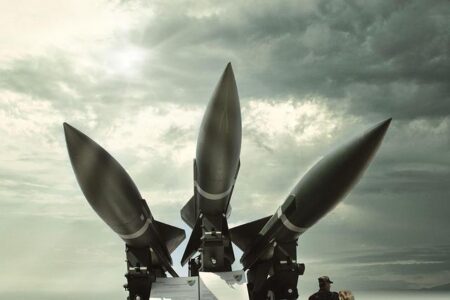   |