
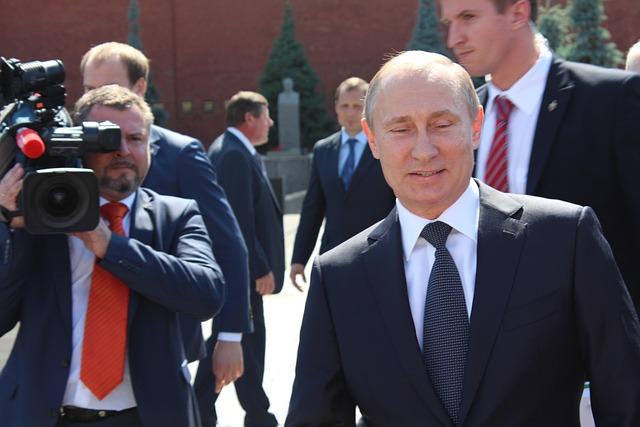
A recent British report has held Russian President Vladimir Putin “morally responsible” for the death of Dawn Sturgess, a UK citizen who was fatally poisoned with a nerve agent in 2018. The investigation highlights Moscow’s alleged role in the use of the Novichok toxin on UK soil, underscoring the ongoing tensions between Britain and Russia. This development adds a new dimension to the scrutiny surrounding the Kremlin’s actions and their far-reaching consequences.
Putin Held Morally Accountable for Sturgess Death in UK Intelligence Report
A recently declassified UK intelligence report has unequivocally placed moral responsibility on the shoulders of Vladimir Putin regarding the tragic death of Dawn Sturgess. The report outlines a series of failures and reckless decisions stemming from the Kremlin’s handling of a nerve agent attack in Salisbury, which indirectly led to Sturgess’s fatal exposure. Despite the complexity surrounding direct legal accountability, intelligence officials emphasize that the Russian leadership’s actions created the dangerous conditions that resulted in this innocent civilian’s death.
- Background: Sturgess was fatally poisoned after coming into contact with a discarded container contaminated with a nerve agent linked to the 2018 Salisbury attack.
- Intelligence findings: The UK government concluded that the Russian state, under Putin’s command, orchestrated and covered up the event to evade responsibility.
- International response: Calls for increased sanctions and diplomatic pressure against Russia have intensified following the report’s release.
| Key Aspect | Findings |
|---|---|
| Agent Used | Novichok Nerve Agent |
| Victim | Dawn Sturgess |
| Cause of Death | Exposure to Nerve Agent |
| Accountability | Putin Held Morally Responsible |
Analysis of the Political and Legal Implications for Russian-British Relations
The UK’s assertion of President Putin’s moral responsibility for the death of Dawn Sturgess marks a significant escalation in diplomatic tensions between Moscow and London. This report not only rekindles accusations concerning the use of chemical weapons on British soil but also complicates ongoing efforts to stabilize bilateral relations. The UK government is now under domestic pressure to enforce stricter sanctions and pursue international legal actions, which Russia has consistently condemned as politically motivated. Analysts warn that such developments risk overshadowing cooperative initiatives on issues like terrorism and arms control.
Legally, the situation raises complex questions surrounding international accountability and the application of domestic law in cross-border crime. The report’s strong language against a sitting head of state signals a bold legal posture by the UK, potentially setting precedent for future cases involving state-sponsored covert operations abroad. Below is a summary of the potential repercussions for Russian-British relations from a political and legal perspective:
| Aspect | Potential Impact |
|---|---|
| Diplomatic Trust | Further deterioration, reduced communication channels |
| Sanctions | Implementation of stricter economic and travel restrictions |
| Legal Precedent | Possible expansion of international legal claims against state actors |
| Security Cooperation | Obstruction of joint efforts on counterterrorism and intelligence sharing |
- Heightened political rhetoric likely to dominate UK parliamentary debates, influencing public opinion.
- International allies may rally behind the UK, increasing diplomatic isolation of Russia.
- Reciprocal actions could trigger a tit-for-tat cycle, complicating conflict resolution efforts.
Calls for Strengthened Diplomatic Measures and Accountability in Response to Findings
The UK government’s report assigning moral responsibility to Vladimir Putin for the death of Dawn Sturgess has triggered urgent calls within diplomatic circles to reassess current international strategies towards Russia. Officials and experts alike emphasize the necessity for a more robust and unified front that goes beyond traditional sanctions to ensure genuine accountability. Highlighted measures include:
- Intensified investigative cooperation across Western intelligence agencies to expose covert operations linked to state actors.
- Enhanced diplomatic pressure through coordinated multilateral condemnations and forums such as the United Nations.
- Targeted economic restrictions that aim specifically at individuals and entities implicated in the poisoning incident.
- Supporting affected communities and victims through humanitarian aid integrated into diplomatic dialogues.
In parallel, lawmakers and foreign policy analysts advocate for a transparent accountability framework that can serve as a deterrent for future state-led violations of international norms. A proposed outline captures the essential components for a comprehensive response:
| Component | Objective | Expected Outcome |
|---|---|---|
| International Tribunal | Legally address state culpability | Deterrence, justice for victims |
| Diplomatic Sanctions | Pressure to change behavior | Isolation of responsible actors |
| Intelligence Sharing | Uncover connections and methods | Prevention of future attacks |
| Public Diplomacy | Raise global awareness | International solidarity |
To Conclude
The UK report’s conclusion that Russian President Vladimir Putin is “morally responsible” for the death of Dawn Sturgess marks a significant development in the ongoing investigation into the Salisbury poisoning incident. While legal accountability remains complex, the findings underscore the broader geopolitical tensions and raise pressing questions about state-sponsored actions and their human consequences. As diplomatic relations between the UK and Russia continue to strain, this report adds another layer of scrutiny on Moscow’s conduct on the international stage.