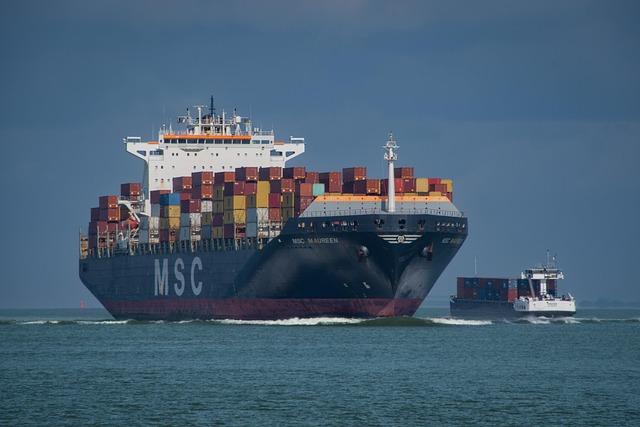
A surprising new development has emerged in naval warfare as a container ship reportedly converted into a missile battery has been spotted in China, according to a recent report by navalnews.com. This unconventional adaptation raises questions about evolving maritime military strategies and the potential implications for regional security dynamics. The sighting marks a notable shift in the way naval assets might be employed, blending commercial disguise with advanced weaponry in a move that experts say could alter conventional naval engagement tactics.
Container Ship Converted into Missile Platform Raises Regional Security Concerns
Recent satellite imagery has revealed a container ship retrofitted with missile launch systems operating in the South China Sea, sparking alarms among regional defense analysts and government officials. This unconventional naval asset appears to blur the lines between commercial shipping and military hardware, raising complex questions about maritime security and sovereignty in contested waters. Experts emphasize that transforming civilian vessels into mobile missile platforms could complicate identification and response strategies for both naval forces and international monitoring bodies.
Key concerns highlighted include:
- Strategic Ambiguity: The vessel’s dual-use appearance could hinder rapid threat assessment.
- Force Projection: The mobility of such a platform allows for unpredictable positioning, extending missile reach without traditional naval signatures.
- Escalation Risks: The lack of transparency could heighten tensions and trigger miscalculations among neighboring states.
| Feature | Impact |
|---|---|
| Camouflage | Reduces detection by radar and reconnaissance |
| Mobility | Allows rapid redeployment within contested areas |
| Armament | Equipped with medium-range missiles capable of targeting naval assets |
Detailed Analysis of the Vessel’s Capabilities and Strategic Implications
The transformation of a conventional container ship into a formidable missile platform signals a significant evolution in naval strategy and asymmetrical warfare capabilities. This vessel’s retrofitting enables it to carry an extensive array of vertically launched missiles, turning a typically civilian asset into a mobile offensive weapon. The adaptation enhances China’s power projection with an ambiguous, less detectable presence, complicating threat assessments for opposing naval forces. Its cargo capacity now serves dual purposes: logistical support and offensive firepower, enabling rapid deployment of precision strikes far from traditional naval bastions.
Strategically, this development challenges existing maritime security frameworks. The ship’s mobility combined with the element of surprise presents new dilemmas for regional navies. The chart below highlights the estimated range and types of missile systems potentially deployed on board, illustrating the vessel’s multifaceted threat profile:
| Missile Type | Estimated Range | Primary Target |
|---|---|---|
| Anti-Ship Cruise Missile | 300 km | Enemy Warships |
| Land Attack Cruise Missile | 1000 km | Coastal Installations |
| Surface-to-Air Missile | 50 km | Air Defense |
- Enhanced stealth: Mimics commercial vessel traffic, reducing likelihood of early detection.
- Rapid redeployment: Can be repositioned quickly across contested maritime zones.
- Cost-effective deterrence: Utilizes existing maritime assets, lowering production expenses compared to traditional warships.
Recommendations for Enhanced Maritime Surveillance and Diplomatic Engagement
To counter the emerging threat posed by unconventional maritime assets such as container ships equipped with missile systems, it is imperative to invest significantly in advanced surveillance technologies. Maritime Domain Awareness (MDA) should be enhanced by integrating satellite imagery, unmanned aerial vehicles (UAVs), and artificial intelligence-driven pattern recognition tools. These systems must work in concert to detect and classify suspicious maritime activities with greater accuracy and in real-time, reducing blind spots in both international waters and critical chokepoints.
On the diplomatic front, fostering stronger regional cooperation through multilateral frameworks can act as a deterrent against the militarization of commercial vessels. Prioritizing transparent communication channels between navies and coast guards will help de-escalate tensions and promote shared security objectives. Collaborative efforts, including joint patrols and information sharing, should focus on:
- Standardizing identification protocols for commercial vessels operating in sensitive maritime zones.
- Establishing rapid response mechanisms to verify and neutralize unconventional threats.
- Engaging in diplomatic dialogues that discourage weaponizing civilian shipping under international maritime law.
| Surveillance Upgrade | Diplomatic Initiative | ||
|---|---|---|---|
| AI-enhanced satellite monitoring | Regional maritime security forums | ||
| Long-range UAV reconnaissance | Bilateral naval communication protocols | ||
| Integrated radar network expansion | International maritime law reinforcement | ||
| Surveillance Upgrade | Diplomatic Initiative | ||
| AI-enhanced satellite monitoring | Regional maritime security forums | ||
| Long-range UAV reconnaissance | Bilateral naval communication protocols | ||
| Integrated radar network expansion | International maritime law reinforcement |
If you want me to assist further or provide suggestions on the content, just let me know!
Insights and Conclusions
As tensions continue to simmer in key maritime regions, the emergence of a container ship retrofitted as a missile battery marks a significant shift in naval strategy and regional security dynamics. This development underscores the increasing convergence of commercial and military assets, raising questions about future maritime security and the balance of power. Analysts will be closely monitoring how this adaptation influences both China’s naval capabilities and the strategic calculations of other maritime nations. Further updates are expected as more information becomes available.

A lifestyle journalist who explores the latest trends.
Related Posts