
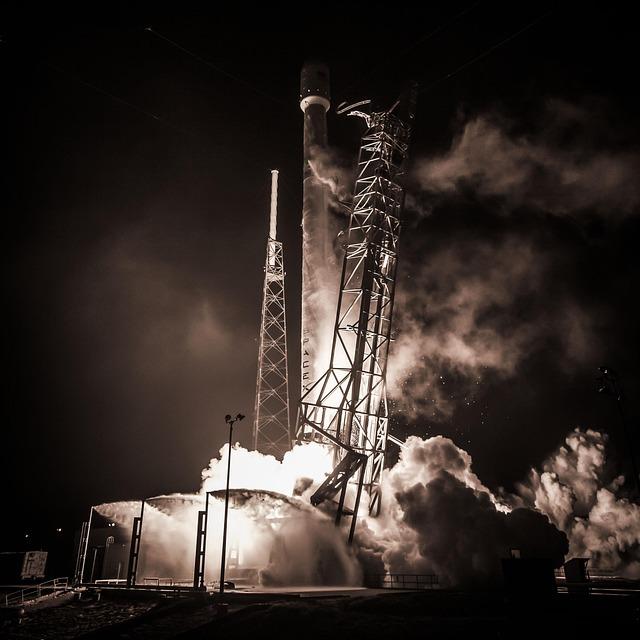
SpaceX has announced plans to relocate approximately 4,400 of its Starlink satellites to a lower orbit following safety concerns raised by China, according to the South China Morning Post. The move comes amid growing international scrutiny over the increasing congestion in low Earth orbit and the potential risks posed to both manned and unmanned space operations. This adjustment highlights the escalating tensions in space governance as private companies expand satellite networks while nations seek to safeguard orbital safety.
SpaceX to Adjust Satellite Orbits Following Safety Concerns Raised by China
SpaceX has announced plans to lower the orbits of approximately 4,400 satellites in its Starlink constellation following concerns raised by Chinese authorities regarding potential collision risks. The adjustment aims to enhance space traffic safety and minimize the possibility of interference with other satellites and space operations. This move represents one of the largest coordinated orbit modifications in the commercial satellite sector, underlining the growing focus on responsible space stewardship amid an increasingly crowded orbit environment.
The revised orbits will position Starlink satellites at altitudes ranging between 540 km and 570 km, lower than their current operational altitudes near 550 km to 570 km. SpaceX has outlined the key benefits of this change:
- Improved collision avoidance with other space assets.
- Reduced risk of generating space debris.
- Enhanced communication latency due to closer proximity to Earth.
| Orbital Parameter | Current Altitude (km) | New Altitude (km) |
|---|---|---|
| Starlink Satellite Constellation | 550 – 570 | 540 – 570 |
| Collision Probability | Moderate | Reduced |
| Latency | Low | Lower |
Implications of Satellite Relocation for Space Traffic Management and Collision Risks
The massive relocation of thousands of satellites by SpaceX introduces complex challenges and opportunities for space traffic management (STM). Moving an extensive satellite constellation to a lower orbit alters current orbital densities, which could increase congestion in certain altitude layers. This shift demands advanced tracking and coordination efforts among international space agencies and commercial operators to prevent potential collision cascades. Furthermore, the relocation places a spotlight on the need for enhanced real-time communication protocols and shared data systems, ensuring satellite operators can dynamically adjust trajectories to maintain safe distances.
However, this move may also contribute positively to reducing long-term collision risks by clearing higher orbits, which are traditionally busier and have slower-deorbit times for defunct satellites. The maneuver highlights several critical factors for improving STM:
- Dynamic orbital slot management to optimize satellite distribution and avoid traffic bottlenecks.
- Improved debris monitoring leveraging AI and machine learning for predictive analytics.
- International collaboration frameworks to standardize protocols for collision avoidance maneuvers.
| Aspect | Current Status | Post-Relocation Impact |
|---|---|---|
| Orbital Congestion | Moderate at lower altitudes; high in geostationary orbit | Increased in low Earth orbit; reduced in higher orbital bands |
| Collision Risk | Elevated due to dense constellations | Short-term spike during relocation; potential long-term reduction |
| Tracking & Coordination | Fragmented among agencies | Necessitates tighter integration |
Recommendations for Enhancing International Coordination on Orbital Safety Standards
To address the growing challenges posed by the increasing number of satellites, international collaboration must be prioritized to establish uniform orbital safety standards. A standardized framework would facilitate real-time data sharing, improve collision avoidance protocols, and align satellite deployment strategies worldwide. Emphasizing transparent communication channels between spacefaring nations can prevent misunderstandings and mitigate risks posed by congested orbital zones.
Key initiatives to strengthen global coordination include:
- Creating a centralized database with updated satellite positions accessible to all stakeholders.
- Developing binding international agreements that regulate satellite altitudes and trajectories.
- Implementing joint emergency response plans for potential in-orbit incidents.
- Encouraging technology sharing to enhance debris tracking and mitigation capabilities.
| Proposal | Benefit | Lead Stakeholders |
|---|---|---|
| Global Satellite Registry | Improved transparency | UN & Space Agencies |
| Standardized Deorbiting Procedures | Reduced space debris | Operators & Regulators |
| Real-time Collision Alerts | Enhanced safety | Private Sector & Governments |
Insights and Conclusions
As SpaceX prepares to reposition its Starlink satellites to a lower orbit in response to safety concerns raised by China, the move underscores the growing complexities of managing an increasingly crowded space environment. With thousands of satellites now encircling the Earth, international coordination and regulatory oversight will be crucial to ensuring the long-term sustainability and safety of orbital operations. This development marks a significant moment in the evolving dialogue on space traffic management and highlights the challenges emerging from the rapid expansion of satellite constellations.