
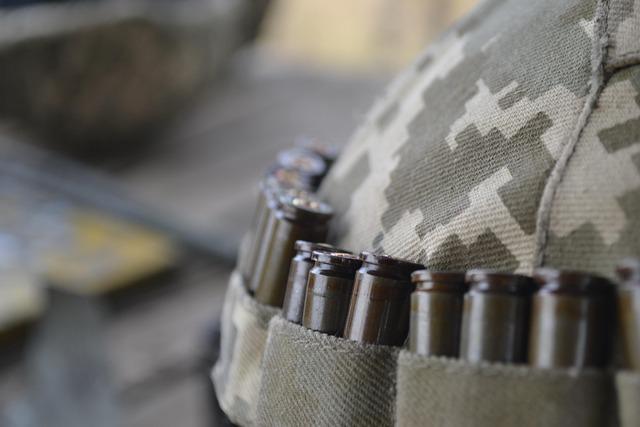
Since October 2021, Iran has supplied Russia with missiles valued at approximately $2.7 billion, Bloomberg reports, highlighting a significant aspect of the ongoing Ukraine conflict. This transfer of weaponry underscores the deepening military collaboration between Tehran and Moscow amid Western sanctions and international condemnation. As the war in Ukraine continues to shape global geopolitics, Iran’s role as a key arms provider to Russia raises critical questions about the balance of power and the evolving dynamics of the conflict.
Iran’s Missile Transfers to Russia Escalate Ukraine Conflict Dynamics
Recent reports highlight a significant escalation in Iran’s military support to Russia, with transactions amounting to $2.7 billion since October 2021. This massive transfer predominantly includes advanced missile systems, which experts suggest have altered the strategic balance on the battlefield in Ukraine. The influx of Iranian missiles has not only enhanced Russia’s strike capabilities but has also intensified the conflict’s complexity, complicating diplomatic efforts towards a ceasefire. Defense analysts note that these weapons have been deployed in various operations targeting Ukrainian infrastructure, raising international concerns about escalated violence and regional stability.
Key aspects of the missile transfers involve:
- Advanced long-range missile technology augmenting Russia’s artillery reach.
- Increased frequency of shipments correlating with intensified combat zones.
- Growing international condemnation and calls for stricter sanctions on Iran.
- Potential shifts in global alliances as the conflict prolongs.
This development underscores deeper geopolitical entanglements and signals a worrying trend of proxy support intensifying the Ukraine conflict, with far-reaching implications for global security frameworks.
Impact of Iranian Weaponry on Russia’s Military Capabilities in Ukraine
Iran’s provision of missile technology to Russia has notably shifted the dynamics on the battlefield in Ukraine. Since October 2021, Tehran has supplied Moscow with an estimated $2.7 billion worth of weaponry, primarily dominated by precision-guided missiles and drone systems. These advanced armaments have empowered Russian forces to extend their strike reach, heavily targeting Ukrainian critical infrastructure and military installations with greater accuracy and frequency. Military analysts emphasize that this infusion reflects a strategic deepening of ties between Tehran and Moscow, enabling Russia to mitigate its supply chain limitations caused by Western sanctions.
The impact manifests not only in expanded tactical options but also in prolonged operational sustainability for Russian troops. Key elements of this support include:
- Advanced ballistic and cruise missile technology bolstering long-range attack capabilities.
- Unmanned aerial vehicles enhancing reconnaissance and precision strike operations.
- Electronic warfare components contributing to battlefield communication disruption.
These developments have complicated Ukraine’s defense efforts, forcing a recalibration of countermeasures under increasingly multifaceted threats. The integration of Iranian arms into Russia’s arsenal signals a significant escalation in the conflict’s technological sophistication and geopolitical entanglements.
Strategic Recommendations for International Response and Arms Control Enforcement
To effectively address the ongoing flow of weaponry fueling the conflict, the international community must bolster existing arms control frameworks. Enhanced verification mechanisms utilizing satellite surveillance and on-the-ground inspections can significantly improve transparency and accountability in arms transfers. Additionally, establishing a joint task force under the auspices of the United Nations could facilitate real-time monitoring and rapid response to violations. Such collaborative efforts would not only deter illicit arms shipments but also reinforce diplomatic pressure on state actors involved in circumventing international sanctions.
Moreover, it is critical to expand targeted sanctions that encompass key intermediaries, financiers, and companies enabling the delivery of prohibited weaponry. Countries should coordinate on intelligence sharing and enforce stricter export controls to close loopholes exploited by proliferators. Key strategic measures include:
- Implementing multilateral export bans against materials and technologies linked to missile production.
- Increasing funding and support for international inspections and arms control treaty enforcement bodies.
- Engaging regional partners to disrupt logistical routes used for weapon smuggling.
- Promoting diplomatic dialogues aimed at de-escalating the conflict while maintaining pressure on violators.
Insights and Conclusions
As the conflict in Ukraine continues to evolve, Iran’s substantial arms transfers to Russia underscore the complex web of international involvement shaping the war’s trajectory. The delivery of $2.7 billion worth of missiles since October 2021, as reported by Bloomberg, not only highlights Tehran’s deepening ties with Moscow but also raises critical questions about the broader geopolitical implications for regional stability and global security. Monitoring these developments will remain essential as policymakers and analysts seek to understand and respond to the shifting dynamics on and beyond the battlefield.