
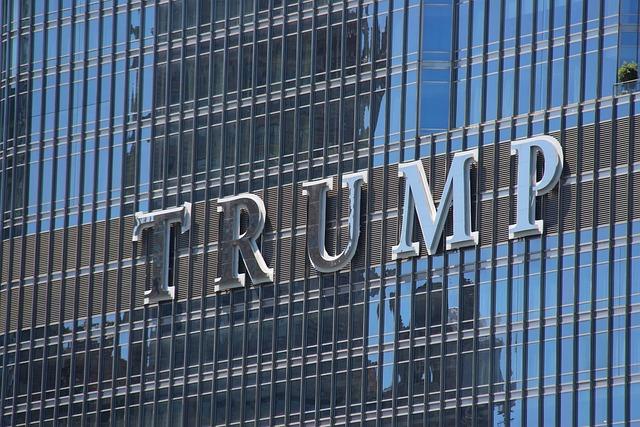
It’s hard to believe that a full year has passed since Donald Trump’s presidency reshaped the American political landscape in unprecedented ways. Over the past 12 months, the former president has remained a dominant presence in news headlines, political discourse, and public debates-proving that, for many, it’s still “all Trump, all the time.” This article examines the enduring influence of Trump’s persona and policies, the media’s relentless coverage, and what this means for the future of U.S. politics.
Has it only been a year A relentless Trump-centered news cycle and its impact on public discourse
The relentless focus on Donald Trump in media coverage over the past twelve months has transformed the landscape of public discourse, often polarizing audiences and overshadowing other critical issues. News outlets, driven by ratings and clicks, have largely circled around the former president’s every move, statement, and controversy. This saturation effect has turned what might have been targeted reporting into an unending echo chamber, creating a cycle where Trump’s persona dictates the news agenda more than policy discussions or societal challenges typically warrant.
The consequences of this Trump-centric news cycle are multifaceted:
- Heightened political polarization, as audiences are frequently bombarded with emotionally charged content.
- Diminished coverage of other pressing topics such as climate change, economic recovery, and international tensions.
- A shift in journalistic priorities, with fact-checking and in-depth analysis sometimes taking a backseat to rapid-fire reporting of breaking developments related to Trump.
As the nation inches forward, the challenge ahead for media institutions will be balancing the undeniable public interest in Trump with the responsibility to illuminate the full spectrum of issues shaping America’s future.
Analyzing media coverage Patterns, biases, and the consequences of nonstop Trump reporting
The media landscape over the past year has been dominated by relentless Trump coverage, often blurring the lines between news reporting and sensationalism. News outlets have exhibited distinct patterns, frequently prioritizing impactful headlines over nuanced analysis. This saturation has not only skewed public perception but also propelled a cycle where every statement, tweet, or rally gets dissected exhaustively. While some argue this relentless focus is warranted given Trump’s outsized influence, others caution that it fosters a climate where substantive policy discussions are sidelined. The repetitive narratives tend to create echo chambers, amplifying partisan divides rather than bridging them.
Examining the biases embedded in this nonstop reporting reveals key trends:
- Selective Emphasis: Certain media outlets emphasize conflicts and controversies, heightening sensationalism at the expense of context.
- Editorial Framing: Headlines and story angles often reinforce preconceived views, either vilifying or lionizing Trump based on publication leanings.
- Source Reliance: Dependence on Twitter and instant reactions can undermine in-depth investigative journalism.
The consequences extend beyond reader fatigue. There is a tangible impact on democratic discourse, as the omnipresence of Trump-related content crowds out diverse perspectives, ultimately limiting the public’s access to a comprehensive understanding of pressing national issues.
Balancing the narrative Strategies for media outlets to diversify political coverage and restore public trust
Media outlets face a critical crossroads in addressing the over-saturation of political coverage that has centered predominantly on a single figure for an extended period. To break free from this tunnel vision, newsrooms must adopt deliberate editorial strategies that emphasize diversity in political narratives. This involves balancing reporting across the political spectrum, elevating underrepresented voices, and investing in investigative pieces that delve deeper than routine coverage of high-profile personalities. By doing so, media entities can present a more comprehensive view of the nation’s political landscape, helping audiences form well-rounded opinions based on varied perspectives rather than continuous, repetitive headlines.
Restoring public trust hinges on transparent and adaptive editorial choices. Outlets should consider:
- Rotating coverage priorities to spotlight local politics and lesser-known policy issues that directly impact communities.
- Engaging with a broader array of political analysts, including those outside traditional media circles, to introduce fresh insights.
- Implementing audience feedback mechanisms to align coverage with public concerns and questions.
- Promoting fact-based reporting that eschews sensationalism in favor of clarity and context.
Collectively, these measures can help dismantle entrenched media patterns and foster a renewed sense of credibility and engagement among viewers and readers alike.
In Conclusion
As the nation marks a full year of nonstop coverage centered on Donald Trump, the media landscape reflects both the enduring influence of the former president and the challenges of balancing comprehensive reporting with evolving public interest. Whether this intense focus will continue or give way to new narratives remains to be seen, but one thing is clear: Donald Trump’s presence in the news cycle has left an indelible mark on American journalism and political discourse alike.