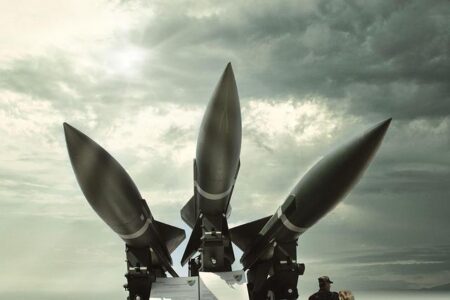

In a significant development underscoring India’s growing defense export footprint, the country has officially supplied its advanced Pinaka rocket systems to Armenia. This deal marks a strategic milestone, showcasing the guided missile system’s cutting-edge capabilities that have attracted international attention, including from established defense powers like France. The Pinaka, known for its precision, range, and rapid-fire capability, strengthens Armenia’s artillery profile while highlighting India’s emergence as a key player in the global defense market. Here’s an in-depth look at the features of the Pinaka rocket system and the implications of this high-profile export.
India Boosts Defense Ties with Armenia Through Pinaka Rocket Exports
Strengthening strategic partnerships in the Eurasian region, India has recently finalized the export of the advanced Pinaka multi-barrel rocket system to Armenia. This move not only marks a significant milestone in bilateral defense cooperation but also underscores India’s growing role as a key player in the global defense export market. The Pinaka system, developed by India’s Defence Research and Development Organisation (DRDO), is designed to deliver high-precision firepower with rapid deployment capabilities, offering Armenia a potent boost to its artillery strength amidst evolving regional security challenges.
The Pinaka system is equipped with several cutting-edge features, making it highly competitive even against Western counterparts like those from France. Key attributes include:
- Multiple rocket launch capability: Fires a salvo of up to 12 rockets in under 44 seconds, significantly enhancing battlefield saturation.
- Extended range: Capable of striking targets up to 40 km away, with ongoing development pushing this further.
- Precision guidance: Incorporates GPS-aided navigation to minimize collateral damage and maximize target accuracy.
- Mobility and deployment: Mounted on a versatile high-mobility vehicle platform, ensuring quick repositioning in combat.
This export deal highlights India’s commitment to expanding its defense diplomacy while reinforcing Armenia’s strategic deterrence, positioning both nations favorably amid shifting geopolitical landscapes.
Exploring the Advanced Capabilities of India’s Pinaka Guided Missile System
The Pinaka Guided Missile System represents a significant leap in India’s indigenous defense technology, blending precision, range, and versatility. Originally developed to provide rapid and accurate artillery support, the system now boasts an enhanced guided rocket variant capable of striking targets with pinpoint accuracy over long distances. Key advancements include its integration with a state-of-the-art navigation system that ensures dynamic target engagement, reducing collateral damage and improving battlefield effectiveness. Equipped with terrain adaptive capabilities, the missile can adjust its trajectory mid-flight, making it highly reliable in diverse combat environments.
Among its most notable features are:
- Range: Extended reach of up to 70 kilometers for guided rockets, significantly surpassing traditional artillery systems.
- Precision Guidance: Utilizes a hybrid navigation system combining inertial navigation and satellite-based GPS for enhanced accuracy.
- Multi-barrel Launcher: Capable of rapid salvo firing, enabling saturation of enemy targets in a short timeframe.
- Mobility: Mounted on highly mobile, all-terrain vehicles facilitating quick deployment and repositioning.
- Interoperability: Easily integrated with existing command and control systems for coordinated operations.
The system’s export to Armenia underscores its growing recognition on the global stage, even attracting interest from advanced defense markets like France. This milestone reaffirms India’s evolving stature as a competitive supplier of sophisticated missile technology.
Strategic Implications and Recommendations for Regional Security Cooperation
The export of India’s Pinaka rocket system to Armenia marks a significant shift in regional defense dynamics, emphasizing the growing importance of South Asian military technology in Eurasian security frameworks. This development underscores a strategic recalibration where traditional alliances are being supplemented by new partnerships centered around advanced, cost-effective weapons platforms. For regional players, the integration of Pinaka rockets-known for their rapid deployability and enhanced precision-offers a robust deterrent capability amidst ongoing tensions. Moreover, it paves the way for deeper technological exchanges and military interoperability between India and Armenia, potentially fostering a balance of power that can stabilize volatile border regions.
To maximize the benefits of this cooperation, countries in the vicinity should consider the following strategic actions:
- Enhanced Intelligence Sharing: Establishing joint intelligence frameworks to monitor threat vectors associated with evolving missile capabilities.
- Multilateral Training Exercises: Organizing periodic drills to improve operational coordination and readiness among partner forces.
- Defense Technology Collaboration: Encouraging collaborative research and co-development projects to upgrade existing missile systems and countermeasures.
These measures will not only fortify national defenses but also serve as confidence-building tools, fostering trust and stability in a region often marked by geopolitical rivalries.
Final Thoughts
The export of India’s Pinaka rocket systems to Armenia marks a significant milestone in the country’s defense diplomacy and indigenous arms manufacturing capabilities. As India continues to strengthen its strategic partnerships through advanced military technology, the Pinaka’s sophisticated guided missile features position it as a competitive asset on the global stage-rivaling established systems from countries like France. This development not only underscores India’s growing footprint in the international defense market but also signals a shift in regional security dynamics, with potential implications for defense collaborations worldwide.