
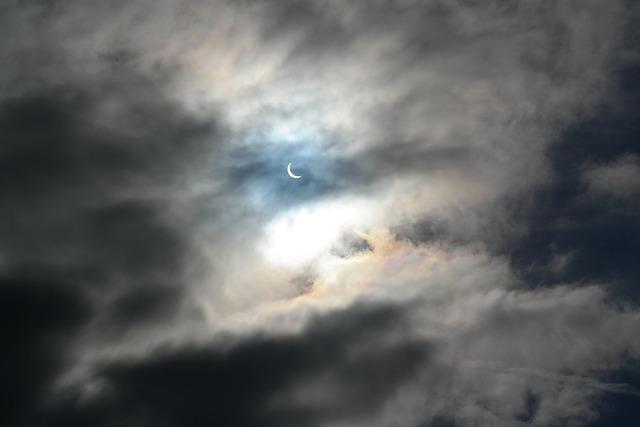
Today’s much-anticipated solar eclipse has captured the attention of skywatchers across the globe. However, millions in India will miss the chance to witness the spectacular “Ring of Fire” phenomenon, officially known as an annular solar eclipse. As the moon aligns between the Earth and the Sun, creating a glowing ring effect along a narrow path, experts explain why this celestial event will not be visible in most parts of India. Here’s a closer look at the reasons behind this limited visibility and what viewers in the country can expect from today’s eclipse.
Solar Eclipse Today Explained Why India Misses the Ring of Fire Phenomenon
The solar eclipse occurring today is a much-anticipated celestial event, but viewers in India will only witness a partial eclipse instead of the captivating “Ring of Fire” or annular eclipse. This phenomenon happens when the Moon covers the center of the Sun, leaving a bright ring or annulus visible around the edges. However, due to the Moon’s position and its distance relative to Earth during this event, the annular phase is not observable in the Indian subcontinent. Instead, much of India will see the Moon cover only a portion of the Sun, creating a partial eclipse that subtly dims the daylight but lacks the dramatic fiery ring.
Several key factors contribute to this outcome:
- The alignment of the Sun, Moon, and Earth is off-center over India, placing the region outside the narrow path of annularity.
- The Moon’s apparent size varies due to its elliptical orbit, appearing smaller during an annular eclipse elsewhere but not sufficiently aligned to create the “ring of fire” effect here.
- The geographic location of India relative to the shadow’s path means the full annular phase only passes over select parts of the globe, such as portions of the Middle East and East Africa.
Geographical Factors Behind the Ring of Fire Eclipse Visibility Outside India
The visibility of the ring of fire eclipse is primarily dictated by the geographical positioning of the observer relative to the Moon’s shadow path on Earth’s surface. This spectacular annular solar eclipse occurs when the Moon covers the center of the Sun, leaving a bright ring, or “ring of fire,” visible in specific regions. However, the Moon’s shadow follows a narrow swath, predominantly crossing parts of the Western Hemisphere, including regions of the Americas and the Arctic. Due to this precise alignment, countries lying outside this path, such as India, fall entirely outside the zone of annularity, limiting their eclipse experience to at best a partial or no eclipse at all.
Several geophysical factors contribute to this selective visibility:
- Latitude and longitude: The eclipse path is confined to a fractional band dictated by the orbital mechanics of the Earth-Moon-Sun system, which shifts yearly.
- Earth’s tilt and rotation: These influence the way sunlight is obscured when the Moon’s shadow reaches the planet’s surface at different times.
- Observer’s local horizon: In some places, the Sun’s position during the eclipse occurs below the horizon, rendering the event invisible.
This intricate dance of celestial bodies means that while some parts of the world witness the awe-inspiring ring of fire, others, including India this time, will remain on the fringes, watching only a partial solar spectacle or none at all.
Expert Tips for Safely Observing the Partial Solar Eclipse from Indian Cities
As millions across India gear up to witness today’s celestial spectacle, experts emphasize the importance of using proper eye protection. Never look directly at the sun without certified solar eclipse glasses or viewers that comply with the ISO 12312-2 safety standard. Regular sunglasses, no matter how dark, are insufficient and can cause serious eye damage. For those opting to observe indirectly, pinhole projectors or solar filters attached to telescopes and cameras offer safe alternatives without compromising the viewing experience.
Urban residents in major cities like Delhi, Mumbai, and Bangalore should also consider the weather conditions and local air pollution levels, which can impact visibility. Experts advise setting up in open spaces away from tall buildings and trees to get an unobstructed view. Additionally, keep an eye on the eclipse timing for your specific location, as the phase and duration differ across the country. Remember to supervise children closely and avoid prolonged sun-gazing to make this celestial event a safe and memorable moment for all.
- Use ISO-certified solar eclipse glasses.
- Do not rely on regular sunglasses.
- Consider indirect viewing methods such as pinhole projectors.
- Choose open, unobstructed locations.
- Monitor local eclipse timings carefully.
Closing Remarks
As the solar eclipse captivates skywatchers across parts of the globe today, viewers in India will miss the rare spectacle of the “Ring of Fire.” This phenomenon, caused by the Moon covering the Sun’s center while leaving its edges visible, remains outside India’s viewing path due to the eclipse’s specific alignment and geographical shadow trajectory. While enthusiasts in India can still observe a partial eclipse with appropriate safety measures, the iconic annular eclipse remains beyond reach this time. Stay tuned for more updates on astronomical events and viewing opportunities in your region.