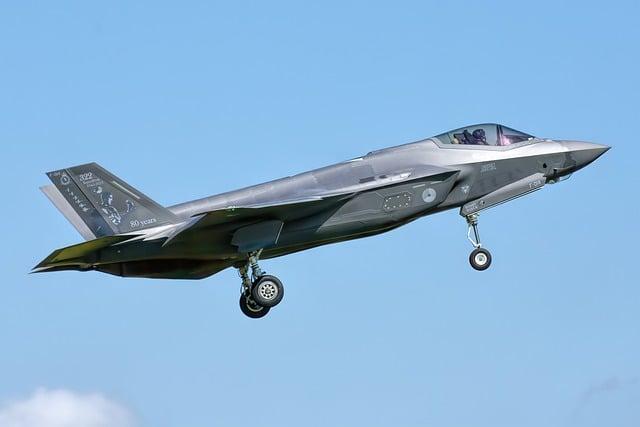
A former United States Air Force F-35 instructor has been charged with conspiring to provide training to the Chinese military, according to a recent report by CNN. The individual, who held a highly sensitive position involving one of the nation’s most advanced fighter jets, allegedly shared critical expertise that could compromise U.S. national security. The charges highlight growing concerns over espionage and unauthorized technology transfer amid rising tensions between the two global powers. Authorities emphasize the serious implications of the case as investigations continue.
Former US F-35 Instructor Faces Charges for Alleged Training of Chinese Military
Federal authorities have charged a former U.S. Air Force F-35 instructor with conspiring to provide military training to personnel linked to the Chinese government. The individual is accused of leveraging his expertise on the advanced stealth fighter jet to allegedly offer tactical guidance and operational knowledge, potentially compromising national security. Investigations revealed that the accused may have transmitted sensitive flight techniques and combat strategies, raising alarms about the implications for U.S. defense capabilities.
Key points in the case include:
- Allegations of covert training sessions conducted outside authorized channels
- Potential violations of the International Traffic in Arms Regulations (ITAR)
- Close monitoring and involvement of counterintelligence agencies throughout the inquiry
- Impacts on ongoing military collaborations and readiness assessments
The Department of Justice emphasized that this case highlights the critical importance of safeguarding defense expertise from foreign adversaries. Legal proceedings are expected to shed further light on the scale and nature of the alleged conspiracy.
Implications for National Security and Military Technology Safeguards
The arrest of a former US F-35 instructor on charges of conspiring to train the Chinese military underscores the critical vulnerabilities within national security frameworks surrounding advanced military technologies. This case highlights the urgent need for stringent oversight and more robust internal controls to prevent unauthorized knowledge transfer that could compromise the strategic advantages held by the United States. The F-35 fighter jet, a cornerstone of US air superiority, represents years of cutting-edge innovation; any leakage of operational tactics or technical details can severely undermine operational effectiveness and global defense positioning.
In response to this incident, defense departments and intelligence agencies are likely to intensify efforts to safeguard sensitive information by implementing:
- Enhanced vetting and monitoring protocols for personnel with access to classified military systems;
- Advanced cybersecurity measures to detect and deter espionage activities;
- Regular security audits focused on potential insider threats within critical defense programs;
- Collaborative inter-agency intelligence sharing to preempt covert operations targeting military technology.
These steps are imperative to preserving the integrity of military advancements and maintaining national security in an era where technological superiority defines geopolitical power balances.
Experts Recommend Enhanced Vetting and Strengthened Counterintelligence Measures
In light of the recent indictment involving a former US F-35 instructor accused of conspiring to train the Chinese military, national security experts are urging for more rigorous personnel screening processes. The breach underscores vulnerabilities within military and defense sectors, where sensitive knowledge and technology are at risk of exploitation. Experts emphasize the necessity of enhanced vetting protocols that go beyond standard background checks, incorporating continuous monitoring and behavioral assessments to identify potential risks before they manifest.
Additionally, there is a growing call for fortified counterintelligence strategies to combat espionage and unauthorized technology transfers. Recommended measures include:
- Increased inter-agency collaboration to share intelligence and detect suspicious activities early.
- Regular security audits targeting personnel with access to critical defense programs.
- Advanced surveillance tools leveraging AI and data analytics to monitor anomalies in communication and behavior patterns.
Experts warn that without such strengthened defenses, the integrity of national defense capabilities could be severely compromised, necessitating immediate and strategic policy reforms.
To Conclude
As the investigation into the former US F-35 instructor’s alleged conspiracy to train the Chinese military continues, authorities emphasize the significant national security implications of the case. This development highlights ongoing concerns over the protection of sensitive military technologies and the challenges faced in safeguarding classified information. Further updates are awaited as the legal process unfolds.