
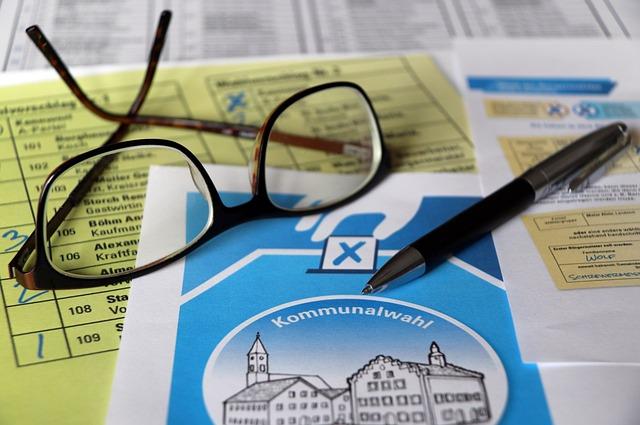
As France gears up for the pivotal 2027 presidential election, the recent municipal votes have offered the country’s major political parties an early and revealing stress test. Held across thousands of localities, these elections not only determined immediate local leadership but also served as a barometer of public sentiment, party strength, and emerging political trends. Analysts and party leaders alike are closely scrutinizing the results to gauge momentum, identify weaknesses, and refine strategies in a landscape increasingly shaped by shifting alliances and voter priorities. The outcomes of this local ballot are being seen as a crucial indicator of how the political battlefield might shape up in the years leading to the next presidential showdown.
French Municipal Votes Reveal Shifting Political Landscape Ahead of 2027 Presidential Race
France’s latest municipal elections have served as a revealing barometer for political parties vying for influence ahead of the high-stakes 2027 presidential contest. Parties across the spectrum grappled with fluctuating voter loyalties as urban districts witnessed unexpected gains and losses, reflecting an electorate increasingly restless with traditional politics. Observers noted the rise of newer political movements capitalizing on grassroots mobilization, while established parties struggled to retain their urban strongholds. The results underscore a fragmented political environment, where alliances and strategic positioning will be critical in the lead-up to the presidential race.
Key takeaways from the votes include:
- Fragmentation of the traditional left and right factions: Historic parties face mounting challenges keeping their bases intact amid growing support for centrist and far-right contenders.
- Emergence of local leaders with national ambitions: Several mayors elected in this cycle now position themselves as influential voices capable of shaping national discourse.
- Shifts in voter turnout: Variations across regions signal evolving political engagement, with younger demographics playing a pivotal role.
These municipal elections have not only exposed vulnerabilities but also opportunities that will inevitably shape campaign strategies, candidate selection, and policy platforms as the 2027 presidential race draws nearer.
Early Results Highlight Challenges for Established Parties and Rise of New Movements
Across France, the latest municipal elections have sent a clear signal: traditional political parties are facing mounting pressure as voter allegiance continues to fragment. Established entities, long dominant in local governance, are struggling to maintain their foothold amidst a political landscape that is rapidly evolving. Factors such as shifting demographics, localized concerns, and a general appetite for fresh voices have contributed to noticeable setbacks for mainstream parties. Analysts point to waning public trust and the inability of these parties to innovate as critical elements behind their early electoral disappointments.
Meanwhile, the surge of new political movements underscores a broader transformation in French politics. From grassroots organizations to emergent ideological groups, these contenders are capitalizing on public desire for change and offering bold alternatives to the status quo. Highlights include:
- Increasing voter engagement among younger demographics eager for representation that aligns with contemporary issues.
- Strategic alliances formed by smaller parties, which have expanded their influence beyond traditional bastions.
- Innovative campaign tactics leveraging social media and community activism to mobilize support.
As these dynamics unfold, the municipal votes serve not only as a barometer for immediate political sentiments but also as a precursor to the more consequential battles expected in the run-up to 2027.
Strategic Lessons for Political Campaigns Drawn from Local Election Outcomes
Local election outcomes in France offer a critical lens through which political parties can assess their organizational strategies, voter outreach, and policy resonance ahead of high-stakes national contests. The recent municipal votes showcased the importance of building robust grassroots networks that engage citizens directly, emphasizing personalized communication over broad, generalized messaging. Parties that succeeded demonstrated agility in adapting to local concerns while maintaining clear national narratives, revealing a key lesson: effective decentralization of campaign efforts enhances overall electoral performance. Beyond messaging, logistical precision-such as timely mobilization of volunteers and efficient resource allocation-proved indispensable in securing voter turnout in closely contested districts.
Moreover, the elections underscored the rising influence of emerging political movements and the fragmentation of traditional voting blocs. This fragmentation calls for parties to innovate coalition-building tactics and cultivate alliances without alienating core supporters. Key takeaways include:
- Data-driven targeting: Leveraging voter data to tailor local campaigns boosts engagement and turnout.
- Issue prioritization: Addressing hyper-local issues alongside national themes strengthens voter trust.
- Flexible messaging: Balancing consistency with adaptability allows parties to resonate across diverse electorates.
As the 2027 presidential race approaches, these insights from municipal contests will be instrumental in shaping strategic decisions that navigate France’s complex political terrain.
In Conclusion
As the results from the French municipal elections continue to unfold, political parties across the spectrum are closely analyzing the outcomes as an early barometer of public sentiment ahead of the pivotal 2027 presidential race. These local contests have not only tested party alliances and strategies but also offered a glimpse into the shifting priorities of French voters. With nearly five years remaining until the national vote, the municipal polls serve as a critical moment of reflection and recalibration for parties aiming to build momentum and address emerging challenges. Observers will be watching closely to see how these early signals influence the evolving political landscape in France.