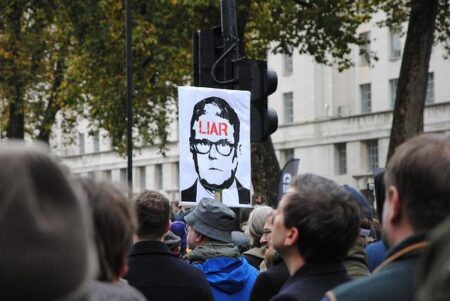

In an era where political discourse dominates headlines and social media feeds, the impact of partisan thinking on our mental processes has become a subject of growing concern. A recent article in Psychology Today delves into how engaging with political content may impair objective reasoning and critical thinking. Experts suggest that when our brains operate under the sway of political biases, cognitive functions suffer, leading to polarized opinions and diminished capacity for nuanced understanding. This exploration sheds light on why thinking under the influence of politics does our brain no favors-and what that means for both individual decision-making and broader societal discourse.
The Cognitive Impact of Political Bias on Decision Making
Political bias functions like a cognitive filter, altering how individuals process information and evaluate evidence. When our brains latch onto preconceived notions shaped by political leanings, critical thinking often takes a backseat. This selective interpretation encourages confirmation bias, where people prioritize data that support their existing views and dismiss contradictory facts, regardless of their validity. Such mental shortcuts conserve cognitive energy but ultimately compromise objective reasoning, fostering an echo chamber effect that distorts reality rather than clarifies it.
Recent studies highlight several psychological consequences linked to this phenomenon, including:
- Reduced analytical engagement: People tend to rely more on intuition and emotional responses than deliberate analysis when political identity is involved.
- Polarization of beliefs: The brain adapts to reinforce group loyalty, making it harder to reconcile conflicting perspectives.
- Impaired decision outcomes: Choices influenced by bias are often suboptimal, affecting everything from public policy preferences to personal judgments.
Understanding these cognitive limitations is key to fostering more informed and balanced decision making in politically charged environments.
How Partisan Thinking Warps Critical Reasoning and Emotional Response
When political allegiance colors our thinking, it triggers a cognitive tunnel vision that narrows our ability to evaluate information objectively. The brain prioritizes loyalty over truth, often disregarding facts that challenge deeply held beliefs. This phenomenon is fueled by confirmation bias, where individuals selectively absorb information that aligns with their political identity, reinforcing existing narratives instead of questioning them. Such mental rigidity hampers problem-solving, leading people to default to emotional reactions rather than reasoned analysis.
The emotional fallout of partisan thinking goes beyond mere opinion; it escalates social division and undermines empathy. Heightened group identity causes the brain to treat opposing views as threats, igniting stress responses and hostility. This results in a feedback loop where:
- Critical scrutiny is suspended for the sake of group cohesion.
- Emotional biases overshadow balanced judgment.
- Dialogue devolves into echo chambers instead of constructive debate.
Neuroscience studies reveal this interplay between reasoning and emotion, illustrating how partisan thinking distorts not only how we think but also how we feel-compromising both mental agility and social harmony.
Strategies to Cultivate Objective Thought Amid Political Polarization
In a time when political affiliations are more divisive than ever, nurturing an impartial mindset requires deliberate effort. One actionable approach is to diversify information sources, seeking out perspectives beyond one’s usual echo chamber. Exposure to varied viewpoints challenges cognitive biases and fosters a more nuanced understanding of complex issues. Additionally, embracing critical questioning-asking why and how certain narratives are shaped-can prevent automatic alignment with party lines and encourage deeper analysis.
Equally important is cultivating emotional awareness. Political discourse often triggers strong feelings that cloud judgment. Actively practicing emotional regulation techniques, such as mindful breathing or pausing before reacting, helps maintain cognitive clarity. Moreover, engaging in conversations with individuals holding opposing views in a spirit of curiosity rather than confrontation can promote empathy and diminish tribal thinking. Together, these strategies act as antidotes to the instinctual partisanship that undermines objective thought.
- Broaden media consumption beyond familiar outlets
- Question assumptions behind political claims
- Practice mindfulness to manage emotionally charged responses
- Engage respectfully with differing opinions
In Summary
As the interplay between politics and cognition becomes ever more pronounced in today’s polarized landscape, understanding the mental toll of politically charged thinking is crucial. This exploration underscores how partisanship can cloud judgment and stunt critical analysis, ultimately doing our brains no favors. Recognizing these cognitive pitfalls is the first step toward fostering more balanced, reflective discourse-both individually and collectively. In a world increasingly shaped by political narratives, maintaining mental clarity may prove to be one of the most important challenges we face.