
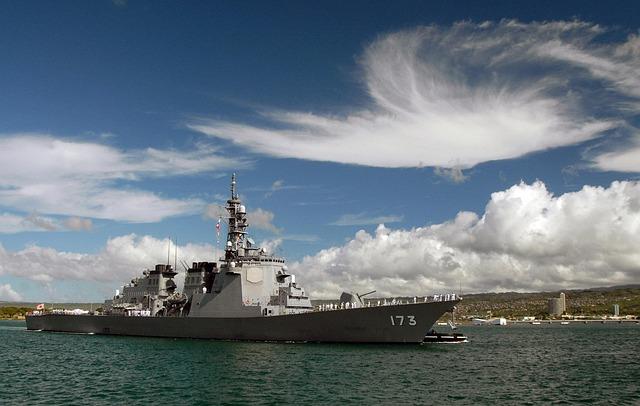
Japan has taken a significant step in modernizing its naval forces, with reports confirming that one of its destroyers has been equipped with Tomahawk missile launch capability. This development marks a notable enhancement in Japan’s maritime defense, reflecting both strategic shifts and growing emphasis on advanced deterrence amid evolving regional security dynamics. The integration of the U.S.-made cruise missiles into Japan’s Maritime Self-Defense Force signals a deepening security partnership and underscores Tokyo’s commitment to maintaining stability in the Indo-Pacific.
Japanese Destroyer Enhances Firepower with Tomahawk Missile Launch Capability
The latest development in Japan’s maritime defense capabilities marks a significant leap forward with the integration of the advanced Tomahawk missile system on one of its destroyers. This strategic upgrade not only bolsters the ship’s offensive reach but also enhances its deterrence against potential regional threats. Experts highlight that the long-range precision strike ability of the Tomahawk missile provides Japan with a critical edge in maintaining maritime security and safeguarding its territorial waters.
Key features of this enhancement include:
- Extended Strike Range: The Tomahawk missile enables targeting of critical assets at distances previously unreachable by Japan’s naval forces.
- Improved Combat Flexibility: The destroyer can now engage a wider array of targets with increased accuracy and response time.
- Multilateral Defense Collaboration: The upgrade aligns Japan’s naval capabilities more closely with allied forces, reinforcing regional stability.
Defense analysts assert that this move underscores Japan’s commitment to modernizing its Self-Defense Forces amid evolving geopolitical dynamics in the Indo-Pacific region.
Strategic Implications for Japan’s Maritime Defense Posture
The integration of Tomahawk missile launch capability on Japan’s destroyers marks a significant evolution in the nation’s maritime defense strategy. This enhancement not only increases the strike range and precision of Japan’s naval forces but also signals a pivot towards a more proactive deterrence posture in the Indo-Pacific region. By equipping its vessels with long-range, land-attack cruise missiles, Japan enhances its ability to respond swiftly to potential threats, projecting power beyond its immediate territorial waters.
Such a development carries several strategic implications:
- Strengthened deterrence: The extended reach of Tomahawk missiles bolsters Japan’s capacity to deter aggression by signaling credible retaliatory options.
- Enhanced alliance interoperability: The capability aligns Japan’s naval assets more closely with U.S. forces, facilitating joint operations and information sharing.
- Shift in regional balance: Japan’s upgraded offensive capabilities may prompt neighboring states to reassess their own maritime strategies and defense investments.
- Implications for defense policy: This advancement could influence ongoing debates about Japan’s pacifist constitution and the scope of its Self-Defense Forces’ roles.
Recommendations for Strengthening Regional Security through Advanced Naval Integration
To enhance regional stability amid evolving security challenges, close cooperation among allied naval forces is paramount. Leveraging advanced missile capabilities, such as the integration of Tomahawk missiles on Japanese destroyers, offers a strategic edge that should be synchronized across partner navies. Establishing joint training exercises focused on missile defense and offensive strike coordination will maximize the platforms’ potential and ensure seamless interoperability during crises.
Additionally, fostering real-time intelligence sharing networks and standardized communication protocols can significantly improve situational awareness and rapid decision-making. Key recommendations include:
- Expanding multi-national naval task forces equipped with advanced strike systems
- Developing joint rapid response frameworks for emerging threats in the Indo-Pacific
- Investing in integrated command and control infrastructures to enable shared operational command
- Encouraging technological exchanges to expedite adoption of cutting-edge weaponry
By prioritizing these measures, regional partners will not only deter potential aggressors but also build a cohesive maritime strategy that upholds peace and security in the wider region.
The Conclusion
The integration of Tomahawk missile launch capability marks a significant advancement in the operational reach and strategic flexibility of Japan’s maritime self-defense forces. As regional security dynamics continue to evolve, this development underscores Japan’s commitment to enhancing its defense posture in collaboration with allied partners. Further updates on deployment timelines and potential implications for regional security are expected in the coming months.