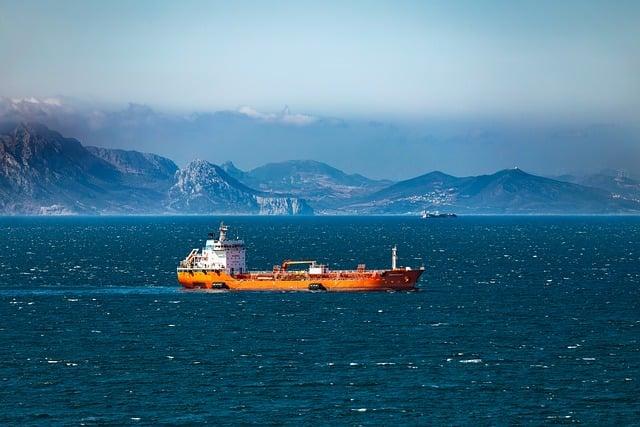
The recent closure of the Strait of Hormuz has sparked fresh debate over strategic chokepoints and their role in global geopolitics, with analysts increasingly drawing parallels to China’s stance on Taiwan. In a recent Financial Times article, experts argue that Iran’s move serves as a blueprint for Beijing’s potential tactics in the event of heightened tensions over Taiwan. The comparison underscores growing concerns about how control over critical maritime routes could be leveraged to exert pressure and reshape geopolitical dynamics in the Indo-Pacific region.
Shutting Hormuz Signals a Strategic Playbook for China in Taiwan
The recent closure of the Strait of Hormuz has drawn sharp attention to the evolving tactics China may employ in asserting control over Taiwan. By demonstrating the capacity to disrupt a critical global shipping lane, China signals its willingness to use geostrategic chokepoints as leverage in broader geopolitical confrontations. This approach is not merely about economic pressure but embodies a multidimensional strategy involving military posturing, economic coercion, and diplomatic isolation aimed at deterring foreign intervention.
Analysts suggest that the Hormuz precedent offers a clear blueprint for China’s potential actions in the Taiwan Strait. Key elements include:
- Exploiting maritime bottlenecks: To hinder trade flows and raise the costs of international involvement.
- Integrated military-civilian operations: Leveraging asymmetric tactics and rapid mobilization to create ambiguity and delay response times.
- Economic containment: Utilizing sanctions, trade restrictions, and energy supplies as tools of coercion.
- Information warfare: Crafting narratives to justify aggressive measures and undermine opposition legitimacy.
These strategies collectively form a coercive playbook that prioritizes control through disruption, signaling a shift from traditional deterrence paradigms to more hybrid forms of conflict.
Economic and Security Implications of Maritime Blockades in Geopolitical Conflicts
The strategic use of maritime blockades during geopolitical standoffs underscores a significant shift in how economic leverage is exercised on the global stage. The Strait of Hormuz, a chokepoint through which approximately 20% of the world’s oil passes, has long been a flashpoint where regional tensions intersect with global energy security concerns. Blocking or restricting this vital artery not only triggers immediate spikes in oil prices but also disrupts global supply chains, causing ripple effects across industries far removed from the conflict zone. Such actions reveal how control over maritime routes can profoundly impact national economies and international markets, escalating the stakes of regional disputes far beyond their borders.
For emerging powers like China, the implications extend well into their strategic playbook, especially in relation to Taiwan. The potential closure of the Taiwan Strait or the imposition of a naval blockade could mirror the Hormuz scenario, leveraging maritime dominance to isolate and pressure an adversary. Key impacts include:
- Disruption of global semiconductor supply chains, given Taiwan’s pivotal role in chip manufacturing.
- Challenging US military and allied naval operations by restricting freedom of navigation in a critical corridor.
- Triggering severe economic repercussions across Asia and beyond due to halted trade routes.
Such blockades serve not only as immediate tactical measures but also as potent strategic signals, capable of reshaping alliances and global power dynamics. The ability to control or threaten these maritime passages has become a coveted tool in statecraft, blending economic warfare with traditional security concerns in an increasingly interconnected world.
Policy Recommendations for Strengthening International Response to Regional Coercion
To effectively counteract regional coercion tactics reminiscent of the Strait of Hormuz blockade, international coalitions must prioritize proactive engagement and deterrence mechanisms. Establishing a multilateral rapid response framework can help swiftly address incidents threatening maritime and territorial freedoms. This involves not only enhancing intelligence-sharing but also conducting joint military exercises to signal collective resolve. Furthermore, reinforcing legal frameworks-such as the United Nations Convention on the Law of the Sea (UNCLOS)-and pushing for stricter enforcement can deter attempts at unilateral intimidation.
Equally critical is the diversification of energy and trade routes to reduce vulnerability to chokepoint disruptions. Policymakers should encourage the development of alternative pathways and resilient supply chains across Asia-Pacific and beyond. Support for regional institutions that promote dialogue and conflict resolution must be intensified to create diplomatic avenues that can de-escalate tensions before coercion escalates. Ultimately, a synchronized approach combining diplomatic, economic, and security tools will be essential for safeguarding the rules-based international order against evolving templates of regional pressure.
- Implement joint naval patrols in strategic waterways to ensure freedom of navigation.
- Enhance sanctions regimes targeting entities involved in coercive tactics.
- Invest in multilateral crisis communication channels to prevent misunderstandings.
- Support infrastructure projects that offer viable alternatives to vulnerable supply chains.
Insights and Conclusions
The closure of the Strait of Hormuz stands as a stark example of how control over vital maritime chokepoints can be leveraged as a powerful geopolitical tool. As Beijing watches closely, the strategic implications for Taiwan-and the broader Indo-Pacific region-become increasingly clear. Understanding these dynamics is essential for policymakers and international observers alike, as the balance of power in one of the world’s most critical waterways may well foreshadow the challenges ahead in Taiwan. The unfolding developments will continue to test global diplomatic resolve and the resilience of the international order.