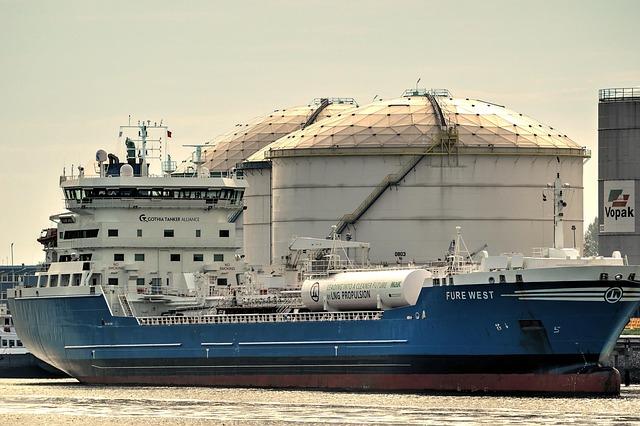
Several US-sanctioned oil tankers have successfully transited the strategic Strait of Hormuz despite an ongoing US blockade, according to recently obtained data. The passage of these vessels highlights the challenges the United States faces in enforcing its sanctions regime in one of the world’s most vital maritime chokepoints. The developments underscore the complex geopolitical and economic dynamics at play as Washington seeks to curb Iran’s oil exports amid heightened regional tensions.
US Sanctioned Tankers Navigate Strait of Hormuz Despite Enforcement Efforts
Recent data reveals that several oil tankers under US sanctions have successfully transited the strategic Strait of Hormuz, a vital chokepoint for global energy supplies, despite ongoing American enforcement efforts. This development underscores the complexities involved in monitoring and interdicting sanctioned vessels in one of the world’s busiest maritime corridors. Satellite tracking and AIS (Automatic Identification System) data have shown a pattern of sanctioned tankers altering their routes and employing evasive maneuvers to avoid detection, raising concerns about the effectiveness of current sanction enforcement mechanisms.
Key factors contributing to these successful transits include:
- Advanced ship-to-ship transfer tactics: Hidden cargo exchanges in nearby waters allow sanctioned vessels to mask their true destinations.
- Use of flags of convenience: Registering ships under foreign flags to obscure ownership and complicate tracking efforts.
- Technological disruptions: Intermittent AIS signal jamming and spoofing, which hinder maritime monitoring systems.
These methods not only challenge US naval blockade operations but also spotlight the ongoing cat-and-mouse dynamic between sanction-evading entities and enforcement agencies in the region.
Analysis Reveals Gaps in US Blockade Strategy Impacting Regional Security
Recent data highlights critical shortcomings in the enforcement of the US-led blockade aimed at curbing sanctioned Iranian tankers’ movements through the Strait of Hormuz. Despite intensified monitoring and naval presence, multiple vessels flagged under sanctioned entities have successfully navigated this narrow but strategic waterway. The ease with which these tankers pass not only undermines the blockade’s effectiveness but also raises questions about intelligence coordination and maritime surveillance capabilities in one of the world’s most volatile regions.
Key factors contributing to these gaps include:
- Insufficient real-time tracking technology integration among allied forces.
- Ambiguities in maritime law enforcement jurisdiction in international waters.
- Deliberate evasion tactics employed by sanctioned tankers, such as AIS signal manipulation and flag-hopping.
- Limited cooperation from regional states, complicating enforcement of sanctions.
These vulnerabilities not only allow sanctioned shipments to continue fueling regional adversaries but also exacerbate geopolitical tensions, posing a persistent threat to maritime security and international trade routes. The analysis underscores the urgent need for a recalibrated strategy that enhances regional collaboration, leverages cutting-edge surveillance, and addresses legal complexities to effectively reinforce the blockade’s intended impact.
Experts Recommend Enhanced Maritime Surveillance and International Coordination
Maritime security analysts emphasize the critical need for heightened surveillance measures in the Strait of Hormuz amid recent reports of US-sanctioned tankers navigating successfully through the chokepoint. Experts argue that relying solely on national enforcement mechanisms has proven insufficient, given the complex web of covert tactics employed to evade detection. They advocate for the deployment of advanced sensor technologies, increased aerial reconnaissance, and real-time satellite monitoring to better track vessel movements and intercept illicit maritime operations.
Additionally, specialists stress that effective management of this strategic corridor requires robust international collaboration. Key recommendations include:
- Establishing multinational maritime task forces to share intelligence and coordinate patrols
- Implementing unified communication protocols to promptly report suspicious activities
- Enhancing legal frameworks for joint enforcement against sanction violations
By fostering a cohesive, transnational approach, stakeholders aim to close loopholes exploited by sanctioned entities and secure the free flow of commerce critical to global energy markets.
Closing Remarks
As the situation in the Strait of Hormuz continues to evolve, the passage of US-sanctioned tankers despite the stated blockade underscores the complexities of enforcing international sanctions in a strategically vital region. Monitoring agencies and policymakers alike will be closely watching subsequent developments, as the movement of these vessels could have significant implications for global energy markets and geopolitical stability. Further updates are expected as more data becomes available.