
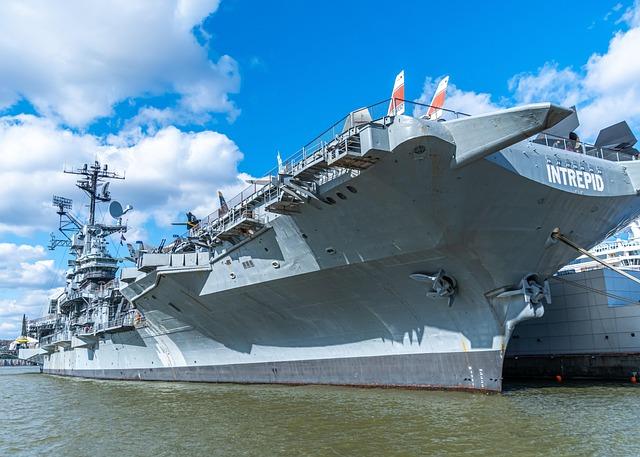
Indonesia’s plans to bolster its naval capabilities may take an unexpected turn as the country shows renewed interest in acquiring Italy’s retired aircraft carrier. Once considered a less feasible option, the possibility of Indonesia inheriting the decommissioned vessel has gained traction amid growing regional maritime challenges. This development signals a potential shift in Southeast Asia’s naval landscape, underscoring Jakarta’s ambitions to expand its blue-water navy and enhance its strategic reach.
Indonesia’s Strategic Ambitions Drive Interest in Italy’s Decommissioned Aircraft Carrier
Indonesia’s growing naval ambitions are capturing global attention, particularly as its interest in Italy’s retired aircraft carrier gains momentum. This development signals Jakarta’s strategic shift toward enhancing maritime capabilities in the Indo-Pacific region. The aircraft carrier, once a symbol of Italy’s naval power, could potentially serve as a force multiplier for Indonesia, enabling extended operational reach and boosting its ability to secure vital sea lanes amid rising geopolitical tensions. Analysts suggest this move could also accelerate Indonesia’s naval modernization efforts, which have been steadily progressing to match the region’s evolving security landscape.
Key factors driving Indonesia’s pursuit of the decommissioned carrier include:
- Enhanced power projection: Expanding Indonesia’s blue-water navy capabilities beyond traditional boundaries.
- Maritime domain awareness: Strengthening surveillance and rapid response capabilities in critical waterways.
- Regional deterrence: Balancing China’s influence and asserting Indonesia’s sovereignty in the South China Sea.
- Economic interests: Protecting burgeoning sea trade routes essential to Indonesia’s economic growth.
As the transaction moves closer to fruition, this acquisition could redefine Indonesia’s naval strategy and establish a new chapter in its maritime ambitions.
Analyzing the Operational Challenges and Potential Benefits for Indonesia’s Navy
Integrating a retired Italian aircraft carrier into Indonesia’s naval fleet presents a complex web of operational challenges. The vessel’s age and maintenance history necessitate significant refurbishment investments to ensure seaworthiness and combat readiness. Moreover, adapting the carrier’s systems to accommodate Indonesia’s existing aircraft and logistical infrastructure could strain both technical expertise and budgetary allocations. Crew training and retention pose additional hurdles, as personnel must master carrier-specific operations, a departure from Indonesia’s traditional naval focus. The geographic realities of the Indonesian archipelago, with its dispersed islands and variable sea conditions, further complicate the effective deployment and support of such a large capital ship.
Despite these obstacles, the strategic advantages could be substantial. Possession of an operational aircraft carrier would markedly enhance Indonesia’s maritime dominance and power projection capabilities in the Indo-Pacific region. Potential benefits include:
- Expanded air defense coverage over critical sea lanes and territorial waters.
- Improved humanitarian assistance and disaster relief capabilities, thanks to rapid deployment and onboard medical facilities.
- Enhanced deterrence posture against regional threats, bolstering Indonesia’s standing in international security dialogues.
- Increased joint exercise opportunities with allied navies, fostering interoperability and strategic partnerships.
Successfully navigating these operational intricacies could position Indonesia as a formidable maritime force, reshaping regional naval dynamics.
Recommendations for Modernization and Integration into Indonesia’s Maritime Defense Strategy
To fully leverage the strategic potential of acquiring a retired aircraft carrier, Indonesia must embark on a comprehensive modernization program tailored to its unique maritime defense needs. This includes upgrading the vessel’s radar and communication systems to integrate seamlessly with existing naval assets and allow for enhanced situational awareness. Furthermore, retrofitting the carrier with advanced defensive and offensive weapons platforms will be critical to counter emerging regional threats effectively. Training programs must also be intensified to ensure that Indonesian naval personnel can operate the sophisticated technology onboard, transforming the carrier into a formidable force multiplier rather than a mere symbol of status.
Integration into Indonesia’s broader maritime strategy calls for a coordinated approach involving multiple branches of the armed forces and government agencies. Priorities should encompass:
- Interoperability: Ensuring the carrier functions smoothly with air, sea, and land defense systems.
- Logistical Support: Building infrastructure to support maintenance, repairs, and rapid resupply in regional naval bases.
- Strategic Positioning: Deploying the carrier effectively to project power and preserve Indonesia’s vast archipelagic waters.
- Diplomatic Engagement: Using the carrier as a tool to enhance maritime partnerships and participate in joint exercises.
By addressing these modernization and integration imperatives, Indonesia can transform the acquisition from just a headline into a cornerstone of its maritime defense capability.
The Conclusion
As discussions advance over the potential transfer of Italy’s retired aircraft carrier to Indonesia, the deal underscores the shifting dynamics in regional naval capabilities and defense cooperation. While details remain subject to further negotiation, the acquisition would mark a significant upgrade for Indonesia’s maritime forces, enhancing its ability to project power across the Indo-Pacific. Observers will be closely watching how this development influences broader strategic balances in the region in the months ahead.