
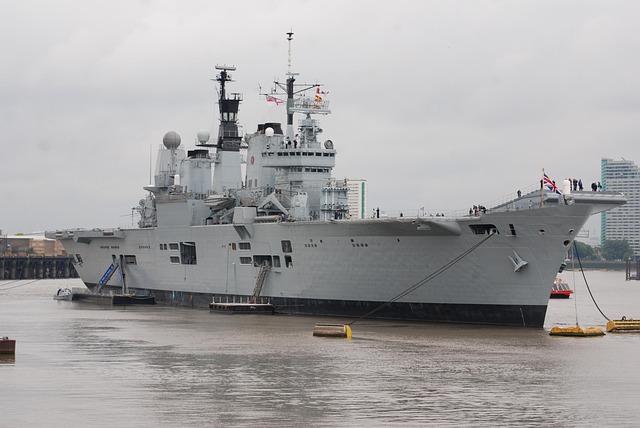
France’s only aircraft carrier, the flagship of its naval power, has officially arrived in the Middle East, marking a significant development in the region’s maritime dynamics. The deployment underscores France’s strategic commitment to maintaining security and stability in key international waters, as well as its readiness to address emerging geopolitical challenges. This arrival, reported by Forbes, highlights the carrier’s pivotal role in projecting French military influence far beyond European shores.
France’s Only Aircraft Carrier Enhances Strategic Presence in the Middle East
In a significant move to bolster its naval capabilities and regional influence, France’s flagship vessel has made a strategic arrival in the Middle East. This deployment underscores Paris’s commitment to maintaining security and stability amidst the complex geopolitical landscape of the region. Equipped with cutting-edge technology and a formidable air wing, the carrier serves as a mobile command center, ready to support a range of operations from humanitarian aid to military deterrence.
The carrier’s presence enhances France’s ability to project power and foster cooperation with allied nations in a volatile area marked by ongoing conflicts and shifting alliances. Key features of this deployment include:
- Advanced fighter jets: Increasing aerial superiority and rapid response capabilities.
- Integrated defense systems: Providing robust protection against emerging threats.
- Multi-mission versatility: Supporting anti-piracy, surveillance, and evacuation operations.
This strategic positioning not only reaffirms France’s role as a maritime power but also serves as a tangible demonstration of its readiness to engage collaboratively with international partners in safeguarding vital maritime routes and regional security interests.
Implications for Regional Security and Power Dynamics
The arrival of France’s sole aircraft carrier in the Middle East marks a significant recalibration of power dynamics in a region rife with geopolitical tension. By projecting naval strength far from its continental base, France signals its intent to bolster alliances and safeguard maritime routes critical for global trade and energy supplies. This move is likely to intensify the strategic competition among regional and extra-regional actors, particularly as France aligns itself more closely with Gulf Cooperation Council (GCC) countries and seeks to counterbalance growing Iranian influence. The deployment offers Paris a platform to coordinate joint military exercises, intelligence-sharing, and rapid response capabilities, underscoring its commitment to maintaining a stable security architecture in the volatile Gulf waters.
Analysts suggest several key implications stemming from this naval presence:
- Enhanced deterrence: The carrier’s formidable air wing and accompanying escort vessels act as a robust deterrent against potential aggression, thereby stabilizing flashpoints like the Strait of Hormuz.
- Diplomatic leverage: France strengthens its bargaining position in regional disputes and arms deals by demonstrating tangible military reach and readiness.
- Power projection: Serving as a mobile command center, the carrier enables rapid deployment and sustained operations, crucial in responding to crises or securing maritime chokepoints.
As the Middle East becomes increasingly entangled with global strategic interests, the presence of France’s carrier introduces a new variable into the complex equation of regional security, potentially reshaping alliances and prompting recalibrations among rival powers.
Recommendations for Strengthening Multinational Maritime Cooperation
To enhance the effectiveness of multinational maritime efforts in strategic regions like the Middle East, it is imperative for involved nations to invest in standardized communication protocols. Such protocols would enable seamless coordination during joint exercises, real-time threat assessments, and crisis response operations. The integration of interoperable technology platforms across allied naval forces can significantly reduce operational friction and improve response times to emergent maritime security challenges. Establishing robust data-sharing frameworks will also foster transparency and trust among participating countries, ensuring that collaborative missions are carried out with unified objectives and minimized risk of miscommunication.
Furthermore, fostering regular multilateral training initiatives and exchanges will strengthen the tactical and strategic cohesion required in high-stakes maritime environments. These programs should emphasize combined anti-piracy efforts, humanitarian assistance, and disaster relief operations, reflecting the multifaceted nature of security challenges in the region. Equally important is a commitment to diplomatic engagement aimed at aligning defense policies and addressing geopolitical tensions that could undermine cooperation. By prioritizing these measures, partners can create a resilient network of naval alliances that bolsters collective security and maintains freedom of navigation in critical sea lanes.
The Way Forward
As France’s sole aircraft carrier docks in the Middle East, the move underscores Paris’s commitment to maintaining a strategic presence in a region marked by geopolitical volatility. This deployment not only enhances France’s naval capabilities but also signals its intent to collaborate closely with regional partners amid evolving security challenges. Observers will be watching closely to see how this development influences the balance of power and France’s role on the global stage in the months ahead.