
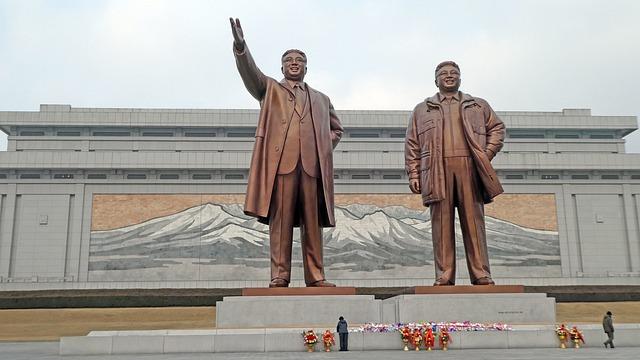
Pyongyang has sharply condemned Japan’s recent efforts to overhaul its security policies, accusing Tokyo of pursuing a path toward becoming a “war state.” In a statement carried by North Korean state media, Pyongyang criticized Japan’s move to expand its military capabilities and revise its pacifist constitution, framing the bid as a threat to regional stability. The development marks a significant escalation in tensions on the Korean Peninsula and highlights growing unease over Japan’s evolving defense posture amid shifting geopolitical dynamics in East Asia.
Pyongyang Condemns Japan’s Security Overhaul as Step Toward Militarization
North Korea has sharply criticized Japan’s recent moves to revise its security policies, interpreting them as a clear trajectory toward remilitarization and regional destabilization. Pyongyang’s state media described the overhaul as a dangerous escalation that threatens peace on the Korean Peninsula, accusing Tokyo of resurrecting its “aggressive war ambitions.” The statement underscores ongoing apprehensions in Pyongyang about Japan’s expanding military capabilities and its implications for security dynamics in East Asia.
Key points highlighted by North Korean officials include:
- Perceived threat to sovereignty: Japan’s security measures are seen as undermining the sovereignty and security of neighboring countries.
- Violation of post-WWII pacifist principles: The policy changes are condemned for deviating from Japan’s constitutionally mandated pacifism.
- Encouragement of regional arms race: Concerns are raised that Japan’s actions may provoke an arms buildup across the region, escalating tensions further.
Regional Tensions Rise Amid Japan’s Bid to Expand Defense Capabilities
North Korea’s state media has sharply criticized Tokyo’s recent moves to revamp its defense structure, accusing Japan of attempting to transform itself into a “war state.” The escalating rhetoric comes amid Tokyo’s push to boost its military capabilities in response to growing regional security challenges. Pyongyang’s statement warns that these developments threaten peace and stability on the Korean Peninsula and may trigger an arms race in East Asia.
In addition to North Korea’s denunciation, other neighboring countries have expressed concern over Japan’s security reforms. Key points raised by critics include:
- Potential for increased militarization destabilizing regional diplomacy.
- Concerns over historical animosities influencing contemporary policy.
- Risks of provoking adversarial responses from China and Russia.
Amid these tensions, international observers emphasize the delicate balance between enhancing national defense and maintaining peaceful coexistence in the region.
Experts Urge Diplomatic Dialogue to Prevent Escalation in East Asia
Amid growing tensions in East Asia, international experts emphasize the critical need for renewed diplomatic engagement to steer the region away from potential conflict. Scholars and policy analysts warn that the escalating rhetoric between Pyongyang and Tokyo, especially surrounding Japan’s proposed security restructuring, threatens to destabilize the delicate balance already in place. They argue that unilateral military advancements risk provoking a dangerous spiral, urging all parties involved to prioritize dialogue and mutual understanding over aggressive posturing.
Key recommendations from experts include:
- Establishing multilateral talks involving North Korea, Japan, South Korea, China, and the United States to address security concerns collaboratively.
- Promoting confidence-building measures such as transparency in military activities and communication hotlines to reduce misunderstandings.
- Engaging regional organizations to facilitate mediation and strengthen diplomatic channels.
They stress that without sustained diplomatic efforts, the risk of miscalculation grows substantially, endangering regional peace and global stability. The consensus remains clear: dialogue is indispensable in preventing an escalation that could have far-reaching consequences.
Future Outlook
As tensions continue to simmer on the Korean Peninsula, Pyongyang’s denunciation of Japan’s security overhaul highlights the deepening mistrust between the two neighbors. While Tokyo insists its measures are geared toward self-defense amid evolving regional threats, North Korea’s sharp rhetoric underscores the fragile security dynamics in East Asia. Observers will be closely watching how these developments influence diplomatic efforts and the broader balance of power in the region.