
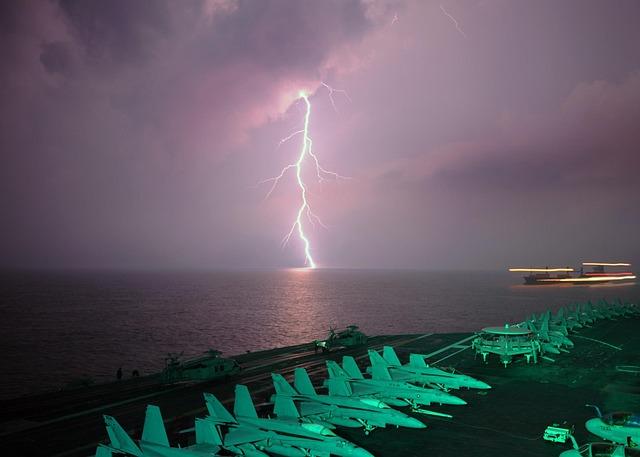
As the United States Navy faces mounting challenges to its maritime dominance, experts argue that forging stronger alliances is essential to counter China’s rapidly expanding naval capabilities. With Beijing investing heavily in advanced warships, missile systems, and strategic infrastructure across the Indo-Pacific, Washington’s solo efforts risk falling short in maintaining balance at sea. In this context, collaboration with regional partners and traditional allies emerges as a critical strategy for the US Navy to effectively project power and uphold freedom of navigation in contested waters.
US Navy Faces Strategic Challenges in Pacific as China Expands Maritime Presence
The US Navy is increasingly confronted with the reality of China’s rapidly expanding maritime capabilities, challenging its long-standing dominance in the Pacific. Beijing’s aggressive strategy includes not only augmenting its fleet with advanced vessels and submarines but also establishing a network of military outposts on disputed islands. This multifaceted approach significantly complicates US naval operations and intelligence gathering, limiting freedom of navigation and threatening crucial sea lanes. To counterbalance these moves, Washington must reconsider its approach, shifting from a predominantly unilateral presence to a collaborative regional framework that leverages the strengths of allied navies.
Key to this recalibration is the integration of allies who share strategic interests in maintaining stability in the Indo-Pacific. Countries such as Japan, Australia, South Korea, and the Philippines possess valuable geographic positioning and naval assets that can complement US forces. By fostering deeper cooperation, the US Navy can enhance:
- Interoperability: Streamlined communication systems and joint training exercises improve coordinated responses.
- Intelligence Sharing: Enhanced surveillance and monitoring capabilities through allied networks enable better situational awareness.
- Force Multiplication: Combined logistical and operational support amplifies reach and readiness.
As China continues to assert itself, the US Navy’s ability to project power effectively hinges on the strength and unity of its alliances throughout the region.
Building Stronger Alliances Key to Enhancing US Naval Capabilities and Regional Influence
In the race to maintain maritime dominance, the US Navy faces mounting challenges as China rapidly expands its naval capabilities. Rather than attempting to outbuild Beijing single-handedly, Washington is increasingly recognizing the strategic value of bolstering partnerships across the Indo-Pacific and beyond. Collaborative exercises, joint patrols, and intelligence sharing with allied navies not only amplify operational reach but also act as force multipliers in contested waters. These alliances bring together diverse expertise and technologies, creating a united front that can better counter China’s sophisticated naval warfare tactics and assertive island-building campaigns.
Strengthening such coalitions involves more than mere tactical coordination; it requires sustained investment in interoperability and trust-building initiatives. Key partners, including Japan, Australia, South Korea, and India, contribute critical geographic advantages and localized knowledge that enhance situational awareness and rapid response capabilities. Areas of focus include:
- Standardizing communication systems and operational protocols
- Enhancing capabilities in undersea warfare and cyber defense
- Joint development of cutting-edge maritime technologies
By prioritizing these collaborative efforts, the US Navy aims to create a resilient, multi-nation maritime coalition capable of preserving freedom of navigation and deterring unilateral attempts to alter the status quo in the region.
Integrating Joint Exercises and Technology Sharing to Close the Gap with Chinese Naval Forces
To effectively bridge the widening maritime gap with Chinese naval capabilities, the US Navy must prioritize closer operational collaboration with its international partners. Joint exercises present a critical avenue for this engagement, enabling participating forces to harmonize tactics, enhance interoperability, and exchange real-time intelligence. These combined drills not only increase readiness but also send a clear geopolitical message of collective strength and resolve in contested waters. By pooling resources and expertise during these maneuvers, allied navies can sharpen their coordination in anti-submarine warfare, missile defense, and amphibious operations – areas in which China has rapidly advanced.
Equally important is the strategic sharing of cutting-edge technology among ally navies, which ensures a faster pace of innovation and fielding of sophisticated systems. This approach includes:
- Collaborative development of advanced sensor networks and unmanned platforms;
- Joint investments in cyber capabilities to safeguard maritime command and control;
- Exchange programs facilitating access to emerging technologies and tactical doctrines.
Such integration fosters a resilient, versatile naval architecture capable of countering Chinese advances not as isolated actors, but as a unified, agile force across the Indo-Pacific region.
Wrapping Up
As the United States Navy confronts the expanding maritime capabilities of China, forging stronger alliances emerges as a strategic imperative. Collaboration with regional partners not only enhances operational reach but also presents a united front in maintaining stability across pivotal sea lanes. In an era defined by shifting power dynamics, the US Navy’s ability to integrate allied strengths may prove crucial in preserving its edge on the world’s oceans.