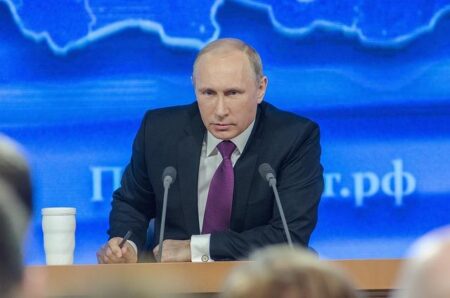

Amid mounting economic challenges and international sanctions, Russia’s global influence appears diminished, yet the nation remains a formidable force on the world stage. According to a recent analysis by Nikkei Asia, while Russia’s military and economic capabilities have been notably weakened, its strategic ambitions and capacity to disrupt remain intact. This nuanced assessment underscores the complexities of Russia’s position in global geopolitics, highlighting that despite apparent vulnerabilities, it continues to pose significant risks regionally and beyond.
Russia’s Diminishing Power Does Not Diminish Its Strategic Threat
Despite the observable decline in Russia’s economic and military capabilities, its role as a formidable geopolitical actor remains intact. The country’s strategic threat persists through its adept use of hybrid warfare tactics, cyber operations, and influence campaigns designed to undermine Western unity and sow discord within democratic institutions. Russia’s capacity to deploy asymmetric strategies allows it to punch above its weight, leveraging vulnerabilities in global networks and exploiting political divisions across Europe and beyond.
Key factors sustaining Russia’s strategic threat include:
- Advanced cyber warfare units capable of disrupting critical infrastructure and stealing sensitive intelligence.
- An extensive network of proxies and allies that amplify Moscow’s influence in regional conflicts and international forums.
- The persistent modernization of nuclear and conventional forces, ensuring deterrent power despite broader military setbacks.
- Information warfare campaigns targeting public opinion to destabilize adversaries from within.
Understanding Moscow’s Hybrid Tactics Amid Economic and Military Strains
Despite facing significant economic challenges and mounting military pressures, Moscow continues to employ a sophisticated array of hybrid tactics designed to offset its vulnerabilities. These methods include cyber warfare, disinformation campaigns, and the strategic use of proxy forces, each aimed at undermining adversaries without direct confrontation. The Kremlin’s ability to adapt and integrate these tools reveals a deliberate attempt to preserve geopolitical influence while avoiding the full costs of open conflict. Key to this approach is leveraging asymmetry-targeting political systems, eroding public trust in Western institutions, and exploiting divisions within and between nations.
Among Moscow’s calculated strategies are:
- Cyber intrusions: Disrupting critical infrastructure and stealing sensitive information to gain tactical advantages.
- Information warfare: Propagating false narratives and conspiracy theories to confuse public discourse and weaken alliances.
- Economic leverage: Utilizing energy exports and financial networks to exert pressure on dependent countries.
- Proxy engagement: Supporting armed groups and allied regimes to influence regional conflicts indirectly.
While Russia’s capacity for conventional warfare has been strained, its hybrid toolkit ensures that it remains a formidable force on the international stage-capable of inflicting strategic damage without the need for overt military escalation.
Policy Approaches to Counterbalance Russia’s Persistent Regional Influence
To mitigate Moscow’s enduring grip on its neighboring regions, policymakers are adopting a multifaceted strategy that balances deterrence with engagement. Strengthening alliances through enhanced military cooperation, intelligence sharing, and joint exercises remains pivotal. Countries like the United States, Japan, and members of the European Union are intensifying support for Eastern European and Central Asian states through increased security aid and capacity-building programs. Equally critical is the promotion of resilient economic ties that offer viable alternatives to dependency on Russian markets or energy supplies, thereby reducing Russia’s leverage over vulnerable states.
Beyond hard power, there is a growing emphasis on countering Moscow’s influence campaigns in the information domain. Governments are investing in media literacy initiatives and supporting independent journalism to combat misinformation that seeks to undermine democratic institutions. Key policy tools include:
- Targeted sanctions against oligarchs and entities linked to Kremlin influence networks.
- Cybersecurity enhancements to protect critical infrastructure from Russian-led cyberattacks.
- Diplomatic efforts aimed at isolating Russia from regional forums and pushing for compliance with international norms.
By blending strategic deterrence with proactive engagement, these approaches aim to curtail Russia’s capacity to shape regional dynamics, even as Moscow continues to project power through covert and overt means.
Concluding Remarks
As Russia navigates its current challenges, its diminished capacity does not equate to diminished threat. Analysts warn that despite economic strains and geopolitical setbacks, the country retains significant military capabilities and strategic influence. Understanding this nuanced reality is essential for policymakers and international observers alike, as the balance of power continues to evolve in complex and unpredictable ways.