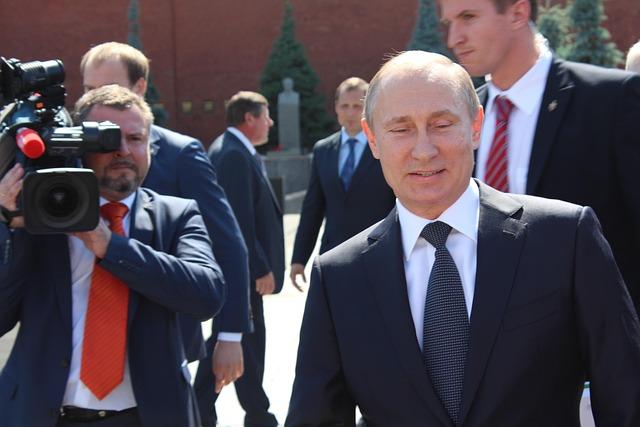
Russian President Vladimir Putin has signaled a potential opening for a peace agreement with Ukraine, contingent upon specific conditions being satisfied, according to a recent statement reported by Yahoo. This development marks a notable shift in the conflict dynamics between the two nations, raising cautious hopes for negotiations after months of ongoing hostilities. The details and terms Putin referenced remain closely watched by international observers and diplomatic channels as efforts to resolve the crisis continue.
Putin Signals Conditional Openness to Peace Talks with Ukraine
In a recent statement, President Vladimir Putin conveyed a willingness to explore peace negotiations with Ukraine, emphasizing that any meaningful progress hinges on specific prerequisites being fulfilled. He underscored the necessity for guarantees that align with Russia’s strategic and security interests, suggesting that concessions would not be made unconditionally. This stance reflects Moscow’s cautious approach amidst ongoing tensions and marks a subtle shift from previous rigid declarations on the conflict.
Key conditions highlighted by Putin include:
- Recognition of territorial claims asserted by Russia in conflict zones.
- Security assurances that restrict NATO’s influence near Russian borders.
- Legal guarantees protecting the rights of Russian-speaking populations in Ukraine.
While the international community welcomes these remarks as a potential opening for dialogue, experts note that the complexity of the demands may pose significant challenges to initiating substantive peace talks. The situation remains fluid as diplomatic channels continue to monitor developments closely.
Key Terms Russia Wants Addressed Before Any Agreement Is Reached
Central to Moscow’s stance are demands that reinforce its strategic interests and security concerns before any peace deal can move forward. Among these, Russia insists on formal recognition of the territorial status quo, including sovereignty claims over Crimea and the separatist-held regions in Eastern Ukraine. Additionally, Russia seeks guarantees that Ukraine will adopt a neutral stance, explicitly ruling out joining NATO or any Western military alliances. These points underscore Russia’s insistence on securing a buffer zone and preventing what it perceives as Western encroachment on its borders.
Beyond territorial and military considerations, Russia is also calling for economic and political concessions. Moscow has expressed the necessity for lifting sanctions that have heavily impacted its economy, framing their removal as an essential precondition for sustainable peace. Furthermore, Russia demands assurances for the protection of Russian-speaking populations and the recognition of their rights within Ukraine. These terms, wrapped in statements about mutual respect and sovereignty, reflect Moscow’s broader objective to reshape the regional order in a way that cements its influence.
- Recognition of Crimea and separatist regions
- Ukrainian neutrality and non-alignment with NATO
- Sanctions relief against Russia
- Protection of Russian-speaking minorities
Experts Weigh Implications and Recommend Steps for Constructive Dialogue
Leading analysts emphasize that while Russia’s openness to a peace deal signals a potential shift, the complexity of the conflict demands cautious optimism. Experts stress that any meaningful progress hinges on clearly defined terms that respect Ukraine’s sovereignty and security concerns. The international community must prioritize transparent communication channels between both parties to avoid misinterpretation and escalation.
Recommendations from policy advisors focus on creating a structured framework for dialogue that includes:
- Neutral mediators to facilitate balanced negotiations and build mutual trust.
- Incremental confidence-building measures that address immediate humanitarian concerns and reduce tensions on the ground.
- Regular verification mechanisms to ensure compliance and prevent breaches of any agreements reached.
- Integration of multilateral support from key stakeholders to sustain long-term peace efforts.
To Wrap It Up
As the conflict between Russia and Ukraine continues to dominate international headlines, President Putin’s recent statement signals a potential, albeit conditional, opening for peace negotiations. While details on the specific terms remain unclear, the global community will be closely monitoring developments, hopeful that diplomatic efforts may pave the way toward a resolution. The situation remains fluid, with the prospects for peace contingent on the willingness of both sides to engage in meaningful dialogue.