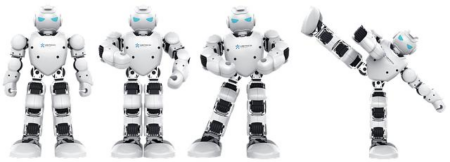

China is rapidly advancing its robotics industry by mass-producing affordable humanoid robots, aiming to revolutionize sectors from manufacturing to customer service. However, despite the impressive scale and cost-efficiency of these developments, industry insiders warn that securing a steady market demand may prove to be the most significant challenge. As Chinese companies flood the market with low-cost humanoids, questions remain about who will ultimately buy these robots-and whether they can live up to their promise in real-world applications.
China’s Rapid Expansion in Affordable Humanoid Robotics
China is making significant strides in the development and mass production of affordable humanoid robots, aiming to transform sectors ranging from customer service to manufacturing. Spearheaded by numerous tech startups and supported by government initiatives, these robots combine functionality and cost-efficiency, making them accessible for small and medium-sized enterprises. Key innovations focus on localizing AI capabilities and simplifying hardware requirements, which have enabled prices to drop without sacrificing critical performance features.
Despite the rapid increase in production capacity, companies face the daunting challenge of identifying viable markets and convincing potential customers to integrate humanoid robots into their operations. Market skepticism coupled with the high upfront investment required for adoption remains a barrier. Industry insiders highlight that success will depend not just on producing cheaper robots but also on educating buyers about their long-term value and real-world applications. Some potential buyers are hesitant due to concerns over maintenance, software updates, and the robots’ adaptability in dynamic environments.
- Investment in R&D: Boosting AI for real-time interaction and problem-solving.
- Scale of production: Factories capable of mass-producing robots at unprecedented rates.
- Market challenges: Buyer education and trust remain pivotal for widespread adoption.
Challenges in Market Adoption and Consumer Trust
While China’s push to mass-produce affordable humanoid robots represents a significant technological leap, the transition from factory floors to consumer hands is proving complex. Potential buyers are grappling with concerns over reliability, maintenance, and the actual value these robots bring to everyday life. Despite aggressive pricing, skepticism lingers around whether these machines can seamlessly integrate into diverse settings-from households to businesses-without costly adjustments or technical support. Such uncertainties are compounded by a market that remains unfamiliar and cautious about adopting robotic assistants at scale.
Adding to the challenge is the matter of trust, which extends beyond technology to encompass privacy and ethical considerations. Many consumers worry about data security, the transparency of AI decision-making, and the potential for misuse of humanoid robots. Building confidence will require companies to not only prove the robots’ functional capabilities but also to:
- Implement robust security protocols and clear privacy safeguards
- Engage in transparent communication about limitations and risks
- Facilitate hands-on experiences to demystify robot interactions
- Offer reliable customer support and after-sales service
Without addressing these multifaceted concerns, manufacturers may find that creating demand outpaces their ability to convert interest into committed buyers, keeping the robots on shelves rather than in homes and workplaces.
Strategies for Bridging the Gap Between Production and Demand
To effectively align production with market needs, manufacturers are adopting a range of innovative approaches. Dynamic inventory management systems powered by AI enable real-time adjustments in output, reducing overproduction and minimizing waste. Meanwhile, robust market analytics provide deeper insight into consumer preferences, allowing factories to tailor humanoid designs and functionalities to niche demands. These methods not only streamline supply chains but also empower producers to pivot quickly in response to fluctuating buyer interest, which remains a critical challenge amid the rapid expansion of affordable humanoid robots.
Additionally, creating demand is as vital as ramping up production. Companies are increasingly leveraging strategic partnerships with industry leaders in sectors such as healthcare, retail, and logistics to showcase practical applications of these robots. Pilot programs and demonstration projects are deployed to build trust and provide tangible proof of value to potential buyers. At the same time, flexible financing options and government incentives are introduced to lower the barriers for adoption. Such combined efforts aim to transform high-volume manufacturing capacity into sustainable market success.
Closing Remarks
As China accelerates the mass production of affordable humanoid robots, the challenge now lies not in manufacturing but in cultivating a viable market. While cost-effective robots hold promise for transforming industries from manufacturing to service sectors, widespread adoption depends on overcoming technical limitations, building consumer trust, and navigating regulatory landscapes. How China’s humanoid ventures address these hurdles will determine whether their robots become ubiquitous fixtures or remain largely experimental showcases in the evolving landscape of automation.