
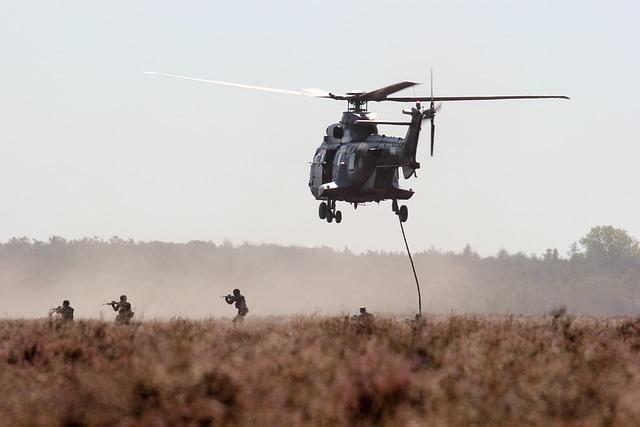
NATO Secretary-General has disclosed that Italy permitted the United States to operate military aircraft from its bases in support of operations related to the ongoing conflict in Iran. This revelation, reported by the Financial Times, sheds light on Italy’s strategic role within the alliance and underscores the complex logistical arrangements underpinning Western involvement in the region. The disclosure raises questions about the extent of European cooperation in US-led military initiatives and the broader implications for regional stability.
Nato Chief Discloses Italy’s Role in Facilitating US Military Operations Amid Iran Conflict
In a significant disclosure, NATO’s Secretary General confirmed Italy’s strategic cooperation by permitting US military aircraft to operate from its bases amid escalating tensions involving Iran. This revelation underscores the pivotal role Italy has played behind the scenes, supporting coalition efforts and enabling rapid deployment of forces in a volatile region. The collaboration highlights Italy’s commitment to NATO’s integrated defense posture while navigating complex diplomatic sensitivities with Iran.
Key aspects of Italy’s involvement include:
- Providing logistical and operational support to US air missions without public acknowledgment until now.
- Facilitating intelligence-sharing frameworks to enhance situational awareness and mission coordination.
- Balancing its diplomatic relations with Iran alongside strategic alliance obligations with NATO and the United States.
Implications of Italy’s Support for US Airbases on NATO Alliances and Regional Stability
Italy’s decision to permit US military aircraft to operate from its airbases amid escalating tensions in the Iran conflict casts a complex shadow over NATO’s cohesion. While underscoring Italy’s strategic commitment to the alliance, this move risks fueling divergent views among member states regarding the alliance’s role in Middle Eastern conflicts. Several NATO countries remain cautious about deepening involvement in the region, concerned about potential escalations and the broader impact on international diplomacy. Italy’s stance, therefore, presents both a display of solidarity and a potential fracture point within NATO’s unified approach to external crises.
Furthermore, Italy’s support carries significant weight in shaping regional stability. By enabling US military operations so close to conflict zones, it inadvertently heightens the possibility of confrontations that could spill beyond Iran’s borders. Key implications include:
- Elevated risks of escalation: The proximity of US forces to Iran increases the chances of miscalculations or unintended engagements.
- Impact on Mediterranean security: Italy’s actions may influence the strategic calculations of neighboring nations and non-NATO actors in the Mediterranean basin.
- Diplomatic tensions: This support could strain Italy’s relations with countries advocating for a more neutral or mediation-focused approach to the conflict.
Italy’s role thus exemplifies the balancing act NATO members face when aligning national interests with alliance commitments, underlining the delicate interplay between military cooperation and regional diplomatic stability.
Strategic Recommendations for Enhancing Transparency and Cooperation in NATO’s Middle East Engagements
In light of recent disclosures surrounding NATO’s operational logistics in the Middle East, it is imperative for the alliance to adopt a more transparent framework that balances strategic imperatives with accountability. Open communication channels between member states and regional partners must be prioritized to mitigate misunderstandings and foster mutual trust. Implementing rigorous oversight mechanisms that scrutinize the use of bases and airspaces can significantly enhance credibility, ensuring that all activities align with both international law and the broader goals of regional stability.
To cultivate deeper cooperation, NATO should consider the following strategic measures:
- Establishing joint task forces with regional stakeholders to coordinate shared security interests and intelligence exchange.
- Regular public briefings detailing operational protocols and base usage to prevent speculation and reinforce transparency.
- Enhanced diplomatic engagement to address concerns raised by non-member countries impacted by NATO’s presence.
- Investment in confidence-building initiatives that include humanitarian support and economic cooperation alongside military activities.
In Summary
The disclosure by the NATO chief that Italy permitted the use of its airbases for US operations related to the Iran conflict adds a new dimension to the understanding of Western military logistics in the region. As the geopolitical landscape continues to evolve, this revelation is likely to spark further debate on the extent of European involvement and the implications for diplomatic relations with Iran. Stakeholders and observers will be watching closely as more details emerge and the broader strategic consequences become clearer.