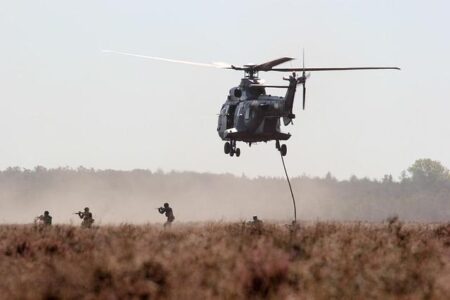

India is accelerating its procurement of weaponised drones as part of a broader effort to modernise its military capabilities amid regional security challenges. The move, reported by the Financial Times, underscores New Delhi’s intent to strengthen its aerial combat and surveillance assets in response to evolving threats along its borders. With the integration of advanced unmanned systems, India aims to enhance operational flexibility and maintain a technological edge over potential adversaries.
India Accelerates Procurement to Enhance Aerial Combat Capabilities
In a significant move to bolster its aerial warfare capabilities, India has swiftly ramped up procurement of weaponised drones, signaling a strategic shift towards modernizing its combat fleet. The accelerated orders come amid rising regional tensions and reflect a focused effort to leverage cutting-edge technology in battlefield scenarios. This initiative aims to enhance precision strike capabilities, real-time surveillance, and target acquisition, thereby strengthening the country’s defensive and offensive posture.
Key highlights of India’s drone procurement drive include:
- Acquisition of a diverse range of unmanned combat aerial vehicles (UCAVs) tailored for multiple mission profiles.
- Integration of advanced AI and sensor technologies to improve operational efficiency and lethality.
- Collaboration with both domestic manufacturers and international defense firms to accelerate delivery schedules.
- Focus on indigenous production under the Make in India initiative to ensure self-reliance and sustain long-term capability development.
Impact of Weaponised Drones on Regional Security Dynamics
The rapid acquisition of weaponised drones by India represents a significant shift in the military balance across South Asia. These unmanned systems, equipped with precision strike capabilities and enhanced surveillance, offer a strategic edge that traditional forces struggle to match. Their deployment not only bolsters India’s defensive posture but also serves as a deterrent against asymmetric threats from non-state actors and hostile neighbors. Experts suggest that this development could trigger a regional arms race, compelling neighboring countries to accelerate their own drone programs to avoid strategic vulnerabilities.
Key implications of this new wave of drone integration include:
- Increased surveillance and rapid response capabilities along contested borders.
- Greater operational flexibility for counterterrorism and anti-insurgency missions.
- The challenge of establishing new norms and regulations around unmanned weapon systems.
- Potential escalation risks as drone strikes reduce the threshold for military engagement.
As India fast-tracks orders for these systems, regional security dynamics are poised for transformation, raising questions about the future landscape of conflict and diplomacy in a highly volatile neighborhood.
Strategic Recommendations for Integrating UAVs into Military Operations
To maximize the impact of UAV deployments on the battlefield, it is crucial for military strategists to focus on seamless integration with existing command and control systems. This requires developing interoperable communication protocols that enable real-time data sharing between drones and ground forces, ensuring rapid decision-making and enhanced situational awareness. Additionally, investing in robust cyber protection measures will shield UAV networks from enemy interference, preserving mission integrity under hostile electronic warfare conditions.
Key strategic priorities moving forward include:
- Enhancement of autonomous targeting capabilities to reduce operator workload and accelerate engagement timelines.
- Training programs tailored for drone pilots and support units to build expertise in unconventional aerial warfare tactics.
- Development of modular payload options to rapidly adapt drones for reconnaissance, electronic warfare, or precision strikes based on mission needs.
- Establishing legal and ethical frameworks to govern the deployment of weaponised UAVs, balancing operational effectiveness with international norms.
Key Takeaways
As India accelerates its procurement of weaponised drones, the move underscores a strategic shift in its defense capabilities amid evolving regional security dynamics. With increased focus on integrating advanced unmanned systems, the country aims to bolster its aerial surveillance and combat readiness. This development not only reflects India’s response to emerging threats but also signals a broader trend towards modernising its military arsenal in an era defined by rapid technological advancement.